 +91-8727000867
 +64 22 003 5555


CRM systems assist B2C brands in managing customer data, boosting retention, and personalising communication, making them vital for long-term business growth and customer satisfaction.
Highlights
- Customer data: keep profiles, purchases, enquiries, support notes, and preferences in one usable customer record.
- Personalization: segment audiences, automate reminders, tailor offers, and keep communication consistent across channels.
- Retention: track repeat purchases, loyalty signals, service history, complaints, and churn risks before customers drop off.

Co-Founder
Vandana Abrol 
An enthusiastic developer and skilled business management expert with over a decade of experience in the field
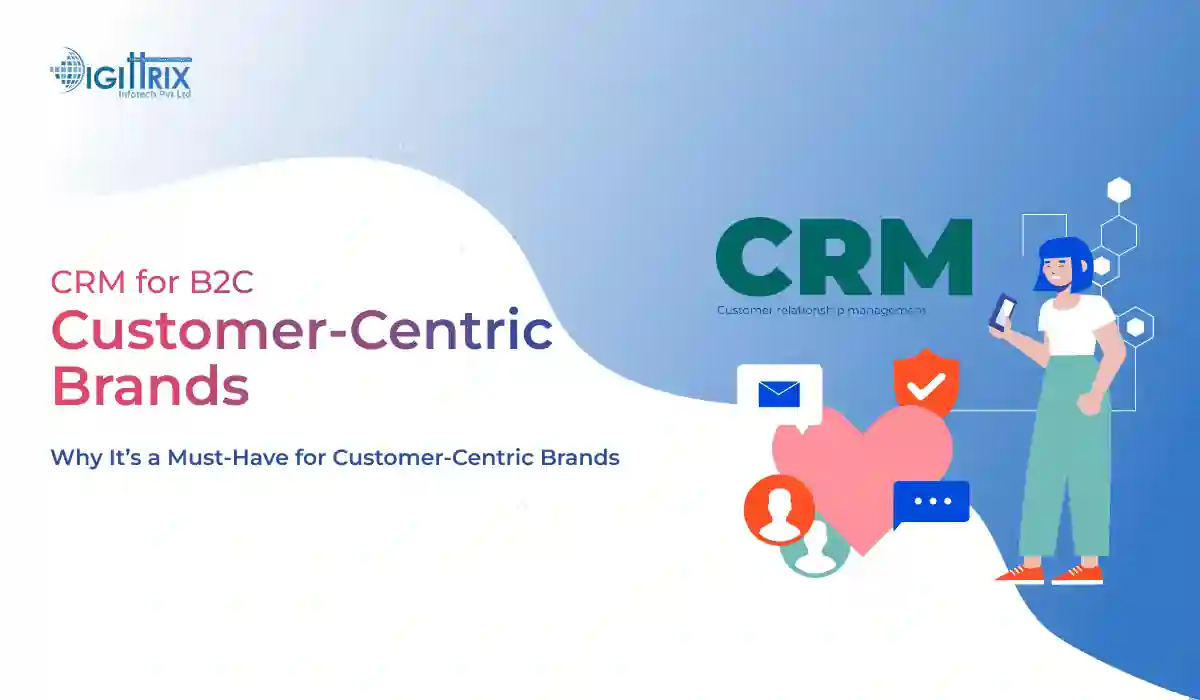
In today's fast-moving business world, customer expectations change quickly. B2C brands aiming to grab attention and keep their customers need more than ads and promotions; they need a system to handle every interaction. This is where a CRM (Customer Relationship Management) system shows its value.
People once believed CRM software was only for B2B companies, but now it's becoming essential for B2C businesses as well. Whether you run an edtech platform, a travel agency, a retail store, or an online shop, you can no longer ignore the importance of managing your customer relationships in a structured and thoughtful manner.
This in-depth article explains why B2C companies need a CRM, how custom CRM solutions can boost your business and why picking the right CRM development partner is key. We'll also share real-world examples and talk about platforms like Zoho and Pipedrive to help you understand what modern CRM solutions can do.
Curious about AI in business tools? Check out how AI can enhance your ERP and CRM systems with practical strategies and insights.
2026 B2C CRM Checklist: Retention, Personalization and Automation
B2C CRM software works best when it is planned around the full customer journey: first enquiry, purchase, onboarding, repeat engagement, support, loyalty, and win-back campaigns. The goal is not only to store contacts, but to help teams understand each customer and respond at the right time.
Quick answer: B2C brands need CRM software to centralize customer data, personalize campaigns, automate follow-ups, manage support history, track loyalty, and improve retention without depending on scattered spreadsheets or disconnected tools.
B2C CRM workflows to plan first
- Lead and enquiry capture: connect website forms, calls, WhatsApp, email, app enquiries, chat, and social leads into one queue.
- Customer profile: store purchases, preferences, service notes, complaints, returns, loyalty status, communication history, and consent.
- Marketing automation: segment customers for welcome flows, abandoned-cart reminders, renewal reminders, offers, and reactivation campaigns.
- Support workflow: assign tickets, track SLA status, show order history, and trigger follow-up reminders after resolution.
Custom CRM decision checks
- Choose a custom CRM when ready-made tools cannot match your customer journey, data model, app workflow, or integration needs.
- Plan integrations with ecommerce, payment, email, WhatsApp, telephony, loyalty, analytics, helpdesk, mobile app, and ERP tools early.
- Define user roles for sales, support, marketing, operations, store teams, management, and admin before development starts.
KPIs to track after launch
- Lead response time, repeat purchase rate, customer retention, churn risk, campaign conversion, and support resolution time.
- Customer profile completeness, abandoned cart recovery, complaint reopening, loyalty engagement, and dashboard usage by team.
GEO and AI-search clarity
For stronger search and AI visibility, a B2C CRM page should clearly explain CRM entities, customer data, personalization, automation, retention, B2C vs B2B differences, industry examples, implementation KPIs, and related CRM planning pages.
For deeper planning, compare our ERP and CRM development services, CRM automation guide, custom CRM vs SaaS CRM guide, and CRM and ERP cost-savings guide.
What Is a CRM and Why Does It Matter in B2C?
CRM stands for Customer Relationship Management. It refers to software that stores and organises all your customer data from contact details to transaction history and communication records.
In a B2C setting, this system helps manage a huge number of customer profiles, keep tabs on interactions, chase up leads, deliver promotional content, and a lot more. If a business doesn't have a CRM, it might lose track of what its customers want and like. This can result in lost sales opportunities and bad customer service. A B2C CRM is valuable when it turns scattered customer behaviour, purchase history, enquiries, and support notes into a single view that teams can act on quickly.
Examples of CRM in B2C Businesses
To understand the real-world application, let’s look at a few examples:
- An edtech company uses a CRM to monitor student inquiries, send reminders about upcoming courses, and offer support.
- A travel agency handles trip preferences, booking history, and communication with clients via a centralised CRM.
- An eCommerce business uses a CRM to send order confirmations, promotional emails, and return updates based on customer behaviour.
Brands like Zoho and Pipedrive are often used in these situations, but even they might fall short if you require specific features unique to your business.
Benefits of CRM for B2C Businesses
1. Centralized Customer Database
With CRM, all your customer details are stored in one place. This helps minimise errors and makes it easier to access important information quickly.
2. Targeted Campaigns
CRM helps your marketing team segment your customers and create tailored campaigns for each group. Whether you're promoting a new software tool in your edtech company or a special holiday deal in your travel business, you can focus on the right audience.
3. Consistent Communication
CRM logs every conversation you have with customers via email, chat, or phone. This allows your sales or support team to pick up right where they left off, providing the customer with a smoother experience.
4. Increase Repeat Sales
By monitoring customer history, you can prompt users when they might need your service again. For example, a travel company can use CRM software to remind clients about annual trips or when to renew their visas.
Why Choose a Custom CRM System?
Ready-made CRM software like Zoho or Pipedrive may work well for many small businesses, but growing companies often need more customised features. That’s where custom CRM software development comes in.
With a custom CRM, you’re not limited to standard features. Instead, your system can be built from scratch to suit how your business operates. For example:
- An edtech firm may want to link the CRM to student performance metrics and course progress.
- A travel business may want to integrate booking engines, visa status updates, and hotel management into its CRM.
This level of flexibility is usually only possible through CRM development services.
Signs You Need Custom CRM Software
If you're wondering whether you need a custom CRM, here are some indicators:
- Your existing CRM doesn’t support specific workflows or data formats.
- Teams are still using spreadsheets to track customer data.
- Communication between departments is inconsistent.
- You’re running multiple tools that don’t talk to each other.
- Your CRM doesn’t support industry-specific needs (e.g., for edtech or travel sectors).
In these situations, hiring a CRM development company that offers CRM software development tailored to your business model becomes important. In these situations, a CRM development partner should map the exact customer journey, data fields, automation rules, and reporting needs before suggesting features.
Selecting the Right Development Partner
Choosing the right team for your custom project matters as much as deciding to build one. Consider these factors:
1. Business Understanding
Make sure the company understands your field—whether you're in B2B, B2C, edtech, travel, etc. They should ask specific questions about your aims, not just technical details.
2. Technology Skills
The CRM development company needs skills in backend technology, front-end development, database design, and system integration.
3. Client Support
A CRM isn't a one-off purchase — it's an ongoing part of your business. Choose a partner that provides ongoing support after launch, regular upgrades, and aims to improve the system.
CRM for B2C vs B2B: What Sets Them Apart?
Both B2B and B2C companies find value in using CRM systems, but their approaches to these systems differ.
- B2B businesses deal with longer-term relationships and detailed sales cycles. Their CRM tools focus on managing proposals, tracking deals, and recording meetings.
- B2C businesses, on the other hand, have shorter but more frequent interactions. Their systems need to manage a higher number of users and support automated communication.
A custom CRM system can be designed to fit either model or even merge features from both.
CRM Software Features That B2C Businesses Look For
These are the most popular features businesses ask for when they turn to a CRM development company:
- Manage contacts and leads
- Track purchases and transactions
- Automate emails and text messages
- Create forms to collect feedback
- Analyze campaigns and monitor performance
- Include loyalty program features
- Connect with online shopping platforms
These are some tools that CRM development services offer to handle the unique needs of B2C businesses.
Examples of Industry-Specific CRM Software
To explain better, here are a few applications of CRM across industries:
- EdTech: Monitor how students perform, check their course progress, track attendance, and stay in touch with parents.
- Travel: Keep track of customer trip plans, booking details, updates and special seasonal offers.
- Retail: Handle orders, returns, customer issues, and manage loyalty rewards.
These examples show why one generic CRM rarely suits every B2C workflow. B2C CRM software development continues to grow because brands need cleaner customer data, faster support, automated communication, loyalty tracking, and clearer retention reporting.
Integrating CRM into Daily Business Life
Getting a CRM isn’t just about purchasing or creating the tool. You will need to integrate it as part of how your team operates day to day.
- Teach Employees: Ensure every department knows how to work with the system.
- Create Guidelines: Set specific instructions for adding and updating data.
- Track Performance: Analyze system usage with built-in tools to assess effectiveness.
Want to streamline operations? Learn how to automate customer and staff communication via CRM for smoother workflows and better engagement.
Final Words
A CRM system has become a necessity instead of just a nice-to-have. Every business that serves customers needs it now. Whether you run an edtech company, a travel agency, a new startup, or an established retail brand, managing customer data and keeping track of their actions sets your business apart. It also helps handle communication better.
Deciding to use ready-made tools like Zoho or Pipedrive versus building a custom CRM depends on what you want to achieve. For many growing B2C companies, creating a custom CRM system works best to make sure it matches how their internal processes operate.
A professional CRM development company plays a specific role in this process. Their CRM development services aim to build tools tailored to your needs, offering stronger control, upgraded capabilities, and dependable operations. A good CRM in a fast-paced business world does more than manage information. It acts as a base to strengthen connections, make better choices, and ensure steady progress.
Build a Custom CRM System for Your B2C Brand with Digittrix
In today’s fast-paced B2C environment, managing customer relationships efficiently is essential for building loyalty, improving service quality, and growing your customer base. A custom CRM system can help your brand organize customer data, simplify sales processes, and deliver consistent communication across all channels.
At Digittrix, we build CRM systems that are made to match the needs of modern B2C businesses. With experience since 2014 in CRM software development, our expert team understands how to design solutions that support high-volume customer interactions, real-time marketing, and smooth support operations.
Looking to build a CRM system that fits your brand and processes? Schedule a consultation with our technical team to discuss how we can support your growth. Call us at +91 8727000867 today.
For questions or more information, write to us at hello@digittrix.com. Let Digittrix support your customer-first approach with dependable CRM development services made for B2C success in 2026.
 FAQ's
FAQ's