+91-8727000867
 +64 22 003 5555

Shopify store design and development
Help shoppers find products and place orders. We organise collections, design mobile layouts and plan content, payment setup and launch checks around your catalogue.

Talksy is our live Shopify app. Explore its chat, product-search and FAQ experience on the official App Store. For storefront work, see our MagicalNest store redesign.
These organisations represent our work across several industries. For a Shopify-specific example, explore Talksy and the linked storefront case study.












Shopify app development adds store features, automates tasks and connects business systems. A theme controls how the store looks. An app can update stock, apply order rules or connect your warehouse software. We build both, along with complete Shopify websites.
Start with the task you want to improve. We check your current setup, compare existing features with custom work and explain the cost of each suitable option.
Choose a theme to improve store design. Choose an app to add a workflow or connect software. A headless storefront separates the customer-facing website from Shopify’s theme system. We check simpler options before recommending that extra work.
On smaller screens, swipe the table to compare all columns.
| Approach | Best fit | What to confirm first |
|---|---|---|
| Existing Shopify app | A standard feature already covered by a maintained product. | Feature fit, permissions, subscription fees and support. |
| Theme customisation or custom theme | Product pages, collection layouts, navigation and brand presentation. | Theme capabilities, content, reusable sections and performance needs. |
| Custom-distribution app | A workflow or integration for one store or stores in one Plus organization. | Data access, installation scope, sync rules and ongoing maintenance. |
| Public Shopify app | A software product offered to multiple merchants through the App Store. | Onboarding, billing, support and Shopify review requirements. |
| Headless storefront | A customer-facing frontend built separately from the theme system. | A clear business reason, API needs, hosting and content-preview workflows. |
| Mobile shopping app | An iOS or Android storefront connected to Shopify commerce. | Mobile-specific user journeys, checkout integration and release requirements. |
Platform references: Shopify theme architecture, app distribution methods and headless storefronts.
Launch a new store or improve the one you have. We plan product pages, navigation and checkout alongside the tools your team uses to manage orders.
Help shoppers find products and place orders. We organise collections, design mobile layouts and plan content, payment setup and launch checks around your catalogue.
Give your store a consistent design with reusable sections and product layouts. We can adapt a suitable theme or build one from scratch. We agree mobile, accessibility and performance checks before starting.
Connect storefront design, business-to-business (B2B) workflows, integrations and supported checkout extensions. We first confirm which capabilities your Shopify Plus plan provides, then identify any custom theme or app work needed.
Build a separate frontend with Shopify’s Storefront API and Hydrogen or another suitable framework. We compare it with a standard theme and explain the extra hosting, content management and maintenance it needs.
Plan an iOS or Android shopping experience connected to your catalogue, cart and checkout. Define account journeys, integrations and store-release requirements separately from any embedded merchant-admin app.
Add Shopify development capacity to your agency. We agree branding, confidentiality, client communication and handover terms, then build the store, theme or app within that plan.
Share your current store, catalogue and requirements. We’ll assess the design, integrations and migration work, then recommend a theme-based or headless approach with a clear delivery scope.
The first decision is whether the app serves your own business or is a product for other Shopify merchants.
Custom distribution supports an app for a single store or stores in one Shopify Plus organization. Use it for internal tools, store-specific features and business integrations.
Public distribution supports an app listed in the Shopify App Store. Plan merchant onboarding, app billing, support and Shopify’s review process as part of the product.
Build the missing connections between your store, your team and the way your business works.
Stock changes arrive late across your store, warehouse and sales channels.
Staff re-enter orders and customer records between Shopify, CRM and accounting tools.
Tagging, routing and fulfilment tasks take time on every order.
Your product or service needs features that the current app setup does not provide.
Customers need clearer ways to manage repeat purchases and delivery schedules.
Failed requests and mismatched order status need visibility and recovery tools.
Explore merchant tools, public app products and specialist features for your store. We can combine features and choose the installation method to match your users.
Swipe to explore all eight Shopify app solutions
Build tools inside Shopify admin for tasks your team handles every day: bulk product updates, custom order rules, fulfilment queues and operational reports.
Create a Shopify App Store product for multiple merchants, with store onboarding, settings, merchant billing and support workflows. We help prepare the app and listing for Shopify review.
Add checkout interfaces and business rules for Shopify Plus merchants. UI extensions at the information, shipping and payment steps require Shopify Plus; we check other extension features against your store plan.
Offer repeat purchases with selling plans, delivery schedules and customer controls to pause, skip or cancel subscriptions. This covers products sold by the merchant; charging merchants to use a public app is a separate billing workflow.
Add vendor product submissions, order routing and commission reporting to a Shopify store. We plan vendor access and payouts around how your marketplace operates.
Keep products, stock and orders synchronised across Shopify and your warehouse or back-office tools. Add event-driven tasks, retries and a dashboard for failed or delayed syncs.
Help shoppers find products through catalogue-aware search, recommendations and support assistants. Connect responses to approved store information and hand off questions to a human when needed.
Connect Shopify to your CRM, ERP, accounting and logistics software. Define data ownership, sync rules and failure recovery before implementation.
Give your team tools that fit how they work. We design the screens, connect the data and test the app. For public apps, we also plan merchant onboarding, billing and submission.
Build around a clear scope, practical milestones and the merchant experience.
Build embedded merchant apps with product tools, custom order rules and dashboards that fit daily store operations.
Design merchant screens with Shopify’s interface patterns and add customer-facing features through app extensions.
Connect product, customer, order and fulfilment data with your business software through supported Shopify APIs.
Test on development stores, prepare the launch and maintain the app as Shopify APIs and your store requirements evolve.
Choose the features that solve your store’s problem. We prioritise essential tasks for the first release and plan other improvements separately.
Explore Shopify app workflows tailored to the products you sell and the customers you serve.
Size and variant management, recommendations, returns and inventory workflows.
Location-based delivery, stock synchronisation and repeat ordering.
Product discovery, replenishment reminders and loyalty experiences.
Warranty workflows, product comparisons and bulk order processing.
Product personalisation, appointment requests and premium service journeys.
Custom product options, delivery planning and catalogue experiences.
Buyer-specific ordering tools, quote requests and ERP synchronisation, matched to the store’s B2B setup.
Replenishment plans, repeat orders and customer controls for subscription boxes or recurring products.
We use Shopify tools for merchant screens and store connections. We choose the database and hosting around your records, background tasks and expected usage.
We choose tools your team can maintain, with performance and security checks in the project plan.
Use Shopify interface components and App Bridge for an app that feels familiar inside the merchant admin.
React
Polaris web components
Shopify App Bridge
Build app services and synchronise Shopify records through the GraphQL Admin API and webhooks.
Node.js
GraphQL Admin API
Webhooks
Choose a database around app records, synchronisation and reporting requirements.
PostgreSQL
MySQL
MongoDB
Plan application hosting, release workflows and operational monitoring.
AWS
Google Cloud
Docker
Add theme app blocks, supported checkout interfaces and Shopify Functions for custom commerce logic. Availability depends on the extension and store plan.
Theme app extensions
Checkout UI extensions
Shopify Functions
Use the authentication flow appropriate to the app, verify session tokens and request only the store permissions required.
OAuth authorization
Session tokens
API access scopes
Shopify platform references: App Bridge & Polaris · GraphQL Admin API · Checkout extensions & plan requirements.
Choose the backend around your existing systems, background tasks and support team. The selected stack must support Shopify’s APIs, authentication, installation flows and operational monitoring.
Use Node.js to run app services, receive store events and connect other systems. We add background jobs, logs and retries where your workflows need them.
Laravel can suit teams with existing PHP systems. Whether using Laravel or core PHP, we plan API compatibility, OAuth, token validation, webhooks and secure deployment around the integration and maintenance requirements.
Python can support data processing, reporting and integration services behind a Shopify app. We define the boundary between backend jobs and the merchant or customer interface, then plan monitoring and failure recovery.
The proposal identifies the interface, backend and integrations required. Existing apps or native platform capabilities may meet some needs without a separate custom backend.
Keep orders, stock and customer records consistent across your tools. We map each data field, agree when updates run and show your team when an update fails.
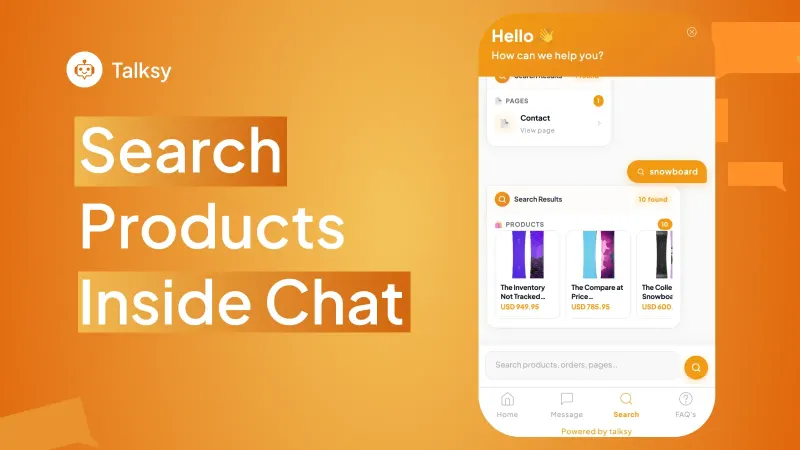
Digittrix developed Talksy, a Shopify app that brings live agent chat, product search, FAQs and message alerts into one storefront experience. Explore the working product and its published features.
Explore the Talksy delivery storyThe official Shopify App Store listing identifies Digittrix Infotech Pvt Ltd. as the developer. Use it to review the app’s screenshots, feature details and installation options.
A practical delivery approach that connects store requirements to working software.
Our team works from Mohali, Punjab, and serves clients worldwide. We agree review times and milestones around your project. Explore Shopify development in Mohali or services for Delhi NCR.
We design your app around your catalogue, daily tasks and team.
Design, backend services and third-party integrations follow one delivery plan.
Review progress through agreed prototypes, releases and acceptance checks.
Test permissions, data flows, reliability and the customer experience.
Prepare installation, release and handover steps for the agreed app distribution.
Plan updates, monitoring and enhancements as your store evolves.
Published feedback on our wider development work and client communication.
“Communication is excellent and results really show skill and professionalism.”
“Handles feedback efficiently. Would work with them again”
Watch clients share how we communicated, handled feedback and delivered their websites and web applications. These videos describe our wider development work.
Web application development
Review summary: Anuj describes working with Digittrix to build a web application. He discusses support, feedback, timelines and choosing a technology partner for an MVP.
Watch on YouTube Read the review transcriptCustom website development
Review summary: A client describes turning his website idea into a finished product, with feedback on listening to requirements, responsiveness, patience and professionalism.
Watch on YouTube Read the review transcriptChoose a package for one website or app project. The final estimate depends on the pages, features, integrations and testing you need. We confirm which requirements fit the package before work begins.
Launch a basic Shopify website or an app that handles one clear task. We agree the pages, features and launch checks before work begins.
Build a custom website or app with the design changes, workflows and integrations your team needs. We confirm which requirements fit this range before you commit.
Add AI product search, recommendations or assisted support to a custom website or app. We review your data, test needs, human support options and usage costs before quoting.
Pricing scope: Choose one website or app project. We confirm features, revisions, integrations and launch checks in your written proposal. We quote AI features and extra requirements separately. Budget separately for Shopify plans, paid themes and apps, hosting, third-party usage, taxes and ongoing support unless your proposal includes them.
Page types, catalogue size, design work, migration and integrations affect the cost. We list Shopify subscriptions, theme licences and paid apps separately from the build.
Theme customisation and a theme built from scratch need different budgets. We assess reusable sections, product-page requirements, responsive behaviour, accessibility and testing before quoting the theme work.
Shopify app development pricing reflects merchant screens, business rules, APIs, distribution, hosting and support. Public apps also need installation, billing and submission preparation; Shopify determines the review schedule.
Send the essentials below. We use them to separate design, development, testing and handover in your quote.
We identify recurring fees separately unless the proposal includes them.
Use these ranges for early app planning. We estimate websites and themes separately after reviewing your requirements.
A limited workflow or small integration with agreed inputs and clear acceptance criteria.
Multiple workflows, merchant interfaces and integrations that need coordinated testing.
Multi-merchant requirements, advanced features and operational needs define the delivery plan.
These are indicative timelines, not fixed commitments. The written proposal confirms development cost, deliverables and support. Shopify review times, third-party fees, hosting and usage charges are separate unless included.
Request a Shopify Development EstimateMoving an existing store needs a data and URL plan as well as a new design. We agree on the records, integrations and acceptance checks before scheduling the switch.
Inventory products, variants, collections, content, customers and order history. Confirm what can transfer, create backups, test a sample migration and reconcile record counts and key fields before the final import.
Match important old URLs to the appropriate new pages, test 301 redirects and review titles, canonicals, index settings and sitemaps. Monitor crawl errors and search performance after launch.
Check mobile layouts, forms, checkout, shipping, discounts and agreed integrations. For apps, test installation, permissions, workflows and failure recovery. Review findings with your team, agree the launch window and record rollback steps.
Customer credentials, subscriptions, historical data and third-party features may need a different migration approach. The plan records these limits; a platform change does not guarantee unchanged traffic or rankings.
Review the work at every stage, from the first discovery session to post-launch improvements.
Understand the store, users, integrations and business goals.
Review merchant journeys, customer interfaces and interactive prototypes.
Build the application, backend and agreed Shopify integrations.
Test installation, workflows, permissions and failure recovery.
Prepare the release, documentation and distribution steps.
Monitor the app and plan maintenance or the next feature phase.
Before launch, we list the accounts, code, notes and training your team will receive. We agree who handles issues afterwards, how to contact them and what the support fee covers.
Confirm the store and repository access, setup notes, configuration, third-party accounts and operating walkthrough included in your project. Record ownership and licence terms alongside the acceptance checklist.
Agree on the support period, start date, contact channel, working hours, priority levels and response arrangements. We compare each issue with the agreed scope and explain whether it needs a fix or a new estimate.
Define responsibility for Shopify API compatibility, theme and app updates, integration monitoring, hosting and third-party changes. We quote new features and work outside the agreed coverage separately.
Your support agreement lists covered tasks, working hours, response arrangements and recurring fees.
Get answers about stores, themes, custom apps, costs, integrations and ongoing support.
Shopify app development adds features to a store or connects it to other software. An app can automate stock updates, apply order rules or give merchants new tools. A theme controls the store design; an app handles the extra functionality.
MVP costs $1,499 USD for a basic website or focused app. Advanced costs $1,500–$2,499 USD for an agreed custom website or app. We quote Advanced with AI after reviewing your requirements. Your proposal lists the work and final price. Platform fees, hosting, paid apps, taxes and ongoing support cost extra unless included.
Allow around 2–4 weeks for a focused app and 6–12 weeks or more for several connected workflows. We confirm the schedule after reviewing your features, data and integrations. Shopify controls App Store review times, so we plan those separately.
Yes. We build apps for your store’s order rules, internal tools and integrations. We review the users, data and access the app needs, then choose the installation method before development.
Custom distribution serves one store or stores within one Shopify Plus organization. Public distribution lets you offer an app to other merchants through the Shopify App Store. Shopify reviews public apps. We choose the route early because it affects installation, billing and launch.
Yes. We help build the app, prepare the listing and respond to review feedback. Shopify decides whether to approve the app and how long the review takes.
Checkout UI extensions at the information, shipping and payment steps require Shopify Plus. Other features have their own requirements. We check your plan and the exact checkout change before confirming the work.
Yes. We connect Shopify to customer relationship management (CRM), enterprise resource planning (ERP), inventory, accounting and shipping systems. We use supported APIs, agree how data moves between systems and plan how your team handles failed updates.
Yes. We review the code, permissions and workflows, then prioritise fixes and improvements. The plan can cover API updates, faster background jobs, clearer admin screens and new features. We agree each release with your team.
Yes. We can provide bug fixes, theme and app updates, API compatibility checks and integration monitoring. We agree the support period, working hours, response arrangements and fees in your proposal.
Yes. We design stores, build or customise themes, organise products and collections, and test the buying journey. We can also connect the website to a custom app or your existing business systems.
We build or adapt page templates, reusable sections, blocks and mobile layouts around your brand. Shopify Online Store 2.0 themes use JSON templates and support app blocks. We confirm the designs, content, accessibility checks and testing before development.
Compare relevant projects, clear pricing, sample deliverables, communication and support terms. Ask why the agency recommends a theme change, existing app or custom build. Review a live product and check who will own the store, code and accounts.
People often use “plugin” or “module” to mean an extra store feature. Shopify usually delivers that feature through an app, theme section or app extension. Extensions add supported features to the storefront, admin or checkout. We check the extension type and plan requirements first.
Yes. We review the existing integration and plan a supported replacement where needed. “Private app” describes an older approach. We use current Shopify authentication, APIs and distribution methods for new work.
We first check the payment provider, merchant eligibility and Shopify requirements. A payments app needs specialist access and approval. A checkout UI extension alone does not add a payment gateway. We confirm the supported route before quoting.
Choose headless when you need a separate customer-facing website that a standard theme cannot support well. Shopify still handles commerce behind the scenes. We compare the extra design freedom with hosting, content previews, integrations and maintenance costs before recommending it.
Our team works from Mohali, Punjab, India, and serves clients worldwide. We agree meeting times, review milestones and handover responsibilities around your time zone and project.
We document ownership, code repository access, store permissions and handover in the contract. Third-party themes, apps and libraries keep their own licence terms. Review these details with us before development starts.
Plan for your Shopify subscription and any paid apps, hosting, database, API usage or support your project needs. Public apps also need merchant support and API updates. We separate these costs from development in your estimate.
We add agreed features such as product search, recommendations or assisted support to a custom website or app. We assess your data, answer quality and handover to human support before quoting. Your proposal identifies any model or third-party usage charges.
Yes. We map products, variants, collections, customers, orders and important URLs, then test a sample transfer. We check redirects and imported records before launch. Passwords and subscriptions may need a separate approach. No migration can guarantee unchanged search rankings.
Yes. We build websites, themes and apps for agencies under agreed branding and confidentiality terms. We define who handles client communication, reviews, account access, ownership and handover before work begins.
We request only the access your app needs, validate authentication and webhook requests, and plan token storage and data retention. We check Shopify requirements for protected customer data. Your scope identifies access controls, uninstall handling and monitoring.
We developed Talksy Live Chat & Search. Its official Shopify App Store listing names Digittrix Infotech Pvt Ltd. as the developer. You can review the live chat, product search, FAQs and message alerts through the listing and our linked project story.
Check the platform requirements: checkout extension availability, protected customer data, and payments partner and app approval.
Share your store URL or project idea, the task you want to improve and your target launch date. We’ll recommend the next step and prepare a clear estimate.
Based in Mohali, India · Serving clients worldwide. We plan remote delivery, communication and time-zone overlap around your project.