+91-8727000867
 +64 22 003 5555


Recurring cleaning and maintenance plans support scheduled visits and subscription revenue.
Home service product engineering for mobile, web and AI
Home Services App Development Company
- Since 2014 Product delivery experience
- Mobile + Web Connected home services platforms
- Booking + AI Connected service operations
Cross-Industry Delivery Experience
Selected organizations represented across Digittrix’s broader product portfolio. These are cross-industry references—not home services or service booking case studies.












What Your Platform Connects
Home services app MVP development connects customer onboarding, service catalogues, provider profiles, appointments, dispatch, payments, notifications, and administration. Start with the service categories and launch area your business needs, then agree the customer app, provider workflow and responsive web admin panel for the first release. Cost and delivery time depend on user roles, scheduling rules, integrations, recurring visits and launch regions. Digittrix can combine its mobile app development services with AI development services for selected, reviewable automation.
Updated Reviewed by: Harsh Abrol, Co-Founder · LinkedIn More than a decade in web, mobile, and custom software delivery Scope and estimate confirmed in writing
- Scoped roadmap
- Delivery roadmap agreed after discovery
- 3 roles
- Customer, provider, and administrator
- Mobile + web
- Connected apps and web administration
Revenue Models
Our home services app monetization solutions can include booking commissions, service packages, recurring maintenance plans, provider memberships and clearly labelled promotions around the customer experience. Actual revenue depends on demand, pricing, service quality and execution.
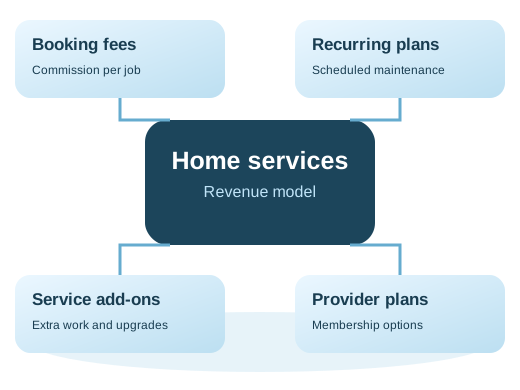
Booking commissions and service fees support transaction-based marketplace revenue.
Service bundles, priority appointments and paid add-ons support optional upgrades.
Provider memberships and clearly labelled sponsored listings support business promotions.
Eight focused home services app formats
Service Categories & Operating Models
Choose the home services product closest to your roadmap. Each format can be configured for mobile and web, with customer, provider, and admin workflows tailored to your business model.

On-Demand Home Services Marketplace
Connect households with local professionals across cleaning, repairs, maintenance and installation. Bring service discovery, appointments, provider allocation and payments into one platform.
- Service catalogue
- Provider marketplace
- Booking management

Home Cleaning & Housekeeping Apps
Let customers book one-time or recurring home cleaning, choose room sizes and add-ons, and manage visits. Give teams clear checklists and completion records.
- Recurring visits
- Service add-ons
- Job checklists

Plumbing Service Booking Apps
Capture the problem, property details and optional photos before assigning a plumber. Support inspection fees, revised quotations and customer approval for additional work.
- Issue photos
- Visit scheduling
- Quote approval

Electrician & Installation Service Apps
Organize repair and installation bookings around skill requirements and available time slots. Keep service instructions, estimates and job updates connected to the appointment.
- Skill-based assignment
- Installation bookings
- Job updates

Appliance Repair & Maintenance Apps
Collect appliance type, brand and fault details, then coordinate diagnosis, spare-part approval and follow-up visits. Maintain service history for each customer.
- Appliance records
- Parts approval
- Service history

AC Service & HVAC Maintenance Apps
Schedule servicing, repairs and seasonal maintenance for household cooling and heating equipment. Build reminders and maintenance-plan renewals around equipment records.
- Equipment profiles
- Maintenance plans
- Renewal reminders

Handyman, Painting & Carpentry Apps
Support jobs that need photos, measurements or an inspection before a final estimate. Track the agreed scope, materials, work milestones and completion confirmation.
- Inspection requests
- Custom estimates
- Milestone updates

Property Maintenance & Field Service Platforms
Give property managers a shared workspace for multiple homes, recurring jobs and maintenance requests. Coordinate in-house teams and contractors through role-based dashboards.
- Multiple properties
- Team scheduling
- Operations reports
Choose How Your Service Business Operates
A service category describes the job. Your operating model determines who assigns it, controls the price and resolves problems. The options below are planning patterns; the final rules belong in your service and provider agreements.
| Decision | Company-owned team | Independent-provider marketplace | Franchise or multi-location operator |
|---|---|---|---|
| Job assignment | A dispatcher allocates employees by skill, shift and travel area. | Eligible providers accept a request or are matched under your platform rules. | Route bookings to a branch or territory, then assign the local team. |
| Pricing control | The company sets fixed packages or approves inspection-based estimates. | Choose platform-set rates, provider quotes or a defined combination. | Use central packages with approved regional prices and exceptions. |
| Payments and payouts | Collect customer payments; track staff compensation in the agreed payroll or accounting workflow. | Record commissions, provider balances, refund adjustments and settlement status. | Reconcile branch collections, fees and transfers with the agreed finance system. |
| Cancellations | Operations reschedules or reassigns the job and applies the published policy. | Define customer and provider cancellation windows, backup assignment and refund ownership. | The branch handles the booking; central support manages agreed escalations. |
| Service quality | Company supervisors own training, checklists and complaint follow-up. | Define provider checks, completion evidence, dispute review and any platform guarantees. | Central standards and local supervision share audit and escalation responsibilities. |
A Repair Booking From Request to Completion
Illustrative workflow: a customer submits an appliance fault and photos, selects an inspection slot and sees the visit fee. Dispatch assigns a suitable technician. After inspection, the technician proposes any parts and additional labour; the customer approves the revised total before work starts. Completion notes, payment status and the receipt stay with the booking.
If the technician is unavailable, operations offers reassignment or cancellation under the policy. If the customer declines extra work, record the decision and apply the agreed inspection-fee rule. These exception paths should be tested alongside a successful booking.
From Product Planning to Launch
Plan the booking experience, build the connected apps and administration tools, and prepare your team for launch.
Four connected delivery tracks
Plan the complete home services product lifecycle
Choose Digittrix as your service booking app development company for mobile engineering, product design, dispatch logic, and trust controls planned around one maintainable release roadmap.

Android & iOS Development
We build robust, high-performance mobile applications tailored for both Android and iOS platforms.
- Native Android home services app development
- Native iOS home services app development
- Cross-platform home services app development using React Native
- Performance optimization
- App Store & Play Store deployment
- Version upgrades and feature scaling

Customer & Provider Experience Design
User experience shapes how customers find services, compare providers, and book visits. Our UI/UX specialists design clear journeys for booking, payment, and job tracking.
- Wireframing & prototyping
- Interactive UI systems
- User journey mapping
- Conversion-focused onboarding design
- Engagement optimization

Smart Booking & Provider Dispatch
We combine service-area rules, provider skills, availability and workload signals to support relevant job assignment. Optional AI-assisted recommendations can help dispatchers review requests and allocate work, with human approval and clear operating rules. For AI risk planning, the NIST AI Risk Management Framework and its Core provide references for managing the selected AI workflow throughout delivery.
- Skill and service-area rules
- Availability and workload checks
- Provider assignment recommendations
- Customer-approved booking details
- Dispatch quality monitoring
- Dispatcher review and controls

Security & Privacy Engineering
Trust and safety controls are selected for the agreed product, launch regions, risk profile, and platform requirements.
- Two-factor authentication (2FA)
- Encrypted data in transit and at rest
- Secure cloud hosting
- Automated risk signals with human review
- Complaints, disputes, and support workflows
- Consent, retention, and deletion controls
Delivery Capabilities
Choosing the right partner for home services app development services can determine the
long-term scalability of your platform. At Digittrix, we combine product strategy, user experience
design, and engineering to deliver maintainable home services applications.
Our approach connects
each technical decision to an agreed product goal and testable release scope.

Service Workflow Planning

Booking & Dispatch Workflow Development
Cross-Platform iOS & Android Apps

Real-Time Chat & Job Update Integration

Cloud-Based Scalable Infrastructure

Security, Privacy & Data Controls

Post-Launch Support & Maintenance
Features for Customers, Providers & Admins
Our custom home services app features connect service discovery, appointment booking, provider dispatch, payments, support, and administration around the agreed release scope.
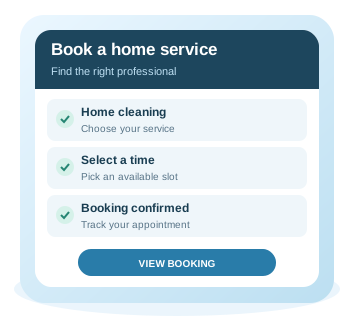
Customer Experience
- User Registration & Authentication
- Saved Addresses & Property Details
- Service Categories & Provider Profiles
- Advanced Search & Filters
- Appointment Booking & Availability
- Real-Time Chat & Messaging
- Push Notifications
Provider Experience
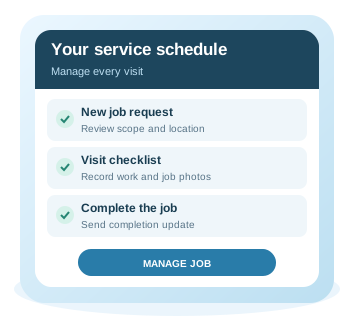
- Job Requests & Assignment Rules
- Provider Skills & Availability
- Service Areas & Navigation
- Customer Chat & Job Photos
- Estimates & Extra-Work Approval
- Job Status & Earnings Updates
Admin & Operations
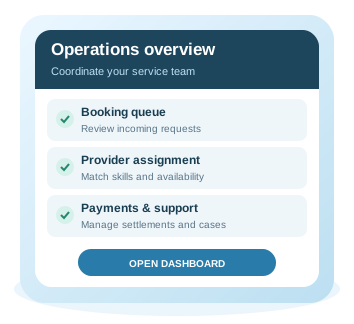
- Service Plans & Recurring Bookings
- Provider Approval & Team Roles
- Commissions, Refunds & Settlements
- Service Catalogue & Pricing Controls
- Customer and Provider Management
- Revenue Monitoring Dashboard
Trust & Safety Controls
Secure home services app development can combine identity, privacy, account controls, and a home services app operations system. Exact safeguards depend on product risk, launch regions, vendor capabilities, and legal review.

Secure sessions and two-factor authentication

Encrypted data in transit and at rest

Complaint, cancellation and refund workflows

Provider approval queues with human review

Provider document and verification integrations

Consent, retention, and deletion controls
Technology blueprint
Technology & Backend Architecture
For home services app backend development, we select the technology stack around dispatch logic, real-time communication, privacy, operations, performance, maintainability, integration, and the scaling requirements defined for the product.
Architecture layers
Technology choices are finalized during discovery against product scope, trust and safety controls, integration requirements, ownership, and operating model.
01 · Customer experience
4 technologies
Frontend & Mobile
Next.js, Flutter, Swift, and Kotlin support responsive web, cross-platform, and native experiences for customers, providers, and administrators.

Next.js

Flutter

Swift

Kotlin
02 · Bookings & services
5 technologies
Backend APIs
Node.js, PHP, Laravel, Python, and CodeIgniter support dispatch, conversations, operations queues, subscriptions, notifications, and administration.

Node.js

PHP

Laravel

Python

CodeIgniter
03 · Services & scheduling
5 technologies
Data Layer
Relational, document, and real-time data services are selected around profiles, service requirements, bookings, conversations, reporting, retention, and deletion workflows.

MySQL

MongoDB

PostgreSQL

Firebase

MariaDB
04 · Scale & release
5 technologies
Cloud Delivery
Azure, Docker, Google Cloud, Vercel, and Netlify support controlled environments, release automation, observability, scalable infrastructure, and web delivery.

Microsoft Azure

Docker

Google Cloud

Vercel

Netlify
05 · Plans & purchases
4 technologies
Payments & Billing
Stripe, Razorpay, PayPal, and Cashfree can support service payments, commissions, plans, refunds, and other agreed commercial workflows.

Stripe

Razorpay

PayPal

Cashfree
06 · Identity & access
1 core technology
Authentication
Token-based access is combined with the agreed email, phone, OTP, social sign-in, session, device, and role controls.
JWT
Enterprise engineering
Architecture for Higher Booking Volumes
Quick answer: an enterprise home services platform should separate customer, dispatch, communication, billing, operations, and analytics workloads so each can be measured, released, and scaled against real usage. Final capacity and availability targets are confirmed through discovery, infrastructure planning, and load testing.
Modular API-First Service Boundaries
Separate dispatch, chat, media, billing, operations, and administration concerns to support safer changes and independent scaling.
High-Concurrency Communication Planning
Model peak sessions, connection volume, message throughput, media traffic, queues, retries, rate limits, and failure recovery before selecting infrastructure.
Resilient Data & Media Delivery
Plan caching, storage lifecycles, search indexes, backups, regional delivery, and recovery requirements around service records, bookings, conversations, and job evidence.
Observability & Controlled Releases
Define service metrics, logs, traces, alerts, feature flags, load tests, rollback paths, and release gates for measurable performance and safer iteration.
Existing platform roadmap
Modernize or Migrate Your Existing Platform
Quick answer: modernization starts with a verified baseline of the current code, architecture, data, security, performance, release process, and operating risks. Changes are then divided into measurable phases with backups, rollback plans, and acceptance gates.
Architecture & Performance Assessment
Review service boundaries, code health, database load, chat behavior, security controls, infrastructure cost, release bottlenecks, and measurable performance baselines.
Phased API & Data Migration
Map data ownership, system compatibility, validation, dual-run needs, cutover sequencing, backups, rollback, and audit evidence before moving production workloads.
Mobile Modernization & Store Readiness
Plan operating-system updates, dependency upgrades, privacy disclosures, operations flows, release assets, production checks, and supported App Store or Play Store submission work.
Analytics, Retention & Experimentation
Connect agreed events and funnels to onboarding, discovery, dispatch, conversations, subscriptions, safety outcomes, feature experiments, and roadmap decisions.
 Delivery partner
Why Work With Digittrix?
Our engagement covers the product, engineering, safety, launch, and scaling work needed to move a home services platform from concept to a maintainable release.

Product discovery and feature prioritization
Safety, privacy, and operations planning
Booking, dispatch and real-time communication integration
iOS, Android, web, and admin delivery
Transparent milestones, QA, and launch support
Post-launch monitoring and scalable enhancements
Development Prices & Delivery Planning
Quick answer: Digittrix home services app development pricing is USD 1,499 for an MVP, USD 1,500–2,499 for a mid-level app, and USD 2,500+ for an advanced app. Customer and provider workflows, platforms and integrations are confirmed in the written proposal. Advanced pricing is open-ended and depends on the agreed scope.
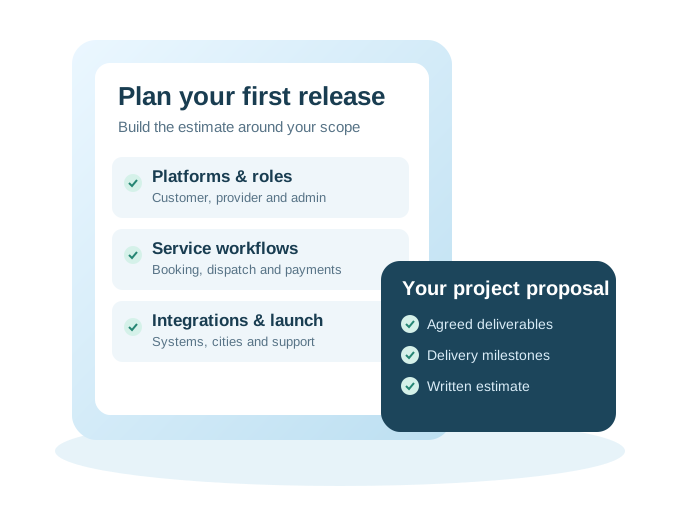
Features, roles, and release scope
iOS, Android, and web platforms
Booking, scheduling, and dispatch workflows
Provider approval and service quality controls
Payments and third-party integrations
UI/UX complexity and accessibility
| Planning scope | Best for and delivery boundary | Included in the scope | Usually separate | Delivery planning | Development price (USD) |
|---|---|---|---|---|---|
|
Planning scope 01 MVP home services app |
A service business validating one launch area and a tightly scoped booking workflow. Customer app or responsive booking website, provider workflow and lightweight web administration as agreed. |
Service catalogue, booking requests, customer details, basic provider assignment, notifications, payment integration and essential administration. | Advanced dispatch, additional cities, historical data migration, external service fees and custom integrations unless included in the proposal. | Approve the booking prototype, then build and test the first complete booking-to-payment journey. | USD 1,499 |
|
Planning scope 02 Mid-level home services app |
An operator connecting customers with multiple service providers across selected categories. Customer and provider mobile experiences with a shared backend and web operations dashboard. |
Provider onboarding, service areas, availability, booking allocation, revised estimates, commissions, refunds, reviews and operational reporting. | Complex multi-city rules, bespoke AI models, bulk migration, third-party usage and round-the-clock operations unless separately agreed. | Validate provider onboarding, assignment, commissions and refund scenarios before a controlled pilot. | USD 1,500–2,499 |
|
Planning scope 03 Advanced home services app |
An established platform expanding regions, modernizing existing systems or connecting enterprise operations. Agreed mobile, web, backend, integrations, reporting and administration scope. |
Architecture and capacity planning, city-specific coverage and pricing, custom dispatch rules, business-system integrations and a phased rollout roadmap. | Unspecified integrations, production migration, provider staffing, external licences and ongoing support beyond the written engagement. | Confirm integration access and any migration trial before scheduling a phased city or team rollout. | USD 2,500+ |
Planning note · Updated 9 October 2026: Each scope covers the agreed engagement boundary. The advanced package starts at USD 2,500; the final price follows the agreed scope. The written proposal identifies deliverables, review and acceptance milestones, payment timing, revision limits, responsibilities, and the change-request process. API and licence charges, cloud usage, store accounts, taxes, payment fees, service operations, legal reviews, maintenance, and marketing remain separate unless the written proposal includes them.
How We Turn Your Scope Into a Delivery Plan
A package price does not establish a launch date. A delivery date is agreed after reviewing the launch area, service catalogue, customer and provider platforms, assignment rules and integrations. The estimate separates prototype approval, development milestones, acceptance testing and release preparation. Client content, API access, payment-provider setup and app-store review are tracked as dependencies. New service categories, custom dispatch, data migration or delayed approvals can change the schedule; confirm any revised scope and dates before the next milestone.
1. Bring the inputs
Confirm the launch area, services, price rules, user roles and platforms. Share existing systems, required integrations, provider data and who will approve designs and acceptance tests.
2. Agree the outputs
The proposal should identify the booking prototype, feature backlog, integration list, milestone demonstrations, acceptance scenarios and release checklist, with an owner and review point for each.
3. Track dependencies
Payment onboarding, API access, client feedback, content, migration checks and store review can affect release timing. Re-estimate added features before changing the agreed milestone plan.
Worked Scope Example: One-Area Cleaning MVP
Illustrative planning example, not a client case study: one service area, three fixed cleaning packages, a responsive customer booking website, a provider job list and a web admin dashboard. The first release uses manual assignment, one payment integration and booking notifications. Separate native apps, automated dispatch, subscriptions and historical data migration are outside this example.
Acceptance checks: a customer can select a valid slot and address, complete a test payment and receive confirmation. Admin can assign and reassign a provider. The provider can accept and complete a job. Failed payment, unavailable provider and cancellation scenarios must also produce the agreed status, notification and refund records.
Price and schedule: the MVP package is USD 1,499 when the written proposal accepts this scope. Prototype approval comes first, followed by the complete booking workflow, acceptance testing and launch preparation. The proposal assigns dates after confirming integration access, content and review availability; additions require a revised estimate.
How We Build Your Platform
We move from product discovery and UX planning through development, testing, deployment, and post-launch optimization with clear review points at every stage.
Discovery & Market Research
Business analysis, competitor benchmarking, feature planning.
UI/UX Strategy
Wireframes, interactive prototypes, usability testing.
Agile Development
Customer and provider apps, booking APIs, dispatch workflows.
Quality Assurance
Functional testing, load testing, security validation.

Deployment
Cloud deployment and app store submission.
Post-Launch Optimization
User analytics monitoring and feature expansion.
Direct buyer answers
Questions Before You Build
Clear answers on cost, scope, platforms, AI dispatch, safety, ownership, and launch support.
What is home services app development?
Home services app development creates mobile and web software that connects households with service professionals. A typical platform combines a customer booking app, provider workflows and an admin dashboard for cleaning, repairs, installations and maintenance.
Can you build an app like Urban Company or Taskrabbit?
We can build a custom service marketplace with comparable categories of workflows, such as provider discovery, scheduling, quotations, payments and reviews. The product design, brand, operating rules and feature scope are tailored to your business.
How much does a home services app cost?
Digittrix home services app development pricing is USD 1,499 for an MVP, USD 1,500–2,499 for a mid-level app, and USD 2,500+ for an advanced app. All prices are in USD for the agreed development scope. The written proposal confirms platforms, user roles, features, integrations, delivery milestones and the final price. Advanced development starts at USD 2,500 and can increase with scope. Hosting, maps, messaging, payment-provider charges, app-store accounts, third-party licences, taxes and ongoing maintenance are separate unless expressly included.
How long does development take?
A delivery date is agreed after reviewing the launch area, service catalogue, customer and provider platforms, assignment rules and integrations. The estimate separates prototype approval, development milestones, acceptance testing and release preparation. Client content, API access, payment-provider setup and app-store review are tracked as dependencies. New service categories, custom dispatch, data migration or delayed approvals can change the schedule; confirm any revised scope and dates before the next milestone.
Will customers, providers and admins have separate panels?
Yes. We plan distinct customer, service-provider and administrator experiences, with permissions and workflows for each role. Depending on the scope, providers can use a mobile app or responsive portal, while operations teams use a web dashboard.
Can the app support recurring cleaning and maintenance plans?
Yes. Recurring schedules can include visit frequency, preferred time slots, provider availability, renewals, pause requests and cancellation rules. We define how missed visits, holidays and payment failures are handled before implementation.
Can customers track the assigned professional?
The app can show booking progress and, where included in scope, location updates while a provider is travelling to a job. Update frequency depends on device permissions, connectivity and the selected mapping services.
Can we approve extra work and revised estimates?
Yes. A provider can submit an inspection result or revised quotation for customer approval. The booking keeps a record of the approved scope and price before additional work proceeds.
Can we launch in multiple cities?
Yes. Service areas, local prices, provider coverage, opening hours and assignment rules can be configured by city or zone. We can phase the launch so your team validates operations in one market before expanding.
Can you integrate payments, CRM and accounting tools?
We assess available APIs and plan payment collection, refunds, notifications and agreed business-system connections. Provider payouts, settlement rules and reconciliation are scoped around your payment provider and operating model.
Can you modernize an existing home services app?
Yes. We review the existing code, integrations, data and operational issues, then propose a phased improvement plan. Migration includes agreed field mapping, trial imports, validation and a rollback plan.
Who owns the source code and what support is available?
The written agreement defines source-code handover, third-party licences and account ownership. It also sets the defect-fix period, maintenance responsibilities, support hours and the process for future enhancements.
How is a high-volume home services platform planned?
We review peak booking times, concurrent customer and provider sessions, notification volume, payment events and dispatch updates. Capacity targets are agreed through infrastructure planning and load testing, with monitoring and recovery procedures for the operating team.
Research before you scope
Planning Guides & Related Services
Use these planning guides to compare product scope, features, frameworks, monetization, market examples, and delivery partners before finalizing the roadmap.
India headquarters · global delivery
India-Based Team, Global Delivery
Digittrix has its India office in Mohali, Punjab, and provides remote home services app development for businesses in the United States, United Kingdom, Canada, Australia, and New Zealand. Review our Mohali office and contact details to plan a consultation. Delivery plans account for time-zone overlap, localization, currencies, service areas, payment availability and provider operations. Launch requirements are agreed for each market before implementation.

India
Mohali-based product discovery, UI/UX, engineering, QA, release preparation, and post-launch planning for Indian and international businesses.

USA & Canada
Remote delivery planning for North American products, including agreed time-zone overlap, subscriptions, service operations, privacy requirements, and store readiness.

Australia & New Zealand
Remote product and engineering support with launch-region planning, localization, payment options, communication services, and operating handover considered in the written scope.

United Kingdom
Remote delivery for UK-facing home services and service booking products with privacy-by-design, operations, provider verification, platform policy, and localization requirements identified early.
Service Platform Delivery Evidence You Can Verify
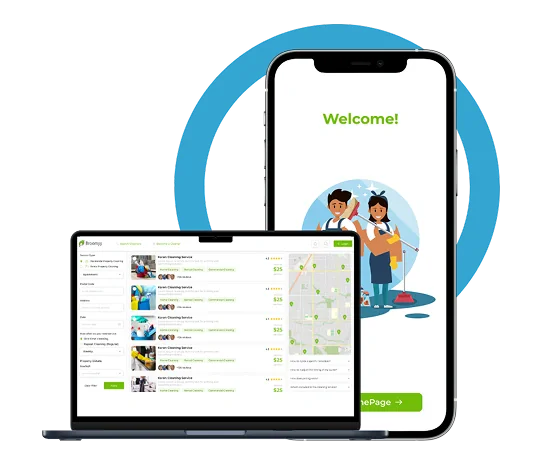
The cleaning app record shows a published service product walkthrough. The supporting records demonstrate communication workflows and two-sided mobile and web delivery across Digittrix’s broader portfolio.
A Connected Cleaning App & Website
Explore the cleaning app gallery, mobile and web technology details, and integration examples in Digittrix’s published project walkthrough.
- Android & iOS
- Website
- Payment integration
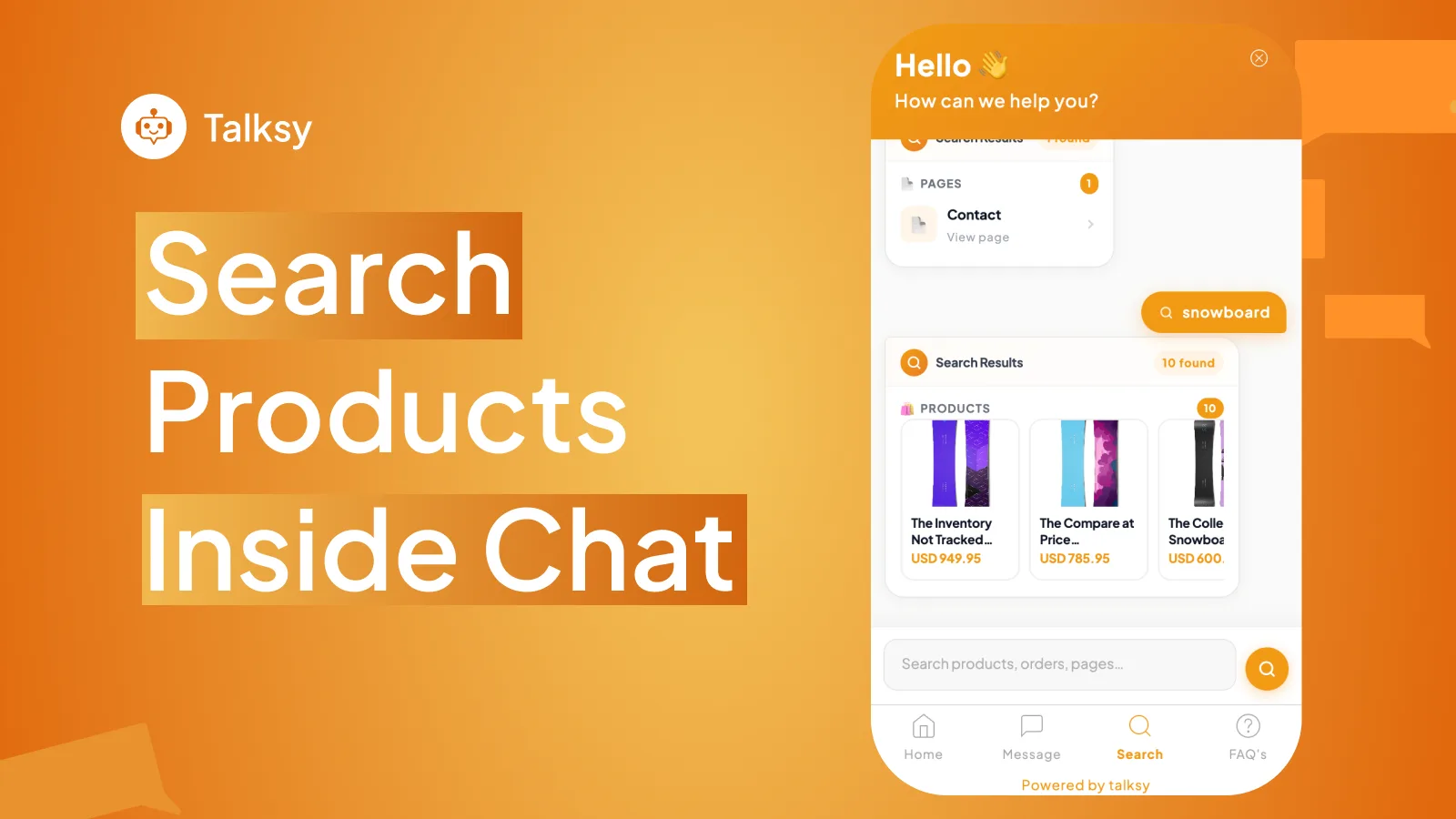
Talksy — real-time communication evidence
Digittrix developed Talksy, a live Shopify product with agent chat, product search, FAQ management, chat history, alerts, and operator workflows.
- Real-time chat
- Alerts and history
- Operator workflows

HappyFidos — two-sided mobile and web delivery
The HappyFidos director’s GoodFirms review names Digittrix’s website, mobile app, and UI/UX delivery for a platform connecting dog parents with sitters.
- Two-sided marketplace
- Mobile and web
- UI/UX delivery
The cleaning app walkthrough presents published product screens and delivery details. Talksy and HappyFidos demonstrate transferable communication and marketplace capabilities; they are broader portfolio references, not home repair client projects. No unverified adoption figures, revenue results or client outcomes are claimed.
Ready for a practical roadmap?
Start Your Home Services App Development Project Today
Tell us your audience, preferred platforms, dispatch model, communication features, operations approach, launch region, and target timeline. We can turn that input into a discovery plan and written scope for a home services app, service booking website, or connected platform.
Where we work: India, the United States, the United Kingdom, Canada, Australia, and New Zealand.