Chat with us
On-demand product engineering for mobile, web and operations

Custom On-Demand App Development Company

Digittrix provides custom on-demand app development services for connected customer, service-provider, operations, and administrator experiences. As an on-demand mobile app development company, we cover product discovery, UX design, mobile and web engineering, real-time booking or dispatch, payments, integrations, testing, launch, and ongoing support.

  • Since 2014Product delivery experience
  • 3 WorkspacesCustomer, provider and admin
  • Scope-ledWritten milestones and acceptance
Illustration of a connected on-demand delivery and service marketplace app

Business Challenges Our On-Demand App Development Services Solve

As an experienced on-demand app development company, we turn disconnected service workflows into governed, real-time digital platforms.

Delayed service delivery icon
Delayed service delivery
Lack of real-time tracking icon
Lack of real-time tracking
Poor customer experience icon
Poor customer experience
Inefficient order management icon
Inefficient order management
Disconnected user and vendor systems icon
Disconnected user and vendor systems

A scoped delivery plan should define usability, capacity, and performance targets for the expected workflows and demand. Those targets should be tested against the agreed environments and release plan.
Instead of relying on manual or disconnected workflows, companies can use a unified mobile platform to coordinate requests, providers, and operational updates. Depending on adoption and business operations, this can support efficiency, customer experience, and new revenue models.
On-demand app development is not just about building an app — it’s about creating a digital ecosystem that connects demand with supply and can support a growing service operation.

Key functionalities include

  • Real-time booking and scheduling
  • Live tracking and notifications
  • Secure payment integration
  • Ratings and reviews
  • Order and service management
Buyer planning guide

On-Demand App Development Cost, Timeline and Scope

Compare three on-demand app development budgets in USD. Choose the planning path that fits your launch. The agreed roles, workflows, platforms, integrations, and release responsibilities determine the final scope and delivery schedule.

Indicative development budgets in USD for the agreed scope. Listed features are representative, not guaranteed packages. The USD 2,999+ bracket is open-ended, not a fixed price for the full ecosystem. Third-party and ongoing charges are separate unless agreed. The written proposal confirms the final scope, price, schedule, and commercial terms. Reviewed .
Planning path Best fit and user roles Representative delivery scope Development budget and schedule
Scope path 01 Focused marketplace MVP Best for: One service category, one launch region, and a tightly prioritised first release.
Roles: Customer, provider, and administrator
Platforms: Customer and provider workflows plus responsive web administration; exact platforms are confirmed in discovery.
Can include: Discovery, core request or booking flow, provider acceptance, status updates, one payment path, notifications, essential administration, QA, and release preparation.
Usually separate: Custom dispatch optimisation, complex migration, multiple regions or languages, formal compliance audits, and third-party usage fees unless included in the written proposal.
Budget: $1,499 USD
Schedule: A release schedule is set after discovery confirms the backlog, dependencies, and approval plan.
Scope path 02 Connected multi-role platform Best for: A growing operation that needs richer customer, provider, support, and administrator workflows.
Roles: Customer, provider or driver, operations or support, and administrator
Platforms: Agreed mobile apps and web operations panels, supported by APIs and selected third-party services.
Can include: Scheduling, live status or tracking, rules-based matching, chat or calling, commissions or payouts, reporting, supported integrations, QA, and staged release support.
Usually separate: Unsupported legacy connectors, large data migration, proprietary vendor licences, formal certification, 24/7 operations, and ongoing cloud or transaction charges.
Budget: $1,499–$2,999 USD
Schedule: A phased schedule is set after workflow and integration discovery.
Scope path 03 Multi-city or regulated ecosystem Best for: A multi-region, multi-brand, high-volume, or regulated service marketplace with an evolving roadmap.
Roles: Customer, provider, dispatcher, support, finance, analyst, and multi-level administrator as required
Platforms: A custom mobile and web ecosystem with role-based operations, reporting, and deployment environments.
Can include: Service zones, regional rules, permissions, dispatch controls, settlement workflows, observability, audit trails, resilience planning, localisation, and staged rollouts.
Usually separate: Legal certification, third-party charges, hardware, operations staffing, guaranteed load targets, and 24/7 service levels unless explicitly contracted and tested.
Budget: $2,999+ USD
Schedule: A phased roadmap follows architecture, workload, regional, and compliance discovery.

On-Demand and Marketplace App Development Cost Factors

  • Number of customer, provider, dispatcher, support, finance, and administrator roles
  • Native iOS/Android, cross-platform, responsive web, and operations-panel requirements
  • Booking, scheduling, dispatch, live tracking, chat, payments, and settlement complexity
  • Third-party APIs, legacy migration, regional rules, localisation, and compliance work
  • Expected peak demand, resilience targets, QA depth, rollout plan, and support coverage

Which costs may continue after launch?

  • Cloud hosting, storage, monitoring, backups, and content delivery
  • Maps, SMS, email, identity checks, chat, calling, and other usage-based services
  • Payment, payout, refund, chargeback, currency-conversion, and transaction fees
  • App-store accounts, vendor licences, taxes, content operations, and support staffing
  • Maintenance releases, security updates, enhancements, and any contracted SLA

Need an early planning number? Use the calculator for a directional starting point, then validate it against a written proposal before making a budget decision.

What you receive

What Does an On-Demand App Engagement Deliver?

The signed proposal or agreement is the source of truth for delivery. A typical project can cover the following outputs, with the exact platforms, files, environments, accounts, acceptance criteria, and exclusions listed before work begins.

Discovery package

Business and operating model, user roles, service blueprint, priority journeys, regional needs, risk and dependency log, product backlog, and estimate assumptions.

UX and product definition

User flows, wireframes, visual direction, reusable interface patterns, interactive prototype, edge cases, and review notes for the agreed customer and provider journeys.

Working software

Agreed mobile or web experiences, administration and operations tools, backend services, data model, supported integrations, source control, and demonstrable increments.

QA, release, and handover

Test scope and results, defect tracking, release candidate, deployment or store-submission responsibilities, production notes, access handover, documentation, and support boundary.

Delivery process

Which Deliverable Is Approved at Each Stage?

The delivery plan can define a buyer-visible output or decision gate for each stage. Some activities can overlap; the written roadmap identifies dependencies and the party responsible for approval.

  1. 01

    Discovery and service blueprint

    Approve the problem, roles, journeys, service zones, constraints, success measures, assumptions, and priority backlog.

    Gate: agreed scope direction
  2. 02

    Architecture and release plan

    Review platform choices, data and integration map, environment plan, risks, release slices, estimates, and acceptance approach.

    Gate: delivery baseline
  3. 03

    UX, UI, and prototype

    Validate the core customer, provider, dispatcher, and admin flows before expensive implementation decisions become difficult to change.

    Gate: approved experience
  4. 04

    Build and integrations

    Inspect working increments, integration behaviour, data states, errors, and backlog decisions through demonstrations agreed in the delivery plan.

    Gate: feature acceptance
  5. 05

    QA, security checks, and pilot

    Run agreed functional, device, integration, permission, performance, recovery, and user-acceptance checks; close release blockers.

    Gate: release candidate
  6. 06

    Launch and handover

    Complete the agreed deployment or store steps, production configuration, documentation, access transfer, monitoring setup, and support plan.

    Gate: launch acceptance
Commercial choice

Which Engagement Model Fits the Product?

Choose the model based on how stable the backlog is. Digittrix publishes project-based proposals plus separate hourly, fixed-term, and dedicated hiring options; availability for an on-demand scope is confirmed after review. The final proposal must state the model, rates or budget, milestones, invoicing, change process, client responsibilities, intellectual-property terms, and termination conditions.

Fixed-scope MVP

Best when the journeys, integrations, and acceptance criteria are stable.

  • Budget and milestone schedule agreed in the proposal
  • Defined inclusions, exclusions, dependencies, and approvals
  • New or changed scope follows the written change process

Phased hourly or time-and-materials roadmap

Best when discovery continues and priorities may change between releases.

  • Capacity, reporting, and spend guardrails agreed up front
  • Backlog and release priorities reviewed at a defined cadence
  • Integration risk can be resolved before later phases are committed

Dedicated delivery team

Best for continuous development, scale work, and a rolling product roadmap.

  • Named role mix and capacity documented for the engagement
  • Client product owner governs priorities and timely approvals
  • Governance, continuity, replacement, and exit terms are written
Five connected product layers

On-Demand Mobile Apps and Platforms We Build

Our on-demand app developers plan customer, provider, administration, automation, iOS, Android, and web workflows around the agreed service model, integrations, and release scope.

Customer Applications

Give customers a clear path from discovery and booking through payment, live updates, completion, and feedback.

  • Profiles
  • Real-time booking
  • Tracking
  • Payments
  • Ratings
Plan this app
Industry workflows

On-Demand App Development Solutions by Industry

Each industry needs a different on-demand app solution. Digittrix defines the scope around the selected service workflows, operating rules, user roles, integrations, and launch market.

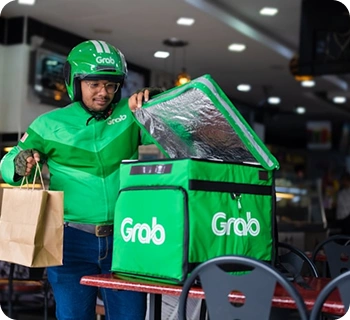
Food delivery courier collecting an order from a restaurant

Food Delivery

On-demand food delivery app development for ordering, restaurant operations, driver dispatch, live tracking, and real-time order updates.

Doctor using a smartphone for an on-demand healthcare consultation

Healthcare

Doctor on-demand app development for appointment booking, telemedicine, patient workflows, consultations, and supported medicine-delivery integrations.

Taxis in city traffic for an on-demand transportation service

Transportation & Taxi

On-demand taxi booking app development for rider and driver apps, dispatch, live tracking, fare calculation, and route optimisation.

Home services technician repairing plumbing for a scheduled booking

Home Services

On-demand home services app development for cleaners, handymen, plumbers, laundry teams, car-wash operators, and other scheduled professionals.

Courier carrying parcels for e-commerce and delivery orders

Grocery & Delivery

On-demand grocery app development and on-demand delivery app development for catalogues, orders, inventory, fulfilment, driver workflows, and live delivery updates.

Beauty and wellness products for salon booking services

Beauty & Wellness

On-demand beauty app development for salon, wellness, massage, at-home services, appointment scheduling, and provider management.

Warehouse team sorting parcels for logistics and courier delivery

Logistics & Courier

On-demand logistics app development for courier dispatch, shipment tracking, delivery scheduling, route optimisation, proof of delivery, and real-time updates.

Connected operations

On-Demand Integration Services

Disconnected systems can hinder operations and the user experience. Integration work is designed to connect the app with the third-party platforms confirmed in scope.

We integrate with:

The integration plan defines data ownership, supported actions, error handling, retries, monitoring, and agreed performance tests. Outcomes depend on both the app and the availability, limits, and behaviour of each third-party service.

On-demand app integration dashboard illustration
Payment gateways icon

Payment gateways

GPS and mapping services icon

GPS & mapping services

CRM systems icon

CRM systems

E-commerce platforms icon

E-commerce platforms

Cloud infrastructure icon

Cloud infrastructure

Third-party APIs icon

Third-party APIs

Technology blueprint

On-Demand App Technology Stack

The final stack is selected against the agreed platforms, workflows, device capabilities, integrations, performance targets, team needs, and maintenance plan.

Architecture layers

Technology choices are finalized during discovery against product scope, security, integration, ownership, and operational requirements.

01 · Experience layer

Frontend & Mobile

Responsive web, cross-platform, and native interfaces for customers, providers, dispatchers, and administrators.

4 technologies
React.js icon for frontend web development

React

Flutter icon for cross-platform mobile app development

Flutter

Swift icon for native iOS app development

Swift

Kotlin icon for native Android app development

Kotlin

02 · Services & logic

Backend APIs

Application services for booking, dispatch, availability, pricing, payments, notifications, reporting, and administrative workflows.

5 technologies
Node.js icon for scalable backend development

Node.js

PHP icon for server-side scripting

PHP

Laravel PHP framework icon

Laravel

Python icon for backend logic and AI integration

Python

CodeIgniter PHP framework icon

CodeIgniter

03 · Storage & sync

Data Layer

Relational, document, and real-time data services selected around consistency, operational reporting, synchronization, retention, and migration needs.

5 technologies
MySQL relational database icon

MySQL

MongoDB NoSQL database icon

MongoDB

PostgreSQL relational database icon

PostgreSQL

Google Firebase real-time database icon

Firebase

MariaDB database icon

MariaDB

04 · Scale & release

Cloud Delivery

Hosting, containers, deployment, observability, backup, and release workflows planned around the agreed environments and ownership model.

5 technologies
Microsoft Azure cloud services icon

Microsoft Azure

Docker containerization platform icon

Docker

Google Cloud Platform services icon

Google Cloud

Vercel deployment platform icon

Vercel

Netlify web hosting and automation icon

Netlify

05 · External systems

Payment Integrations

Payment providers are selected by market, currency, transaction model, refunds, payouts, reconciliation, and compliance responsibilities.

4 technologies
Stripe payment gateway integration icon

Stripe

Razorpay payment solution icon

Razorpay

PayPal global payment gateway icon

PayPal

Cashfree payments integration icon

Cashfree

Selected work

On-Demand App Development Case Studies

See the product need, Digittrix’s documented role, customer and operator workflows, and the evidence behind each project.

Case studies reviewed

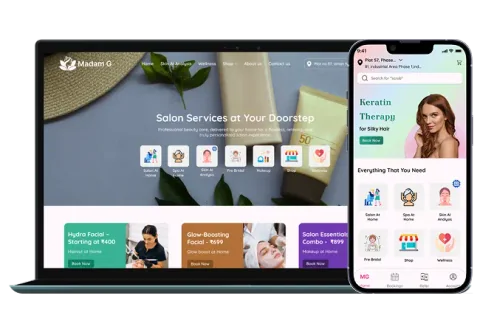
MadamG website and customer mobile app shown on laptop and phone screens
At-home services marketplace Website and App Store attribution

MadamG — on-demand beauty and home-service booking

At-home beauty booking across a customer website and separate customer and professional apps, with public Digittrix development attribution.

Digittrix’s documented role

The live MadamG footer credits “Design and Developed by Digittrix”. Apple lists Digittrix Infotech Private Limited as the developer of both the customer and beautician apps.

Product need
Help customers arrange at-home services while giving beauty professionals a separate workspace for appointments and clients.
Documented workflow
Customers discover services and book appointments. The professional-app listing describes booking updates, appointment and client management, service tracking, and earnings visibility.
Observable outcome
A live customer website and two role-specific iPhone app listings provide inspectable evidence of the product family and its Digittrix attribution.
  • Service discovery and booking
  • Customer and professional apps
  • Appointment and earnings management
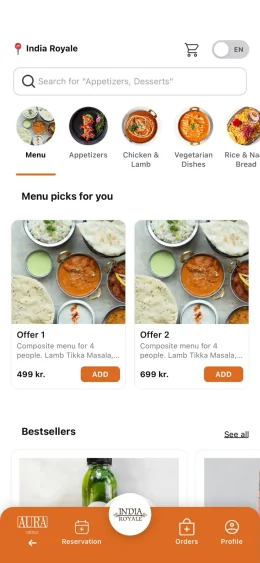
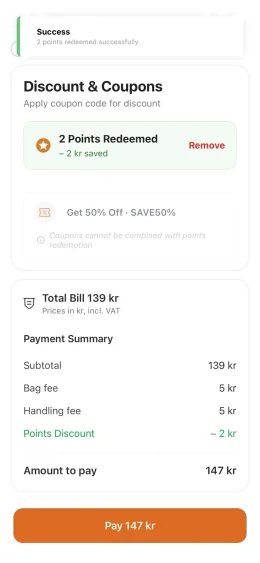
AuraDinings customer app showing the restaurant menu, food categories and ordering navigation AuraDinings checkout showing loyalty-point redemption and an itemised order summary
Restaurant ordering platform Customer and admin product walkthroughs

AuraDinings — food ordering and restaurant operations

Restaurant ordering with menu, cart, checkout, loyalty and order-history screens, plus a related restaurant administration workspace.

Digittrix’s documented role

Digittrix confirms website, mobile app and customer-ordering development. The case study contains actual customer and admin screenshots and privacy-edited recordings supplied by Digittrix.

Product need
Connect customer ordering with the restaurant’s menu, pricing and order-status tasks.
Documented workflow
Customers browse dishes, review cart and rewards, and inspect order details. Restaurant staff can edit menu products, prices and categories, and choose from the displayed order statuses.
Observable outcome
Seven customer screenshots, three admin screenshots and two walkthroughs document the customer and staff interfaces. These show product capabilities, not measured commercial results.
  • Menu, cart and checkout
  • Loyalty and order history
  • Restaurant administration
Product decisions

Custom or White-Label? Native or Cross-Platform?

The right option depends on where the product must differentiate. Custom on-demand app development can combine responsive web software with on-demand Android app development, native iOS delivery, or a shared Flutter or React Native codebase. Discovery should compare delivery speed with workflow fit, device needs, maintainability, vendor dependency, source access, data portability, and total operating cost.

Use these criteria to shortlist an approach; the architecture decision is recorded in the agreed scope.
Decision Choose the first option when Choose the second option when Confirm before signing
Custom build vs white-label base Custom: proprietary workflows, integrations, experience, or operating rules are central to the business. White-label: the workflow is standard and initial speed matters more than deep differentiation. Reused components, customisation limits, upgrade dependency, licence fees, source-code access, data export, and exit path.
Native vs Flutter or React Native Native: platform-specific UX, intensive device capability, specialised performance, or separate release plans justify separate codebases. Cross-platform: iOS and Android share most workflows and one release roadmap is more valuable than platform-specific implementation. Device APIs, background location, maps, payments, accessibility, performance tests, library support, release ownership, and long-term maintenance.
Operating model

Service Marketplace App Development for Real Operations

Marketplace app development starts with explicit operating rules—not a generic feature list. An online or B2B marketplace app development scope should show who can act, what changes each state, how matching, dispatch, commissions, and payouts work, what happens when an integration fails, and which decisions an operations team can override.

Matching and dispatch

  • Eligibility by service, zone, availability, capacity, credentials, and customer rules
  • Ranking or assignment by distance, price, priority, workload, or a defined rule set
  • Offer timeouts, acceptance, rejection, reassignment, batching, and manual dispatch
  • Fallbacks for unavailable providers, stale location, map failure, and delayed jobs

Multi-city control

  • Service zones, hours, catalogues, prices, taxes, currencies, and provider requirements
  • Regional permissions, support queues, promotions, content, and operational dashboards
  • Feature flags and staged rollout rather than changing every market at once
  • Metrics and alerts split by city, service, provider cohort, and workflow state

Commissions and payouts

  • Commission, subscription, listing, lead-fee, or hybrid monetisation rules
  • Authorisation, capture, platform fee, provider earning, tax, tip, and adjustment records
  • Payout eligibility, holds, schedules, failed transfers, reconciliation, and exports
  • Merchant-of-record, KYC, tax, gateway, and reconciliation ownership agreed before settlement design

Cancellations, refunds, and disputes

  • Time windows, actor-specific reasons, fees, partial fulfilment, and no-show rules
  • Full or partial refunds, credits, provider adjustments, and notification states
  • Evidence, support review, escalation, resolution, chargeback, and audit history
  • Client-approved end-user rules, administrator permissions, and exceptions separated from automation

Illustrative service lifecycle: requested → offered or assigned → accepted → en route or in progress → completed → settled, with explicit cancellation, expiry, refund, and dispute branches. The actual states depend on your operating model.

Revenue planning

How Can Your On-Demand Marketplace Earn Revenue?

Compare commissions, subscriptions, listing fees and lead fees. The right model depends on what customers buy, how often providers receive work, and which transactions your platform manages. These are marketplace revenue models, separate from Digittrix’s app development prices.

Compare how each model earns revenue, the operating costs to budget for, and the product rules to define. Actual fee rates and responsibilities depend on your business.
Revenue model How it works and when it fits Operating costs to plan for Trade-offs and product rules
Commission on bookings Retain a percentage or fixed fee from a completed booking or order. Can suit food delivery, beauty or home-service platforms that manage checkout and provider payouts. Payment processing, payouts, refunds, dispute handling, reconciliation, customer support and any delivery subsidies. Revenue depends on completed transactions. Define the fee base, treatment of tips and discounts, cancellation adjustments, payout timing and who absorbs each charge.
Subscription or membership Charge providers for recurring access to tools or customers for membership benefits. Can suit repeat-use services or providers who receive continuing value from the platform. Recurring billing, failed-payment recovery, onboarding, support, retention work and the cost of included member benefits. Recurring billing does not guarantee retention. Define plan limits, renewals, upgrades, cancellations, refunds and when paid access starts or ends.
Listing fees Charge to publish or renew a provider profile or service listing. Can suit directories and specialist marketplaces where providers value relevant visibility. Provider checks, content moderation, duplicate or stale listing removal, renewal reminders and traffic acquisition. A paid listing does not guarantee enquiries or bookings. Define publication duration, approval criteria, renewal consent and reporting that demonstrates listing value.
Lead or introduction fees Charge a provider for an eligible enquiry or introduction, whether or not it becomes a booking. Can suit quote-led repairs, home services or B2B service requests. Lead acquisition and qualification, spam screening, routing, duplicate detection, support and refund reviews. Providers bear the risk of non-converting leads. Define eligibility, shared versus exclusive leads, contact rules, spending limits and when an invalid lead qualifies for a refund.

Can you combine revenue models?

  • A provider subscription can include business tools alongside a lower per-booking commission.
  • Optional featured placement can supplement listings; label paid visibility clearly rather than presenting it as an earned rating or recommendation.
  • Show providers their total charges before signup. Define which fees stack, what a plan includes, and how cancellations or refunds affect each charge.
  • Start with rules your team can explain and reconcile. Add another model only when its value and operating costs are understood.

Illustrative booking economics (USD)

  • Example only: these hypothetical amounts are not recommended rates, customer results or Digittrix development prices. Taxes and tips are excluded.
  • Booking value: $100. A 15% platform commission is $15, leaving $85 for the provider before the provider’s own costs.
  • Platform variable costs: $6. Assume $3 payment processing, $1 messaging and transaction infrastructure, and a $2 support/refund allowance, all borne by the platform.
  • Contribution: $9 per booking ($15 − $6). This is before fixed costs, customer acquisition, taxes and any delivery subsidy—not net profit.

References for model definitions and payment workflows. Provider fees vary by product, market and account configuration; the example above does not quote a payment provider’s rates.

Risk planning

How Do Security, Privacy, and Compliance Enter the Scope?

Security is defined as testable controls; compliance depends on the sector and launch regions. The delivery plan should identify the data handled, responsible parties, required evidence, third-party dependencies, and who approves residual risk.

Identity and access

Authentication, verification, role and tenant boundaries, staff access, session handling, account recovery, privileged actions, and approval or escalation paths.

Data and integrations

Encrypted transport and storage where applicable, secrets and token handling, signed webhooks, input validation, data minimisation, consent, retention, deletion, and vendor review.

Reliability and evidence

Audit logs, backups and restore checks, monitoring, alerts, incident responsibilities, security testing, defect handling, release records, and agreed performance or recovery tests.

Compliance boundary

Privacy, payment, healthcare, identity, tax, accessibility, or sector requirements need explicit legal, technical, and audit scope. This page does not claim blanket certification.

Contract and handover

What Happens at Handover and After Launch?

The written agreement—not a general web-page promise—controls ownership and support. It should separate transferred custom deliverables from pre-existing or third-party components and separate any defect warranty from ongoing maintenance and SLA services.

Source code and IP

  • List the custom code, designs, documentation, data outputs, and other deliverables
  • State the payment and acceptance point at which agreed rights or access transfer
  • Identify pre-existing Digittrix components and their permitted use
  • Maintain an inventory of open-source and third-party licences and restrictions

Repository, environments, and accounts

  • Define repository access, branches, build instructions, release notes, and credentials
  • Record which party owns cloud, store, gateway, maps, messaging, and analytics accounts
  • Document environment configuration, secret-transfer process, backups, and runbooks
  • Agree training, knowledge transfer, outstanding risks, and exit assistance

Warranty and maintenance

  • Define any defect-warranty period, qualifying defects, exclusions, and reporting route
  • Price enhancements, OS or dependency updates, optimisation, and new integrations separately
  • Assign app-store, infrastructure, security-patch, and vendor-change responsibilities
  • Agree release cadence and acceptance rules for post-launch work

Monitoring and SLA

  • Name monitored services, dashboards, alert thresholds, and incident contacts
  • Define support hours, channels, severity levels, and response or restoration targets
  • List maintenance windows, dependencies, client duties, exclusions, and escalation steps
  • Do not assume 24/7 coverage or guaranteed service levels unless they are contracted
Delivery partner

Why Choose Our On-Demand App Developers?

Digittrix defines product scope, delivery decisions, and operating responsibilities so each on-demand app platform can support the agreed service model and roadmap.

Digittrix on-demand app development illustration

Custom Development Approach

Apps tailored to your business model

Scalable Architecture

Capacity, resilience, and performance targets defined for the agreed scope

Documented Process

Schedule, dependencies, reviews, and responsibilities recorded in the delivery plan

Post-Launch Planning

Maintenance and service-level options confirmed in the written support plan

Performance & Security Planning

Controls can be selected and tested for the product, data, and agreed launch regions

Verifiable delivery record

Delivery Evidence You Can Check

Explore working examples of customer communication, mobile service workflows and courier tracking. These products show capabilities relevant to building and operating an on-demand platform.

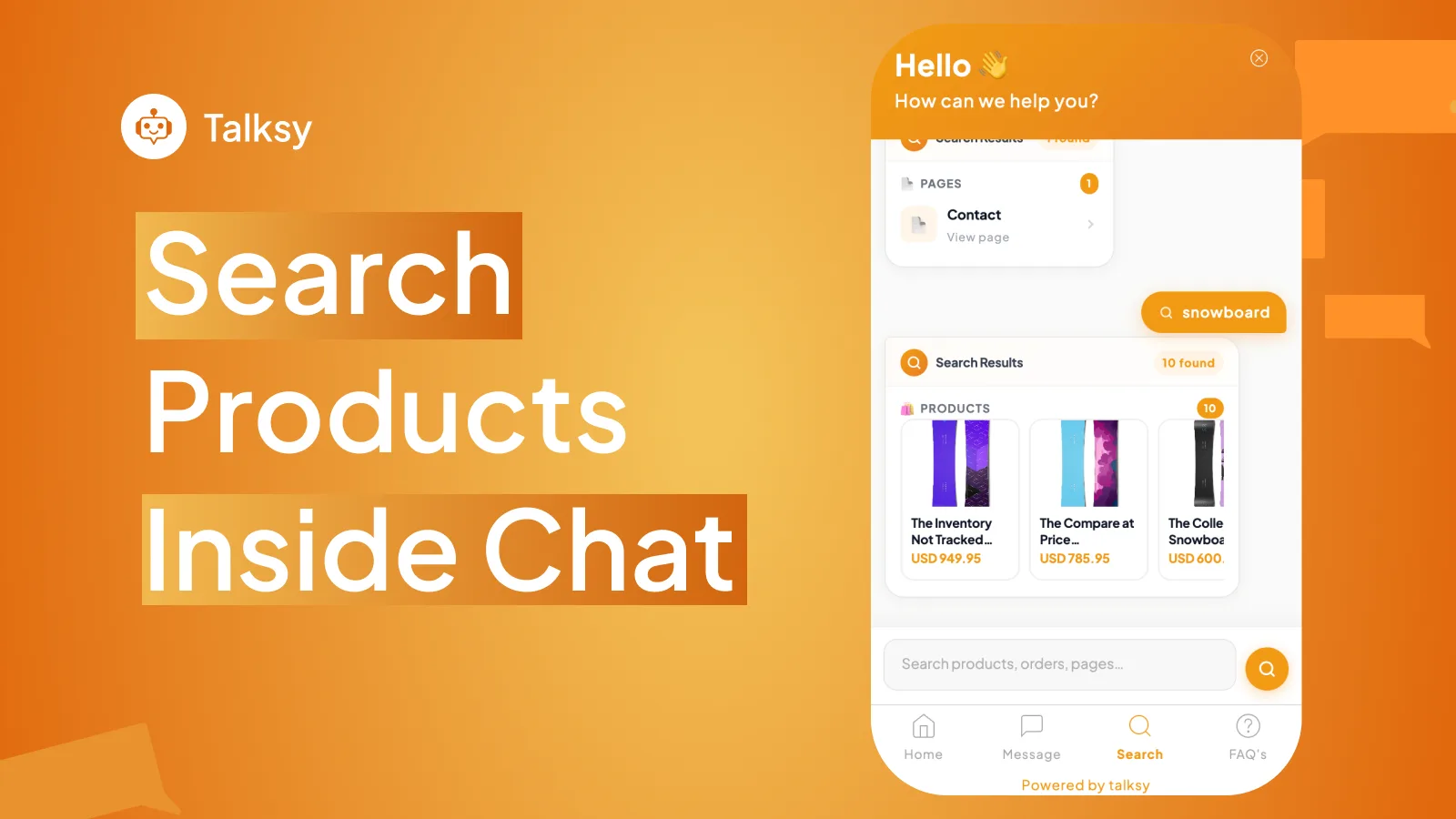
Talksy interface showing product search inside live chat
Live Shopify product Digittrix listed as the Shopify app developer

Talksy — real-time chat and product discovery

Talksy brings live chat, product search, FAQs and message notifications into one Shopify support widget. It demonstrates customer communication and discovery workflows relevant to service and delivery platforms.

  • Live customer chat
  • Product discovery
  • FAQs and notifications
Technical Chowkidar mobile app case-study cover with its shield logo
Connected service mobile app Published mobile-app case study

Technical Chowkidar — customer and service operations

The mobile app connects security-service access, patrol visibility, alerts and customer care. The case study shows how customer requests and physical service activity come together in a mobile workflow.

  • Customer service access
  • Patrol visibility
  • Alerts and support
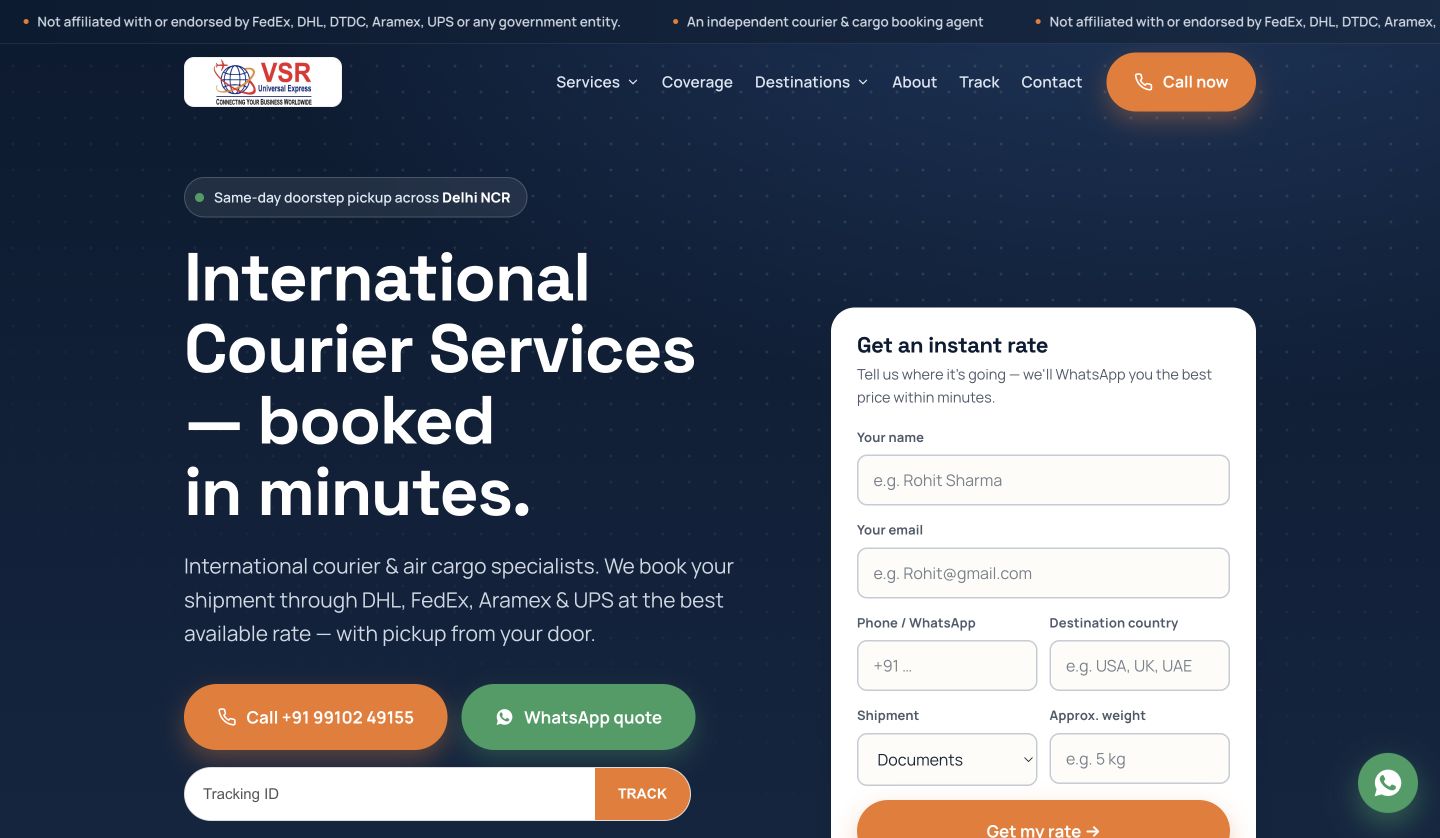
VSR Universal Express website with courier enquiry and shipment tracking controls
Courier web and mobile journeys Public website credit to Digittrix

VSR Universal Express — courier enquiries and tracking

A responsive courier website brings service discovery, shipment quote requests, contact handoffs and parcel tracking into clear desktop and mobile-web journeys.

  • Service discovery
  • Quote enquiries
  • Parcel tracking

Explore each product or case study for its documented scope and source material. Talksy is a Shopify app, Technical Chowkidar is a mobile service product, and VSR Universal Express demonstrates responsive web journeys.

Ready for a practical roadmap?

Ready to Create Your On-Demand App?

If you’re planning to launch or scale an on-demand platform, share your business requirements, challenges, and goals. Our team will review the service model and recommend an appropriate on-demand development approach.

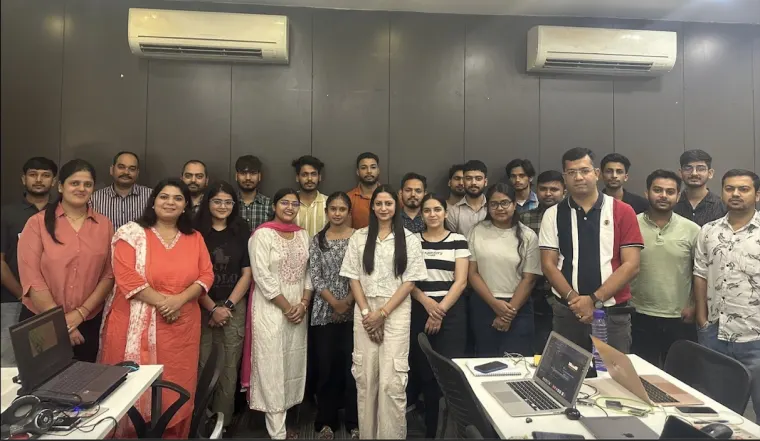
Digittrix product, design, engineering and QA team together in the office
Meet the team behind your build Product, design, engineering and QA working together.

On-Demand App Development Services and Cost FAQs

Direct answers on delivery, cost, timeline, platform choices, operations, security, ownership, and post-launch support.

The signed proposal or agreement identifies the exact deliverables. A typical engagement can include discovery outputs, UX and prototype files, agreed customer and provider experiences, a web administration panel, backend APIs, selected integrations, test and release artifacts, deployment documentation, and the agreed source-code handover.

Digittrix confirms the schedule after discovery defines the backlog, dependencies, review gates, and release responsibilities. A tightly scoped MVP can follow one initial release plan, while multi-role workflows, live tracking, custom dispatch, integrations, migration, compliance work, or multi-city rollout usually require phased delivery.

Digittrix offers three indicative on-demand app development budgets: USD 1,499 for a focused marketplace MVP, USD 1,499–2,999 for a connected multi-role platform, and USD 2,999+ for a multi-city or regulated ecosystem. These budgets apply to the agreed scope, not every listed feature. Platforms, roles, integrations, dispatch, payouts, migration, and compliance requirements can affect the final estimate. Third-party fees, cloud usage, taxes, and ongoing operations are separate unless explicitly included. A written proposal confirms the deliverables, final price, and schedule.

A stable MVP backlog can suit a fixed-scope proposal; an evolving product can suit a phased hourly or time-and-materials roadmap; and continuous delivery can suit a dedicated team. Availability for an on-demand scope is confirmed after review, and the proposal must state the model, rates or budget, milestones, invoicing, change process, responsibilities, and termination terms.

Custom development is better when your workflows, integrations, user experience, or operating rules create real differentiation. A white-label base can shorten initial delivery for a standard workflow, but the proposal should disclose reused components, customisation limits, upgrade dependency, source-code access, data portability, and recurring licence costs.

Cross-platform delivery can reduce duplicated work when iOS and Android share most workflows. Native delivery can be preferable for platform-specific experiences, intensive device capabilities, specialised performance, or separate release plans. Digittrix confirms the stack after reviewing product priorities, devices, integrations, budget, and maintainability.

Digittrix can scope custom on-demand application development across product discovery, UX design, customer and provider mobile apps, responsive web experiences, administration and operations panels, backend APIs, payments, mapping, notifications, testing, release preparation, source-code handover, and post-launch support. The exact on-demand development services, platforms, roles, integrations, and acceptance criteria are recorded in the proposal.

Yes, when the required marketplace workflows are included in scope. Service marketplace app development can cover customer and provider onboarding, catalogues or listings, matching, booking or ordering, commissions, payments, payouts, ratings, disputes, administration, and reporting. B2B marketplace app development may also require organisation accounts, approval rules, negotiated pricing, purchase workflows, invoices, permissions, and integrations. Product-led ecommerce marketplace requirements are assessed against Digittrix’s dedicated ecommerce app development service.

Yes, when these capabilities are included in scope. The design should define eligibility and ranking rules, service zones, availability and capacity, acceptance timeouts, reassignment, manual overrides, job states, regional catalogues and pricing, permissions, monitoring, and failure handling before implementation.

The scope can define authentication, role permissions, encrypted transport and storage, secrets and token handling, audit logs, consent and retention rules, backups, monitoring, and security testing. Regulatory and certification requirements depend on the sector and launch regions and require explicit technical, legal, and audit scope; this page does not claim blanket certification.

The written agreement should identify the custom code, design files, documentation, repository access, accounts, credentials, and other deliverables handed over, plus the transfer point after agreed payment and acceptance. Pre-existing Digittrix components and third-party or open-source software remain subject to the licences stated in the agreement.

The proposal should separate launch assistance and any defect-warranty period from ongoing maintenance, enhancements, monitoring, infrastructure operation, and service levels. Support hours, channels, severity definitions, response or restoration targets, exclusions, and fees are not assumed—including 24/7 cover—unless they are written into the support plan or SLA.