Chat with us
Travel websites, booking apps and admin tools

Travel Booking App Development Company

Digittrix is a travel app development company in India. We build websites and mobile apps where customers can explore packages, plan trips, request quotes or book through your travel suppliers.

Give your team the tools to manage enquiries, bookings, payments and customer updates in one place.

  • Since 2014 Software development experience
  • Mobile + Web Customer apps and admin tools
  • Supplier APIs Booking and payment connections
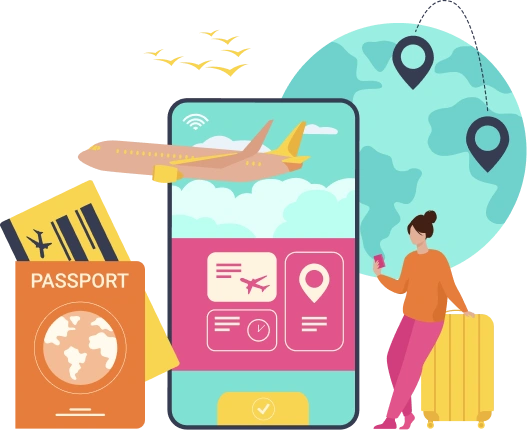
Illustration of a travel app with a map, flight and travel documents

Our Work Across Industries

These logos represent Digittrix projects across several industries. See the Garuda Travel World case study below for our travel website work.

HappyFidos brand logo
Dudar company logo
Swach Bharat mission logo
Amrutam brand logo
Broomy brand logo
Pongo company logo
GoodLives company logo
Zajel company logo
Satyamev Jayate logo
IKEA brand logo
O&M company logo
CarryOn brand logo
Kazo brand logo
Petovac company logo
Choose your travel product

Do you need enquiries, trip planning or online bookings?

An enquiry website helps customers find a package and ask your team for a quote. An itinerary app keeps their trip details together. A booking app also checks supplier availability, takes payment and confirms reservations. Choose the version that matches how you sell travel today.

Updated Digittrix team Prices and timelines below

Your customers
Browse packages, plan trips or book online
Your team
Manage enquiries, bookings and support
Your suppliers
Connect the services you already sell
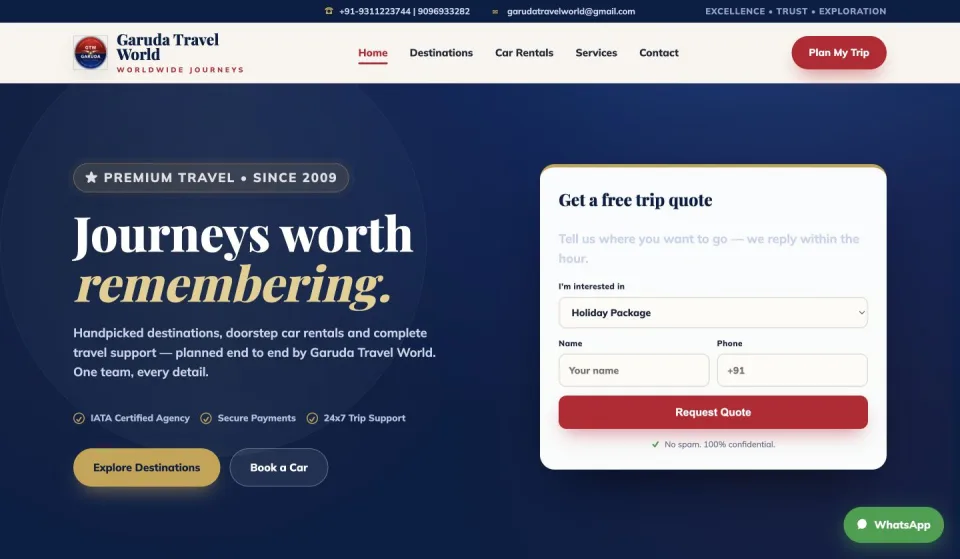
Garuda Travel World website project
Travel website and content management

Garuda Travel World

Garuda Travel World uses its website to showcase destinations and tour packages. Visitors can read itineraries and request a trip quote. The website credits Digittrix for design, development and promotion.

The project covers a responsive travel website, content management and customer enquiries. Read the case study to see the work delivered.

Explore the travel website case study
Features for your travel business

What can your travel app include?

Choose the features you need to sell trips and manage customers. You can start with enquiries and add online booking when your supplier accounts are ready.

Travel booking engine

Let customers search available trips, see the current total price and make a reservation. Track each booking from payment through confirmation or cancellation.

Tour package website

Publish destinations, itineraries, inclusions and prices. Collect trip requirements through enquiry forms so your team can prepare a quote.

Travel CRM and admin dashboard

Keep enquiries, quotes and customer details together. Assign leads to agents and see which follow-ups or bookings need attention.

Itinerary planner app

Give travellers a day-by-day plan with hotel details, transfers, activities, vouchers and important updates in one place.

Agent or supplier portal

Give agents access to the trips and prices they can sell. Let authorised suppliers update availability and manage assigned reservations.

AI travel assistant

Help travellers find packages and draft itineraries from your own travel content. Check availability and prices with the booking supplier before taking a reservation.

Travel app UI and UX design

A sample booking journey

These example screens show how a traveller could find a trip, check the details, pay and view their booking. We design the actual screens around your packages and booking process.

  1. 01 / Discover
    PLAN YOUR NEXT TRIP

    Find your getaway

    Destination · dates · travellers

    Goa escape 3 nights · hotel + experiences
    Kerala discovery 5 nights · a tailored itinerary
    Explore available trips →

    Search by destination, dates and number of travellers.

  2. 02 / Compare
    YOUR TRIP, IN DETAIL

    Know what is included

    • Day-by-day itinerary
    • Room and transfer options
    • Cancellation conditions
    Availability check Recheck supplier rates before checkout
    Review your selection →

    Explain price changes and unavailable options before payment.

  3. 03 / Checkout
    REVIEW AND PAY

    Review your booking

    Traveller details Only information needed for the booking
    Fare + taxes + fees One itemised total in the chosen currency
    Continue to secure payment →

    Show supported payment methods and explain what to do if a payment fails.

  4. 04 / Manage
    BOOKING STATUS

    Stay informed

    Payment received Supplier confirmation tracked separately
    Your trip documents Vouchers appear after confirmation
    View itinerary and support →

    Show whether a booking is confirmed, pending or cancelled, and how to get help.

Illustrative designs only. For a quote-based business, the final step would be an enquiry form followed by a response from your travel team.

Who we build for

Travel businesses we can build for

A tour operator needs different tools from a hotel or a corporate travel team. We start with how your business sells and manages travel.

Travel agencies

Let customers browse packages and request quotes. Give agents one place to assign enquiries, send prices and follow up.

Tour operators and DMCs

Manage departure dates, group sizes, itineraries and local suppliers. DMCs (destination management companies) can organise hotels, transfers and activities for each trip.

Online travel agencies

Bring flight, hotel or activity search and booking into one website or app, using suppliers your business is authorised to sell.

Hotels and accommodation teams

Show room types, rates and availability from your reservation system, and let guests manage their bookings.

Corporate travel teams

Let employees request trips and managers approve them. Track spending against company travel policies.

Travel startups

Test an idea such as a trip planner or activity-booking app with a small first version, then add features based on customer use.

Customer, agent and admin access

Who uses the app?

Customers need a simple way to book. Your staff need control over prices, customer records and booking issues. Each account gets access to the tools it needs.

Travellers

Browse trips, save favourites, request a quote or book online. View payment status, travel documents and support options in their account.

Agents and suppliers

Prepare quotes, manage assigned bookings and update the information they are allowed to change. Agent markups and access can differ by account.

Your operations team

Manage packages and staff access, check bookings that need attention, match payments to orders and review sales reports.

From search to support

What happens from search to confirmation?

A successful payment does not always mean a confirmed reservation. The app must track both and explain what happens if a supplier rejects or delays a booking.

  1. Search and compare

    A traveller chooses dates and a destination, then compares available options, inclusions and cancellation terms.

  2. Check the current price

    Before checkout, ask the supplier for the latest price and availability. If either changes, show the update and let the traveller decide whether to continue.

  3. Take payment and confirm

    Match the payment to the booking and wait for supplier confirmation. If payment succeeds but the reservation fails, show the actual status and a clear support or refund path.

  4. Manage the trip

    Give the traveller access to vouchers and itinerary updates. Handle change and cancellation requests under the terms of the booked service.

API and payments

Travel APIs and payment integrations

APIs let your app exchange information with travel suppliers. A global distribution system (GDS) can provide flight availability and reservation services. The right connection depends on what you sell and which supplier accounts you have.

Swipe to compare all columns →

Examples of services your app can connect to, subject to account access and provider approval.
Connection What it connects What we need to confirm
Flights Connect to Amadeus, Sabre, Travelport or another supplier for flight search and booking. Your approved supplier account, available routes, booking permissions and test access.
Hotels Connect hotel availability and rates to your existing reservation system or a hotel supplier. Who supplies the rooms, which rate plans apply and how changes and cancellations work.
Payments and refunds Connect a suitable gateway, such as Razorpay, Stripe or PayPal, to take payments and track refunds. A merchant account, supported currencies, settlement terms and the refund process.
Maps and messages Show locations and send booking confirmations or trip updates by email, SMS or push notification. Provider accounts, usage charges and customer notification preferences.
CRM and reports Pass enquiries and booking updates to your customer-management system. Which records to share, who can access them and which system keeps the main customer record.

Your business needs the relevant supplier and payment accounts. Providers set their own approval requirements and fees. The names above are possible integration options, not a list of Digittrix partners.

Before choosing a developer

How to compare travel app development companies in India

Ask each company to explain what you will receive for the quoted price. Use the same questions when comparing proposals.

Swipe to compare all columns →

Questions to ask when comparing travel app development proposals.
Topic What to check Digittrix approach
Booking features Does the quote include enquiries only, or live availability, payments, confirmed bookings and cancellations? We list the booking steps and supplier connections included in your estimate.
Agent and admin tools Can your staff assign enquiries, prepare quotes and resolve booking problems? We agree what travellers, agents and administrators can see and change.
Website and mobile apps Are web, Android, iOS and admin tools priced separately? What is included at launch? Your proposal lists the platforms, screens, testing and launch work.
Relevant past work Ask to see the actual product and find out what the company built. The Garuda case study covers a travel website and enquiry features. The logo strip shows work across other industries.
Development and running costs Does the price separate development from hosting, supplier fees, payment charges and maintenance? We list development fees and identify the separate services your business needs to pay for.
Ownership and support Who owns the code and accounts? Who fixes problems after launch? The agreement sets out code handover, account access, support hours and maintenance terms.

Ask for these details in writing before signing, especially what happens after launch and which costs are paid separately.

Cost and timeline

How much does a travel app cost?

The main difference is whether customers request a quote, organise a trip or make a live booking. Supplier integrations and the number of web or mobile platforms also affect the price.

Travel website and enquiry portal

Customers browse your packages and send trip requirements. Your team confirms availability and sends a quote.

What affects the price: Number of pages, package content and enquiry forms.

Travel MVP or itinerary app

A minimum viable product (MVP) is a first version with the essential features, such as saved trips and a day-by-day itinerary.

What affects the price: Chosen platform, screens, user accounts and connections to other services.

Supplier-connected booking platform

Customers check availability, pay and receive booking confirmation through connected travel suppliers.

What affects the price: Number of suppliers, booking rules, refunds and agent or admin tools.

Swipe to compare all columns →

Digittrix estimates for a defined first version. The final quote lists the features and services included.
Product Estimated cost (USD) Approximate cost (INR) Typical timeline Example inclusions
Travel website and enquiry portal $1,500–$3,500 Approx. ₹1.25–3 lakh 3–6 weeks Destination and package pages, enquiry forms, content editing, WhatsApp or CRM connections, analytics and basic admin tools.
Travel MVP app or itinerary product $3,500–$8,000 Approx. ₹3–7 lakh 6–12 weeks A customer app or responsive website, itinerary tools, saved trips, accounts, notifications, an agreed payment or enquiry option and admin tools.
Supplier-connected booking platform $8,000–$25,000+ Approx. ₹7–21 lakh+ 12–20+ weeks Booking features, agreed supplier or GDS connections, payment and refund tracking, agent or supplier accounts, admin reports, testing and launch support.

These estimates assume a limited first version built with reusable software components. Larger platforms and complex data migrations need a separate quote. INR amounts are approximate; your proposal confirms the price, currency and taxes.

Budget separately for: GST, hosting, supplier access, payment-gateway fees, maps, messages, software licences, maintenance and marketing, unless your quote includes them.

To keep the first version manageable, choose the platform and booking features your customers need most. Add more languages, suppliers or apps when the business needs them.

The timelines assume your content, design approvals and supplier access are ready. Supplier certification or app-store review can delay launch.

Read the travel app development cost guide
Delivery process

How we build your travel app

Review the designs and working features as the project progresses, with clear milestones for development, testing and launch.

  1. Understand your business

    Discuss what you sell, who books with you and how your team manages trips today. Agree the first version and budget.

  2. Design the screens

    Review the search, enquiry or booking screens before coding starts. Confirm what happens when a price changes or a booking fails.

  3. Build and connect

    Develop the website or app, admin tools and agreed supplier integrations. Review working features at each milestone.

  4. Test and launch

    Test bookings, failed payments, cancellations and user access. Prepare the hosting or app-store release and hand over the agreed documentation.

  5. Support after launch

    Fix issues covered by the support agreement, maintain supplier connections and plan later improvements.

Technology planning

Technology for your website and app

We choose technology to fit your required devices, supplier systems and maintenance needs. These are some of the options we discuss with you.

Web and mobile

React can power the website. Flutter allows shared development for Android and iOS, while Swift and Kotlin support separate native apps.

Mobile app development

Booking records and admin tools

Laravel/PHP or Node.js can run the booking and admin services, with PostgreSQL or MySQL storing records. Repeated requests must not create duplicate bookings or charges.

CRM and operational tools

AI for trip planning and support

An AI assistant can suggest itineraries or answer questions using your package information. Live prices, availability and booking confirmation still come from the supplier.

AI development services

Hosting and backups

Choose hosting for the expected traffic, with backups and monitoring. Frequently used search results can be cached to improve speed, but the latest price must be checked before booking.

Indian and international payments

Offer UPI, cards or other methods supported by your payment gateway. Show the total price, currency and taxes clearly, and keep customers informed about refunds.

Data protection and testing

Collect only the traveller details needed, protect supplier credentials and restrict staff access. Test interrupted payments, supplier errors and cancellation requests before launch.

Your proposal confirms the selected technology and the services your team will need to operate.

Explore travel app features and monetization to compare product options before deciding what belongs in your first release.

Starting or upgrading?

Start small, build custom or improve an existing app

The right approach depends on whether you are testing an idea, replacing manual work or improving software you already use.

A focused first release

Launch the essential features first, such as package enquiries or trip planning. Use customer feedback and booking data to decide what to build next.

A custom travel platform

Build around a business process that standard software cannot handle, such as custom agent pricing or bookings from several suppliers.

Improve an existing product

Start by reviewing the existing code and supplier connections. Prioritise problems such as failed bookings, slow screens or missing reports before adding features.

How will you earn revenue? The app can account for supplier commissions, booking fees or subscriptions. Decide how charges appear to customers and what happens to those fees when a trip is cancelled.

Maintenance and growth

Support after your travel app launches

Supplier systems change, apps need updates and customers need help when a booking goes wrong. Agree who handles these issues before launch.

Supplier and payment connections

Investigate failed supplier requests, missing payment updates and bookings awaiting confirmation. Update integrations when providers change their APIs.

App updates and performance

Fix agreed bugs, review crashes and slow screens, and test releases before publishing website or app updates.

Search visibility and content

Maintain destination pages, package details and FAQs. SEO and generative engine optimisation (GEO) support can help search engines and AI services understand this content.

Your support agreement should state: which bug fixes are covered, the support hours, response targets, contact person and maintenance fee. It should also explain how new features and supplier changes are charged.

Planning resources

Travel app development resources

Read more about budgeting, choosing features and marketing a travel business.

Questions clients ask

Travel app development FAQs

Practical answers about scope, supplier access, costs and ongoing support.

How much does travel booking app development cost in India?

Our estimates are $1,500–$3,500 USD (Approx. ₹1.25–3 lakh) for an enquiry website, $3,500–$8,000 USD (Approx. ₹3–7 lakh) for a basic travel or itinerary app, and $8,000–$25,000+ USD (Approx. ₹7–21 lakh+) for a supplier-connected booking platform. The cost table explains the included features. Your quote confirms the final INR price, taxes and separate running costs.

How does a travel enquiry portal differ from a booking app?

An enquiry portal collects trip requirements so your team can check availability and send a quote. A booking app lets the customer see current availability, pay and receive confirmation through a connected supplier. An itinerary app mainly organises trip details and does not need to sell bookings.

Can my travel app connect to flight and hotel APIs?

Yes, if the supplier provides the required API access and approves your account. We review its documentation and test access before confirming which search, booking, change and cancellation features can be included. Amadeus, Sabre and Travelport are among the options to assess.

Who provides supplier credentials and pays API fees?

Your business normally owns and pays for its supplier, payment and hosting accounts. You provide the access needed for development. We identify the required accounts and separate provider charges in the proposal.

How are price changes, failed payments and refunds handled?

The app rechecks the price before checkout and asks the customer to accept any change. Payment and supplier confirmation are tracked separately. If payment succeeds but a booking fails, the customer sees the actual status and a support or refund option. Refund eligibility and timing follow the supplier and payment-provider terms.

Can a platform support travel agents and direct customers?

Yes. Customers can book or enquire directly, while agents use separate accounts to manage quotes and bookings. You can set agent markups, restrict access to customer records and give administrators control over both.

How long does it take to build a travel app?

Allow roughly 3–6 weeks for an enquiry website, 6–12 weeks for a basic travel app, and 12–20+ weeks for a supplier-connected booking platform. These estimates assume the agreed designs, content and supplier access are ready. Additional features, supplier approval or app-store review can extend the timeline.

Which platforms, source-code rights and support are included?

These depend on the agreed package. Your proposal lists the website, Android or iOS app, admin tools, source-code handover and documentation included. It also states which accounts you own and what bug fixes or maintenance are covered after launch.

What AI features are useful in a travel app?

AI can suggest an itinerary, help find a suitable package or answer questions from your travel content. It should use supplier data for prices and availability, and must not invent booking confirmations. Customers should be able to check details and contact your team.

How should I compare travel app development companies in India?

Compare relevant work, the features and platforms included, supplier integration experience, code ownership, support terms and the total cost. Ask each company how it handles a paid booking that the supplier cannot confirm. Its answer will tell you more than a long feature list.

Plan your next release

Tell us about your travel business

Tell us what you sell, how customers book today and whether you need a website, Android app or iOS app. Share any supplier systems you already use so we can prepare a relevant estimate.