+91-8727000867
 +64 22 003 5555


Custom storefront
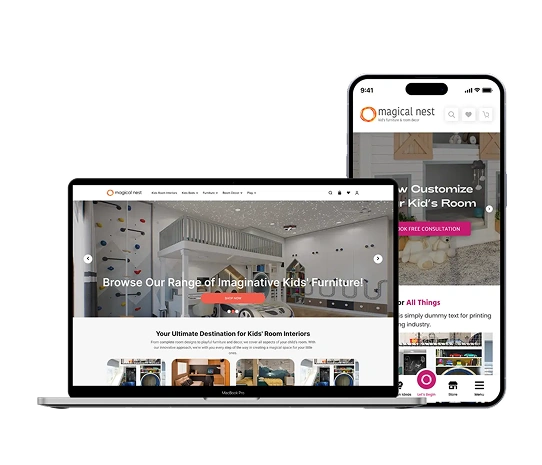
Motoscents Ecommerce Website
Explore the published website-development scope: product discovery, collections, account access, cart and public content for an automotive fragrance brand.
Read case study

Selected organizations represented in Digittrix's broader product portfolio. Explore the published work and client reviews.












An ecommerce development service connects the customer shopping experience with product, payment, inventory and order operations. As an ecommerce development company, we plan around your business model: one store, a B2B portal or a multi-vendor marketplace. Define the workflows and integrations required for the first release. Our mobile app development and web development services share the same planning and delivery process.
See published commerce projects, the delivered scope and the sources behind each case study.
Explore the published website-development scope: product discovery, collections, account access, cart and public content for an automotive fragrance brand.
Read case study
Review the published ecommerce website and search work, with project scope and supporting sources in the case study.
Read case studyYour business model determines the shopping experience and operational workflows. A single-brand store, subscription business, B2B portal or multi-vendor marketplace needs different pricing, fulfillment, refund and reporting rules. Define those responsibilities before choosing the platform or planning development.
Direct product sales connect a brand catalog with checkout and fulfillment
Marketplace commissions need clear seller, settlement and refund workflows
Subscriptions and memberships connect repeat orders with recurring billing
B2B ordering supports negotiated pricing, quotes and purchase approvals
Choose the product format closest to your roadmap. Our ecommerce developers connect storefronts, shopping apps, B2B portals, subscriptions and multi-vendor marketplaces with the customer, seller and administrator workflows each business needs.

Our custom ecommerce store development services connect product variants, collections, discounts, checkout and fulfillment for a single brand. Start with essential shopping journeys and extend the release around actual customer needs.

Bring multiple sellers into one shopping experience. Our ecommerce software development connects vendor onboarding, product moderation, order routing, commissions and settlement records.

Give business buyers a dedicated ordering portal with negotiated prices, minimum quantities, purchase approvals and repeat orders. Connect the portal to your ERP and stock systems.

Our online shopping app development company builds native or cross-platform applications around your catalog and customer journey. Compare device features, delivery scope and maintenance before selecting a framework.

Support recurring orders, memberships and service packages with clear billing, renewal, cancellation and account workflows. Define payment-provider capabilities and customer communications from the start.

Keep your website, shopping app and operational systems connected through shared APIs. Coordinate inventory, customer records and fulfillment across sales channels.
Our ecommerce design and development process starts with the customer journey. Ecommerce website design services and mobile UI design cover discovery, product selection, cart, checkout and order tracking. We review responsive prototypes, accessibility and payment states before engineering begins.
These conceptual frames show a possible shopping journey from discovery to checkout. They are planning examples, not screenshots of a delivered app. Final screens follow your brand, catalog, audience and accessibility requirements.
Search, categories, useful filters and clear availability connect shoppers with a relevant product.
Explore the collectionProduct discovery designed around the catalog and customer.
Images, variants, specifications, delivery information and transparent pricing support the buying decision.
Choose a variantProduct information and stock states before adding to cart.
Edit quantities, apply eligible offers and review delivery options without losing the shopping context.
Continue to checkoutA cart that keeps totals, discounts and availability visible.
Address, delivery choice, taxes, final total and the selected payment method in a clear sequence.
Confirm the orderOrder confirmation with tracking and a clear support path.
Creating an ecommerce website means connecting the storefront with customer accounts and operations. As a custom ecommerce website development company, we plan responsive pages, checkout and inventory around your business. Custom ecommerce web development connects those workflows through shared APIs.
Explore web development servicesResponsive, crawlable category and product pages with structured catalogs, useful content, product details and technical SEO foundations.
Registration, addresses, wishlists, carts, payments, order history, invoices, shipment tracking and return requests.
Catalog approval, stock, pricing, fulfillment, promotions, refunds, reporting and role-based access around shared APIs.
A complete ecommerce platform needs connected workflows for customers, sellers and administrators. The exact feature set follows your catalog, business model, payment methods and fulfillment process.


Connect the customer, seller and operations experience with the systems behind each product, payment and order. Ecommerce integration development defines data ownership, synchronization, retries and reconciliation around the agreed product scope.
Connect the selected payment gateway, checkout states, refunds and transaction reconciliation. Provider fees and merchant onboarding remain part of launch planning.
Connect serviceability, shipping rates, shipment creation and tracking. Account for failed deliveries, returns and status changes.
Agree where product, stock, pricing and order data originate. Handle synchronization, validation and recoverable integration failures.
Link customer records and service requests with platforms such as HubSpot, Zoho or Salesforce, according to the agreed integration scope.
Plan invoice, payment and order exports around your finance systems. Define reporting access and the business events that matter.
Use customer-approved notifications, email, WhatsApp or SMS for order updates. Measure discovery, checkout and repeat purchases with agreed events.
Agree the source of truth for products, prices, inventory and orders during discovery. Document payment states and integration failures, then test the critical journeys before launch. Security and privacy controls follow the agreed requirements and operating model.
Validate variants, stock, discounts, tax inputs and order totals. Define which system owns each record and how changes reach every storefront.
Account for failed, pending and duplicate payment events. Reconcile orders, refunds and settlements with the selected gateway.
Define stock reservations, cancellations, returns and retry handling so the website, app and operational systems agree.
Test critical shopping journeys, permissions, integrations, accessibility and device behavior before each planned release.
Plan encrypted transport, role-based access, retention, consent, backups and account controls around the agreed requirements.
Keep AI-generated descriptions and support suggestions reviewable. Pricing, stock and payment decisions should use authoritative business data.
Extend a working shopping journey with capabilities that fit the catalog and customer needs. Prioritize search, repeat purchases, communication and localization using product evidence rather than adding every feature to the first release.
Help customers explore the catalog with relevant filters, related items and recommendations based on agreed product data.
Plan translated content, regional formats and locale-aware shopping journeys for the markets you serve.
Send consent-based order, delivery and account updates with preferences and clear notification controls.
Support recurring orders, memberships and rewards with understandable renewals, billing and cancellation rules.
Build checkout, refund and payment-status workflows around the selected provider and operating region.
Choose technology around catalog complexity, platform requirements, integrations and ownership. The best ecommerce development platform is the one that fits the agreed product.
We confirm technology choices during discovery, including licensing, infrastructure and maintenance requirements.
React supports responsive storefronts; Flutter supports cross-platform apps. Swift and Kotlin suit native iPhone and Android ecommerce development.

React

Flutter

Swift

Kotlin
Choose Node.js, PHP, Laravel or CodeIgniter around your existing systems and product requirements. A Node.js based ecommerce platform or a PHP application still needs clear catalog, order and payment models.

Node.js

PHP

Laravel

CodeIgniter
Choose relational, document or real-time storage around catalogs, orders, inventory and reporting. Plan transaction integrity, backups and migration before selecting the database.

MySQL

MongoDB

PostgreSQL

Firebase

MariaDB
Select infrastructure around traffic, availability, security and operating costs. Controlled environments, release automation, monitoring and recovery belong in the delivery plan.

Microsoft Azure

Docker

Google Cloud

Vercel

Netlify
Connect the selected provider for checkout, refunds, subscriptions or marketplace settlements. Availability, merchant onboarding and provider fees depend on the business and launch region.

Stripe

Razorpay

PayPal

Cashfree
From custom ecommerce application development to ongoing store support, choose the delivery scope that fits your business. Review our published work and client reviews when selecting an ecommerce app development agency.
Our ecommerce mobile app development company connects iPhone and Android shopping to one backend. Ecommerce mobile app development services cover product discovery, carts, checkout, order tracking and customer accounts.
Custom ecommerce website development services for responsive storefronts, searchable catalogs and checkout. Our ecommerce web development services connect the website, inventory and mobile experience.
B2B ecommerce platform development for manufacturers, wholesalers and distributors. Support account pricing, bulk orders, quote approvals, purchase limits and buyer portals.
Multi vendor ecommerce website development with seller onboarding, catalog approval, commissions, order allocation and settlement workflows. Define each seller and administrator responsibility before the build.
Connect payments, shipping, inventory, ERP, CRM, accounting and notifications. Map data ownership, synchronization, retries and reconciliation around the systems your team already uses.
Work with an ecommerce development consultant on platform selection, migration and release planning. Every package includes six months of technical support. Ongoing ecommerce website management services can be scoped separately.
Catalog structure, buying behavior and fulfillment vary by industry. Plan the right product variants, search, pricing, stock and delivery workflows for the customers you serve.
The cost of developing an ecommerce website depends on catalog complexity, platforms, design, checkout rules, integrations and operational workspaces. Compare the scope before comparing prices.

Every package includes: Android app, iOS app, website, admin panel and six months of technical support.
| Package | Feature scope | Delivery timeline | Planning range (USD) |
|---|---|---|---|
| Starter Ecommerce Website + Apps | Standard catalog, cart, checkout, payment and shipping setup, and essential order controls. | Agreed after discovery | $1,499 - $2,499 |
| Custom Ecommerce Website + Apps | Custom UX, customer accounts, notifications and selected integrations. | Agreed after discovery | $2,500 - $3,499 |
| B2B or Marketplace Platform | Vendor or buyer roles, account pricing, approvals, inventory and deeper operational integrations. | Agreed after discovery | $3,499+ |
All ecommerce website development packages include the apps, website, admin panel and six months of technical support listed above. Confirm feature scope, timeline, taxes, hosting, licences, payment fees, data migration and any extended maintenance in the written proposal. For more detail, read our ecommerce website development cost guide.
A first-release scope, platform choice and custom build approach are different decisions. Agree the required workflows before comparing ecommerce website development packages.
Affordable ecommerce website development starts with clear priorities: essential catalog, checkout and order workflows first, then phased improvements.
Custom ecommerce website development cost changes with unique pricing rules, multiple sellers, data migration and deep ERP integration. Compare estimates against the same feature scope.
When comparing online shopping website development cost, budget separately for hosting, subscriptions, messaging and third-party services. Ecommerce store management services and support beyond the included six months need an agreed ongoing scope.
Launch a focused shopping journey across the included Android app, iOS app and website, managed through an admin panel. Validate product discovery, checkout, payment completion and fulfillment before adding more features and markets.
Start with an agreed catalog, product details, cart, one selected payment gateway, shipping workflow and basic order controls. Keep these core workflows consistent across mobile and web.
View planning ranges →Agree seller onboarding, catalog approval, order allocation, commissions and settlement responsibilities. Keep the initial operating model focused enough to test end to end.
Explore workspace features →Timeline assumptions: an approved backlog, ready product data, payment-provider accounts, integration access and timely design feedback. Scope changes, migrations and app-store review can affect the launch date.
Plan later releases: additional storefronts, languages, advanced loyalty, subscriptions, deeper ERP integration and data-led personalization can be prioritized after launch.
Start by defining the audience, catalog, business model and role-based workflows. The ecommerce development process then sets design, engineering, testing, launch, acceptance and maintenance responsibilities.
Define customers, catalog, business model, user roles, platforms, integrations and first-release priorities in a documented scope.
Map discovery, product selection, checkout and operational workflows. Review responsive prototypes before engineering starts.
Build the agreed website, mobile apps, catalog, checkout, order workflows, administration and selected integrations.
Validate permissions, stock changes, payment states, refunds, devices and critical customer journeys against acceptance criteria.
Prepare hosting, monitoring, backups, app-store submissions, production checks and a controlled release and rollback plan.
Use the included six months of technical support for the agreed product. Review defects and technical issues, and scope later feature releases or extended maintenance separately.
Every package includes six months of technical support for the delivered Android app, iOS app, website and admin panel. Agree the covered technical issues and service terms in writing, with new development and extended maintenance scoped separately.
Agreed defect fixes, dependency updates, mobile OS compatibility and regression checks for login, checkout and order journeys.
Review payment, logistics and inventory API changes, monitor failures and maintain the agreed recovery workflows.
Define support hours, channels, severity levels, response targets and backup responsibilities. Confirm ecommerce website maintenance cost for any service beyond the included six months.
Six-month support terms: the start date, covered issues, support hours, response targets and exclusions belong in the written agreement. New features, third-party charges, infrastructure costs and support beyond six months are quoted separately.
Answers about platforms, costs, integrations, delivery and support.
Compare platforms, costs, product scope and delivery decisions before finalizing your roadmap.
Explore a live commerce product and published website case studies. Review each source for the delivered scope rather than treating a logo or concept screen as proof of a complete ecommerce platform.

Explore Digittrix's Shopify app for agent chat, product search, FAQ management, chat history and notifications.
Explore the published website-development scope: product discovery, collections, account access, cart and public content for an automotive fragrance brand.
Review the published ecommerce website and search work, with project scope and supporting sources in the case study.
Case studies are Digittrix-published accounts. Their stated sources define the evidence; independent endorsements and private performance metrics are not implied. Product concepts elsewhere on this page are labelled separately.
Tell us your product catalog, customers, preferred platforms, integrations and launch priorities. We will help turn that input into a written scope for your ecommerce website, mobile app or connected platform.
Prefer a local discussion? Explore ecommerce app development in Mohali and arrange a meeting with our Sector 75 team through our contact page.

Enhance efficiency with creative business solutions that drive productivity and revenue. Contact us for tailored solutions designed specifically for your business








 Request Instant Call
 Hire Remotely