 +91-8727000867
 +64 22 003 5555


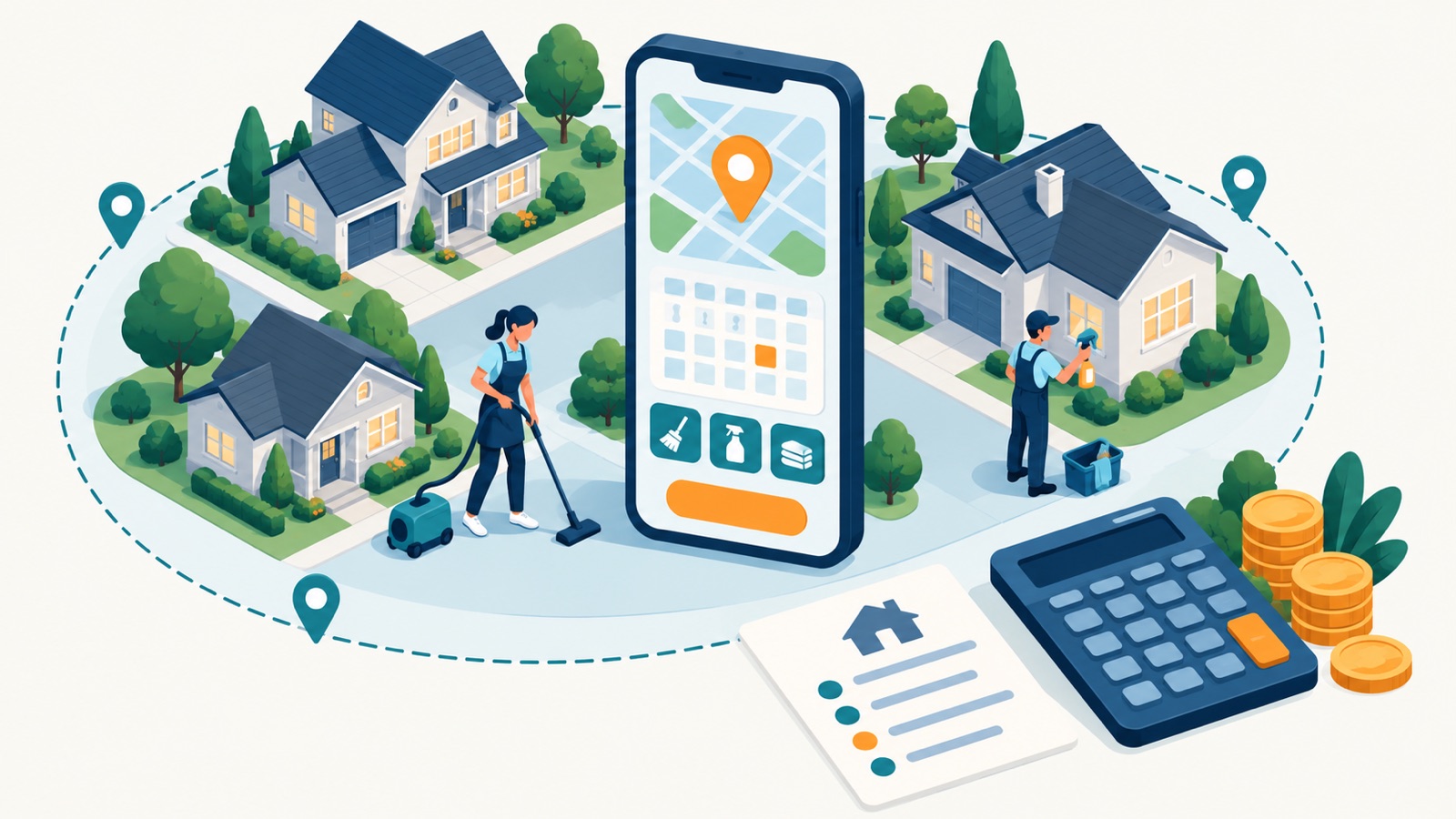
A Pronto-style cleaning platform needs a budget for more than a booking screen. Service zones, cleaner availability, visit duration and repeat bookings determine the scheduling and operations work. This guide explains how those choices affect a custom development estimate for your own business.
Planning apps like UrbanClap or a Pronto-style platform? Explore our on demand home services app development approach to customer booking, provider assignment and administration. For a cleaning-only business, review house cleaning app development workflows for recurring visits, service add-ons and team schedules.
“Pronto-style” describes the local home-service booking concept in this guide. These are illustrative planning decisions for an independent product, not claims about Pronto’s internal software, prices, staffing or delivery promises. Digittrix is not affiliated with Pronto.
Start With Your Service Zone and Booking Promise
Decide where you can reliably fulfil a cleaning visit before offering bookable slots. One neighbourhood with scheduled visits requires different rules from several zones with short-notice requests. A promise shown to customers must reflect actual cleaner capacity, travel time and opening hours.
| Decision | Focused launch | Additional development to scope |
|---|---|---|
| Service area | One defined area with an address eligibility check. | Multiple zone boundaries, local rate cards and cross-zone assignment rules. |
| Visit duration | Fixed cleaning packages with known appointment lengths. | Property-size estimates, add-ons, variable duration and travel buffers. |
| Cleaner assignment | An administrator assigns an available cleaner. | Skills, shift and travel-time matching, acceptance deadlines and reassignment. |
| Repeat visits | Customers make a new booking when needed. | Recurring schedules, skipped visits, preferred cleaners and replacement rules. |
| Payment | One agreed payment integration for each booking. | Subscriptions, refunds, credits, payout reconciliation and failed-payment recovery. |
For a broader comparison across cleaning, repairs and multi-service marketplaces, use the general home service app development cost guide. For service workflows, see our house cleaning app development page.
Plan Cleaner Capacity Before Automating Dispatch
Write down each cleaner’s shift, service area and supported job types. The booking system then needs a rule for reserved time, travel buffers and jobs that run late. A simple first release can use an administrator’s assignment queue; automated matching is a separate feature with its own acceptance scenarios.
Specify what happens if a cleaner declines, becomes unavailable or cannot reach the address. Customers need a clear rescheduling or cancellation choice. Operations needs a record of the change and its payment consequences. These exception paths affect the estimate as much as the normal booking journey.
Separate Repeat Booking From Subscription Billing
A weekly or fortnightly booking is a scheduling requirement. A subscription adds billing rules: renewal, payment failure, cancellation, unused visits and any permitted credits. Scope them separately so a recurring appointment feature is not mistaken for a complete subscription system.
For example, a fortnightly two-bedroom clean might reserve a regular slot, while an oven-cleaning add-on increases the first visit’s duration. If the usual cleaner is absent, define whether operations offers a replacement, another time or cancellation. This is an illustrative workflow, not a completed client result.
Digittrix Packages for a Pronto-Style Cleaning Platform
Digittrix home services app development pricing is USD 1,499 for an MVP, USD 1,500–2,499 for a mid-level app, and USD 2,500+ for an advanced app.
Every package includes a responsive website and mobile apps built from scratch, plus six months of post-launch support. The written scope identifies the mobile operating systems, customer and provider interfaces, integrations and release deliverables.
| Delivery detail | MVP USD 1,499 | Mid-level USD 1,500–2,499 | Advanced USD 2,500+ |
|---|---|---|---|
| Best for | Validate one launch area with a focused booking workflow. | Extend the booking product with selected provider and operating workflows. | Plan custom workflows, integrations, automation or expansion across service areas. |
| Website and mobile apps | Responsive customer website and mobile apps, with a shared backend and web administration. The proposal names the mobile operating systems and release builds. | Responsive website, mobile apps, shared backend and web operations dashboard. The proposal lists the customer and provider builds included. | Responsive website and mobile apps with the backend, administration tools and integrations listed in the custom proposal. |
| Customer, provider and admin | Customer booking, a basic provider job workflow and essential web administration. The proposal specifies whether providers use a mobile interface or responsive portal. | Customer, provider and administrator workflows, with selected permissions and operating controls agreed for the quoted price. | Customer, provider and administrator experiences, with any branch, dispatcher or additional roles explicitly scoped. |
| Feature scope | A focused first release with a service catalogue, booking requests, basic provider assignment, payment integration, notifications and essential administration. | The core booking workflow plus a selected set of provider onboarding, availability, scheduling, booking allocation, commissions, refunds or reporting features. The quote identifies which additions are included. | Custom features selected around the business requirements, such as multi-city pricing, dispatch rules, business-system integrations or automation. USD 2,500 is the starting price; the final total follows the agreed scope. |
| Outside the listed scope | Automated dispatch, extra cities, recurring subscriptions, historical data migration and custom business-system integrations unless expressly scoped. | The complete feature list is not automatically included at USD 1,500. Complex multi-city rules, bespoke AI, bulk migration and additional integrations require an agreed scope. | Unlisted custom features, production migration, external licences and operational staffing. Additional scope changes the quote. |
| Delivery and acceptance | Approve the booking prototype, then build and test the complete booking-to-payment journey before release. | Validate the selected provider, scheduling and payment exception workflows before a controlled pilot. | Confirm architecture, integration access and any migration trial before scheduling the agreed rollout. |
How the price bands work: the MVP is a focused release at USD 1,499. Mid-level projects are individually scoped within USD 1,500–2,499; the final quote depends on the selected additions. Advanced projects start at USD 2,500 and have no fixed upper limit. A higher tier does not automatically include every feature described on this page.
What Your Development Package Covers
Design and build: the website and mobile apps are built from scratch around the approved requirements and design. The proposal records the screens, design revisions, user roles and integrations included.
Testing and handover: agree the booking, payment, permissions and exception scenarios to be tested, the release deliverables and the acceptance milestones. Source-code handover, account ownership and third-party licences are documented in the agreement.
Six months of support: Six months of post-launch support is included. The agreement defines the support start date, covered issues, support hours and response arrangements. New feature requests, scope changes and support or maintenance after the included period are quoted separately.
Running costs: hosting, maps, messaging, payment-provider charges, app-store accounts, third-party licences and taxes are separate unless expressly included. These costs are distinct from the development price and included support.
Review the Home Services app development packages for project planning details.
The MVP price applies to an agreed focused release. Short-notice dispatch, recurring subscriptions, extra cities and historical data migration are not automatically included. Confirm customer and provider interfaces, mobile operating systems and release builds in the written proposal.
Worked Scope: A Scheduled Cleaning Launch
Illustrative scope: one service area, three cleaning packages, customer address and slot selection, a provider job workflow, manual assignment, one payment integration and essential web administration. The responsive website and mobile apps are built from scratch, with six months of post-launch support under the agreed terms.
Acceptance checks: an eligible address can book an available slot; an ineligible address cannot complete booking; an administrator can assign and reassign the cleaner; the provider can update job status; and cancellation or failed payment produces the agreed notification and refund status.
Later phases: add recurring visits, automatic allocation or zone-specific pricing after confirming the operating rules and revising the estimate. The example does not promise a particular arrival time or include every feature described in this guide.
Budget for Operations Separately From Software
Development does not fund cleaner recruitment, training, wages, cleaning supplies, transport or customer acquisition. Your business plan needs those costs alongside software delivery. Hosting, maps, messages, payment-provider fees and app-store accounts also remain separate unless explicitly included in the proposal.
Six months of support covers the agreed post-launch service, not unlimited new features or permanent hosting. Confirm the support start date, coverage, communication channel and response arrangements in writing.
Bring These Inputs to Your Cost Estimate
- Launch area and the rule for accepting an address.
- Cleaning packages, property-size options, add-ons and expected visit durations.
- Cleaner shifts, assignment responsibilities and travel buffers.
- One-off or recurring booking requirements and cancellation rules.
- Customer, provider and administrator interfaces, platforms and payment provider.
- The person approving designs, supplying service content and accepting release tests.
These inputs support a milestone plan covering prototype approval, development, acceptance testing and release preparation. A delivery date follows the agreed scope and dependencies; app-store review and third-party onboarding are not fully controlled by the development team.
Explore the Booking Experience Before You Scope
See our published cleaning app project walkthrough for actual product screens. For the wider product roadmap, read the Pronto-style home services app planning guide. Compare operating models and current package terms on the Home Services app development page.
 FAQ's
FAQ's