 +91-8727000867
 +64 22 003 5555

01 · Entry roles
Consumer and owner paths
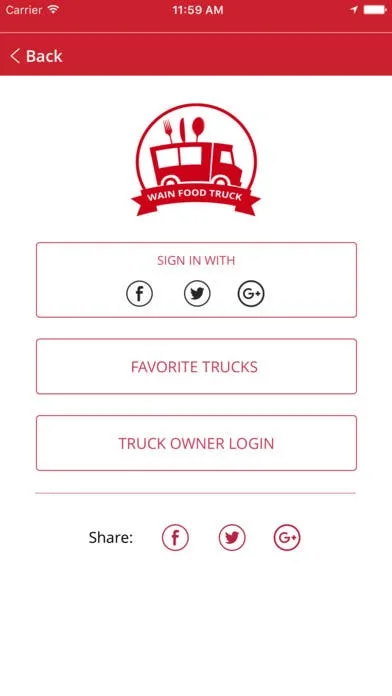
The entry screen separates social sign-in, saved trucks, and truck-owner access.

Restaurant product evidence · historical portfolio
Quick answer: Wain is publicly attributed to Digittrix in Digittrix’s verified Freelancer portfolio. The retained product screens document nearby food-truck discovery, map and list views, menus, favorites, and owner-side content controls.
Evidence boundary
The claims below come from the public portfolio description and the five original screens attached to that record. They are deliberately narrower than a typical marketing case study.
Screen-by-screen evidence
These are original screens attached to Digittrix’s public Wain portfolio entry. Their captions describe only what is visible or explicitly stated in that entry.
The entry screen separates social sign-in, saved trucks, and truck-owner access.
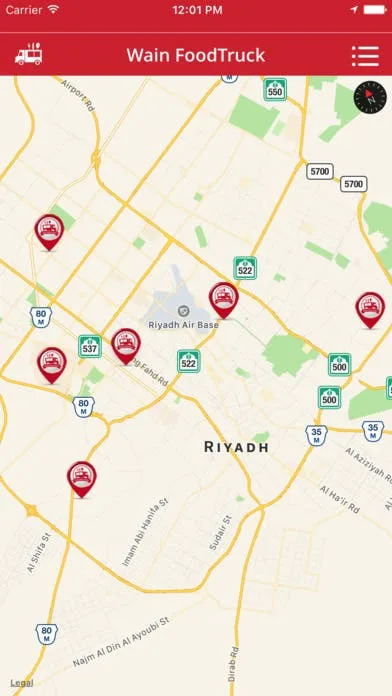
Map pins turn a user’s location into a scannable view of currently serving trucks.
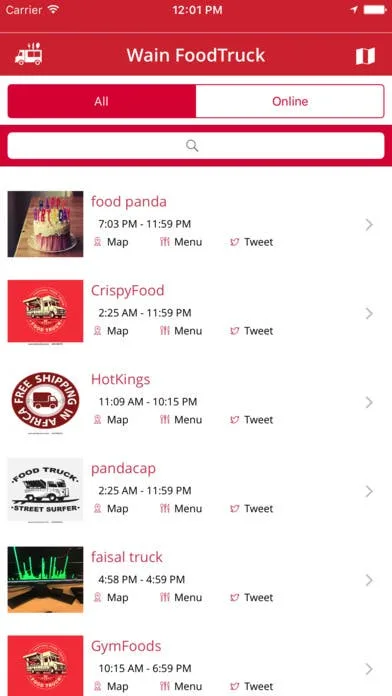
Users can scan truck names, serving hours, map links, menu links, and social actions.
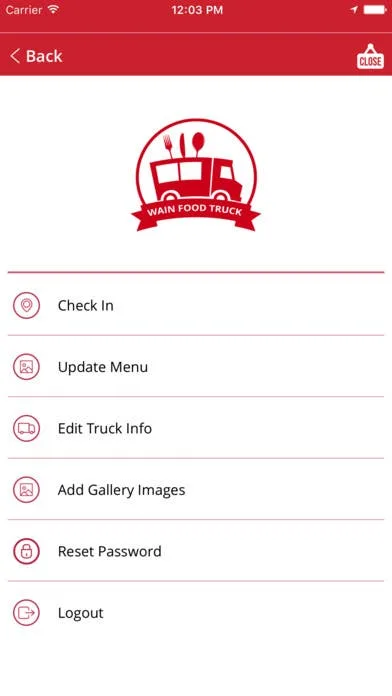
The owner view exposes check-in, menu, truck information, gallery, and account actions.
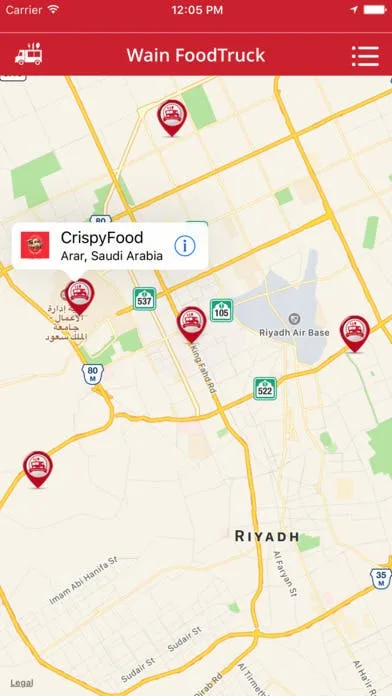
A focused map state keeps the selected truck visible in its surrounding service area.
Restaurant app development relevance
Wain provides restaurant-sector evidence around discovery and operator content workflows. It does not, by itself, prove every capability needed for a modern ordering or delivery platform.
Map pins, nearby results, and current availability help users decide where food can be found now.
Consumer discovery and truck-owner maintenance are separated into clear task-oriented paths.
Owners are given visible controls for menu content, truck details, images, and serving status.
The public record includes a historical Apple App Store ID, but the listing is no longer available. This page therefore presents Wain as historical portfolio work, not as a currently maintained app.
No client testimonial, project budget, delivery timeline, technology stack, order volume, conversion improvement, POS/KDS integration, payment flow, or business outcome was found in the retained public evidence. None of those claims has been added.
Current product planning
For a current food-truck or restaurant platform, discovery should connect to verifiable operational workflows rather than stop at attractive screens.
Truck check-ins, service radiuses, opening states, and stale-location handling.
Item availability, modifiers, allergens, prices, scheduling, and out-of-stock propagation.
Pickup windows, taxes, tokenized payments, refunds, failures, and customer support states.
Roles, audit logs, moderation, performance reporting, notifications, and multi-location support.
Use this evidence as a starting point, then define your real customer, kitchen, owner, admin, payment, POS/KDS, delivery, and reporting requirements in a written scope.