
Farms & producer organisations. Coordinate member records, field activities, collection and buyer enquiries.
Cross-Industry Delivery Experience
These organisations feature in Digittrix’s wider portfolio. They work in other industries. Follow the project links and client reviews to see what we delivered; we do not present them as agriculture clients.












Built around the people who grow your business
Agriculture Software Development Company
Our digital agriculture solutions connect plots, crop activities, inputs, harvests and buyer orders. We help farms, farmer producer organisations (FPOs), cooperatives and agritech businesses replace scattered records with shared web and mobile tools.
As an agriculture website development company, we help you present produce, collect enquiries and connect buyer orders to your operations. Combine website development, mobile apps and ERP integrations as your first release needs them.
- Web + mobile
- Connected farmer and buyer experiences
- Field planning
- Languages, simple forms and offline planning
- Your workflow
- From crop records to customer orders
Choose a Starting Point for Your Agriculture Business
Start with a website for enquiries, an app for field records or a marketplace for buyer orders. Choose the first task your team needs to improve.
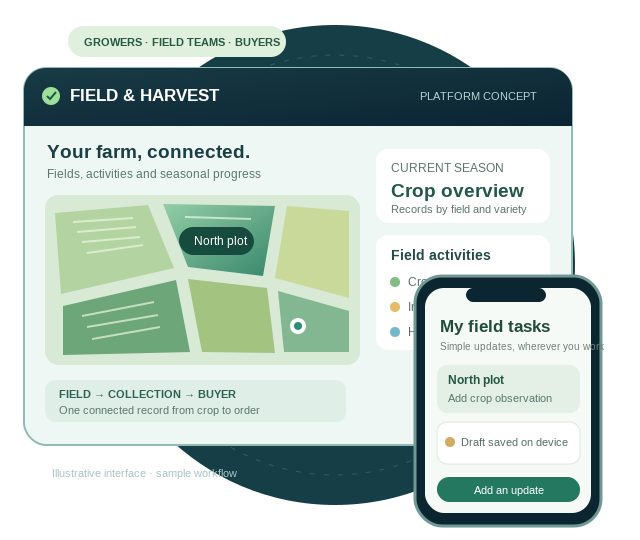
Agritech startups. Launch a focused farmer service, subscription platform or advisory product.
Produce & input businesses. Connect seasonal catalogues, dealer accounts, orders and fulfilment.
Equipment & service providers. Agriculture booking app development connects equipment availability, reservations and customer support.
Eight ways to build your agritech platform
Agriculture Websites & Apps We Develop
Start digital farming platform development with the task your farm, cooperative or agribusiness needs most. Connect the website, mobile app and administration tools as the product grows.
Agriculture Website Development
Give buyers a clear view of your produce, services and certifications. Our farming website development service combines seasonal catalogues and enquiry forms with a content management system your team can update.
- Seasonal catalogues
- Enquiry forms
- Content management
Farm Management App Development
Keep plots, crop cycles, tasks and input records in one place. We plan farm management software development around the way your team works, from daily field updates to supervisor approvals and end-of-season reporting.
- Plot and crop records
- Task scheduling
- Input usage logs
Agriculture Marketplace Development
Build an online agricultural products marketplace where growers list produce and buyers can compare grades, quantities and availability. Set clear rules for orders, delivery areas and settlements before inviting sellers onto the platform.
- Grower listings
- Buyer enquiries
- Order management
Crop Monitoring App Development
Help farmers record observations, upload crop photos and request guidance from advisers. Agricultural weather forecasting app development can integrate licensed forecast data, crop-stage reminders and local alerts, with clear sources, timestamps and coverage limits.
- Crop observations
- Adviser requests
- Weather alerts
Agricultural Supply Chain Software
Connect collection, grading, storage and dispatch to an identifiable produce batch. Agriculture logistics software development adds vehicle assignments, delivery updates and quantity reconciliation across agreed routes, collection points and buyer handovers.
- Batch records
- Collection tracking
- Dispatch updates

Agricultural Equipment Rental App Development
Let growers find available equipment and request a booking in their area. Tractor rental app development can cover operators, deposits and rental periods, while the same agriculture machinery booking app handles implements, pickup and return checks.
- Equipment listings
- Booking calendars
- Service requests
Agriculture Ecommerce Website Development
Let buyers browse seeds, tools and permitted inputs through a dealer portal or agricultural product ordering app. Connect agriculture inventory management software to stock availability, order approvals and delivery updates, with restrictions agreed for each launch market.
- Product catalogues
- Dealer pricing
- Inventory visibility
Smart Farming Software Development
See supported soil, weather and irrigation readings in one dashboard. IoT agriculture app development connects devices to farm monitoring software, with clear units, timestamps and alerts when readings are missing or out of date.
- Sensor dashboards
- Threshold alerts
- Device status
Agriculture Website & App Development Services
Connect your website, field app and business records through one clear delivery plan.
Four connected delivery tracks
Plan who does what
Map seasonal workflows, user responsibilities and connectivity needs before development begins.

Agricultural Web Application Development
Give buyers, field teams and administrators access to the records they need through a browser. We plan agricultural software development around seasonal tasks, user permissions and the records each team owns.
- Responsive design and a content management system (CMS)
- Farm and product pages
- Enquiry and quotation forms
- Multilingual content when scoped

Agriculture Mobile App Development
Make fieldwork easier with readable screens, local-language forms and offline drafts where needed. With custom agriculture app development, we help you choose dedicated Android and iOS apps or a shared codebase that fits your budget.
- Android agriculture app development
- iOS agriculture app development
- Offline drafts and queued uploads
- Photo, location and task alerts

Agriculture ERP Software Development
Bring purchasing, stock and sales together through agriculture business management software. Start with the records your team uses most, then test the workflow before adding approvals, reports and links to existing systems.
- Crop and field records
- Inventory and procurement
- Role-based dashboards
- Reports and data exports

Agriculture API Integration Services
Connect your platform to supported weather, sensor, payment and accounting providers. As part of agriculture app backend development, we agree who can access each record, how systems exchange data and how they retry failed updates.
- Weather and map APIs
- IoT gateway integration
- ERP and payment connections
- Migration and release support
Practical tools for everyday operations
Core Modules for Your Agriculture Platform
Choose the records and controls your team needs first, then expand around a tested workflow.

Land & seasonal records
Agricultural land management software organises plot boundaries, lease records and season history. Link each activity to its field, crop and responsible team.

Crop planning & observations
Plan sowing, field activities and harvests through crop management software development. For field-specific decisions, precision agriculture software development can map observations. We check the source data and its coverage before planning those features.

Inputs & inventory
Follow inputs from purchase to field use. Seed management software keeps variety and lot records; fertilizer management software tracks stock and applications. Where needed, pesticide management software adds product and usage logs for review against plans that a qualified adviser approves.

Harvest & traceability
Link harvest quantities, grading, collection and storage to an identifiable batch. Record handovers, corrections and rejected quantities without losing the original history.

Orders & buyer relationships
Keep availability, enquiries, agreed prices and order status together for sales and fulfilment teams. Give each buyer access only to their own orders and documents.

Weather & sensor visibility
Show the source and freshness of readings. Route threshold alerts for review and handle missing or delayed data explicitly, so teams can distinguish a current reading from an old one.
Farmer onboarding & records
Give farmer producer organisations (FPOs) and cooperatives a consistent way to register members. Farmer registration app development captures agreed details with consent, while farmer management software keeps documents, farm records and assigned services together.
Farm labour & task planning
Farm labor management software links assignments, attendance and work completion to fields and supervisors. Define approval rules, local units and payroll exports around the way your team works.
Livestock & dairy operations
Keep animal identification, feed and health records together through livestock management software development. For milk producers, dairy farm management software development can also cover collection, quality entries and payments. Qualified professionals supply any veterinary guidance.
Irrigation planning & controls
Irrigation management software development can combine schedules, moisture readings and usage records. Connected controls need supported hardware, manual overrides and site-specific safety checks before activation.
Finance applications & servicing
Agricultural finance app development can support applications, documents and repayment tracking for an authorised provider. Agriculture loan management software must follow that provider’s approved eligibility, servicing and market-specific requirements.
Reporting & operational analytics
Use agriculture reporting and analytics software to answer everyday questions about fields, stock and orders. Before adding forecasts to agriculture data analytics software, agree what each measure means, which units it uses and where the data comes from.
Tools for Farmers, Managers & Buyers
Start with the task each person needs to complete. Give farmers, operations managers and buyers focused interfaces with permissions for their role.
Record the work where it happens
Give growers and field staff a clear daily view, with forms that match their devices and languages.
- Assigned field activities
- Crop and season records
- Photo-based observations
- Input usage entries
- Harvest quantity records
- Local-language interfaces
- Weather notifications
- Offline drafts when scoped
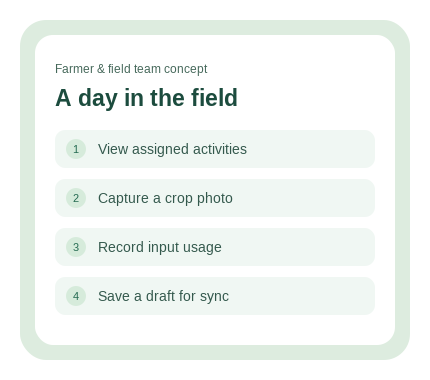
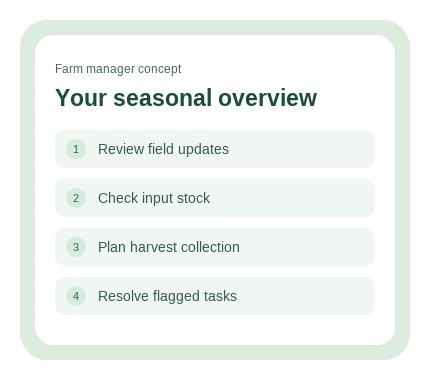
Connect fields, stock and decisions
We plan agriculture management software development around the decisions your managers make each day. Review activity across locations, approve field updates and follow up on exceptions from one workspace.
- Farm and plot dashboard
- Task assignment and review
- Input stock and procurement
- Crop-cycle reporting
- Harvest and batch tracking
- Requests for adviser support
- Sensor status and alerts
- Exports and audit history
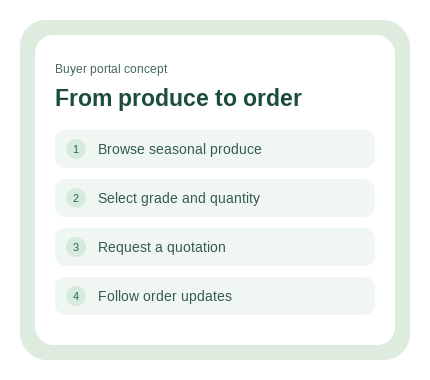
Turn seasonal availability into clear orders
For businesses selling directly to households, farm-to-consumer app development adds produce browsing, delivery slots and order updates. Administrators control catalogues, user access and the rules buyers see.
- Produce and grade listings
- Seasonal availability
- Quote and order requests
- Delivery status updates
- Payment integration when scoped
- Seller and buyer permissions
- Catalogue administration
- Notification preferences
One connected agricultural journey
From Seasonal Planning to Buyer Delivery
Your agricultural business management system should connect responsibilities and records at each stage, from seasonal planning to delivery.
Plan the season
Create crop cycles, assign plots and schedule activities with the responsible team.
Capture field activity
Record input usage, observations and task completion, with offline drafts where scoped.
Collect & grade
Link harvest quantities, quality checks and storage movements to a produce batch.
Sell & fulfil
Share availability, confirm buyer orders and follow dispatch and delivery updates.
Designed for real field conditions
Reliable Data, Integrations & Access
Agree the operating rules before connecting people, records and devices.
Offline records and syncing
Decide which records users can save offline, how uploads retry and who resolves conflicting edits. Live prices and current weather readings need a connection.
Farm Automation Software Development
Before connecting irrigation or other controls, validate device access, data freshness, manual overrides and failure handling. Confirm weather and map coverage, licensing and units during the pilot.
Data permissions & ownership
Define what farmers, buyers, advisers and administrators can access. Agree consent, backups, exports and how long you keep each type of data.
AI with expert review
Use AI to help review photos or search approved information only when suitable data and expert checks support it. Refer uncertain results to a qualified adviser.
Technology blueprint
Technology & Backend Architecture
We choose the technology around your users, records, offline needs and existing systems. The first release determines which integrations and hosting services you need.
Architecture layers
During discovery, we compare technology options against your budget, user permissions, field connectivity and integrations.
01 · Web & field experience
4 technologies
Frontend & Mobile
Next.js, Flutter, Swift, and Kotlin support responsive web, cross-platform, and native experiences for farmers, operations managers, and buyers.

Next.js

Flutter

Swift

Kotlin
02 · Orders & workflows
5 technologies
Backend APIs
Node.js, PHP, Laravel, Python, and CodeIgniter support crop records, order calculations, approval queues, document access, notifications, and administration.

Node.js

PHP

Laravel

Python

CodeIgniter
03 · Fields & records
5 technologies
Data Layer
We choose databases to suit your crop records, documents, approvals and reports. We also agree how long to keep data and when to delete it.

MySQL

MongoDB

PostgreSQL

Firebase

MariaDB
04 · Scale & release
5 technologies
Cloud Delivery
Azure, Docker, Google Cloud, Vercel, and Netlify support controlled environments, release automation, system monitoring, hosting capacity and web delivery.

Microsoft Azure

Docker

Google Cloud

Vercel

Netlify
05 · Collections & billing
4 technologies
Payments & Billing
Stripe, Razorpay, PayPal, and Cashfree can support agreed deposit or milestone payments, refunds and payment-status updates. We agree invoice rules and checks against accounting records separately.

Stripe

Razorpay

PayPal

Cashfree
06 · Identity & access
1 core technology
Authentication
We combine access tokens with the sign-in methods you need: email, phone, one-time passwords or social accounts. We also define session, device and user-role controls.
JWT
Original engineering walkthrough · illustrative records
How We Would Plan a Farm-to-Buyer Pilot
This planning example explains how a small produce-collection platform could work. We invented the record IDs and quantities. The example does not describe a completed client project or measured business results.
Capture a harvest offline
A field worker records 120 kg against plot P-07 and batch B-104. The app stores a local draft with a unique operation ID, capture time and user ID. It displays “Pending sync” until the server acknowledges it; closing the app must not discard the draft.
Retry without double-counting
When connectivity returns, the same operation ID accompanies every retry. If the server accepts the record but the app misses its response, a retry returns the existing result. The acceptance check is one 120 kg receipt after three retries, not three receipts.
Resolve conflicting edits
If a supervisor changes the quantity to 118 kg while an older offline version still says 120 kg, the server compares record versions. It preserves the accepted value and asks an authorised supervisor to resolve the conflict. The audit record retains both values, the reason and the person approving the correction.
Trace a batch through dispatch
Record a split of the accepted 118 kg into 80 kg dispatched, 35 kg in stock and 3 kg rejected. Each movement points to B-104 and its parent event. The totals must reconcile; quantities cannot become negative. A buyer sees their order and approved batch information, not other growers’ records.
Make stale sensor data visible
For a demonstration rule, readings older than 30 minutes display “Stale” with the last-received timestamp and unit. The dashboard never substitutes zero for a missing reading. The actual threshold depends on the device and use case; an irrigation command needs separate authorisation, safety controls and field validation.
Data ownership before integrations
Agree which system owns stock, orders and farmer records. Use permission checks on the server, validate quantities and units, and record integration failures for retry. A dashboard should distinguish a reported event, a verified event and an estimated status.
What the pilot must demonstrate
Test network loss, app restart, repeated uploads, two users editing one record, rejected produce, unauthorised access and a missing sensor reading. Validate language and field terminology with actual users. The pilot must pass these checks before launch. Passing them does not promise higher yields or revenue.
Technical references: MDN on browser storage with IndexedDB and conditional updates with If-Match. These are implementation options; we still need to agree storage limits, test devices and define how the server resolves conflicting edits.
Try our interactive agriculture pilot demo: save a sample harvest draft, simulate network loss, retry syncing and reconcile batch inventory. The demo includes four reproducible checks. It uses fictional records and a browser-only simulated ledger; it is not a client project, a production backend or a field-tested offline app.
For marketplace decisions, read our agriculture marketplace planning guide. Compare these requirements with the published cross-industry case studies and the example first-release scope. Request Quote for your agreed scope, delivery milestones and acceptance checks.
Start with a useful first release
Agriculture Website & App Development Cost
Your estimate depends on platforms, user roles, offline needs, languages and integrations. Define the first release before committing to a wider rollout.
| Starting point | Scope to discuss | Main cost factors |
|---|---|---|
| Agriculture website | Business pages, seasonal catalogue, CMS and enquiry forms | Content, product records, languages and enquiry routing |
| Farmer app or marketplace pilot | One core workflow with mobile access and web administration | User roles, ordering, offline capture and notifications |
| Connected agritech platform | Farm records, inventory, traceability and selected integrations | Locations, migration, ERP APIs, sensor devices and testing |
Share your workflow, sample records, users, languages and launch priorities. We prepare a proposal with design, development, testing and rollout milestones. We list hosting, hardware, weather data, maps, messaging and payment fees separately.
Compare quotes for a defined first release
What Goes Into a Focused Agriculture Pilot?
Example brief: one producer organisation, one collection point and one language. Field workers record harvests; a supervisor reviews stock and dispatch. Use this example to compare proposals. We confirm your price and dates in your project agreement.
1. Define & validate
Deliverables: a field-to-dispatch workflow, record definitions, a user-permissions checklist and sample screens.
Ready to proceed when: your operations lead approves units, grades, corrections and who can view each record. Provide representative records and access to pilot users.
2. Build the first workflow
Deliverables: a mobile-friendly field interface, supervisor web panel, offline harvest drafts, batch movements and a CSV export.
Ready to proceed when: retry, conflict, quantity and permission checks pass against agreed examples. Confirm supported devices and browsers before implementation.
3. Pilot & hand over
Deliverables: an agreed pilot, issue log, operating instructions, access handover and support responsibilities.
Ready to roll out when: users complete the agreed tasks, records reconcile and unresolved issues have an owner. We estimate the next phase after reviewing pilot feedback.
What changes the estimate? Native apps, buyer payments, multiple organisations, translations, data cleanup, live ERP connections and sensor installation add work. Ask for separate costs for hosting, subscriptions, devices, app-store fees and maintenance. Agree who supplies account access, approves designs and gives feedback. Compare quotations against the same tasks and deliverables.
Our Agriculture App Development Process
Begin with one workflow and the records it needs. Validate sample screens with users, implement the agreed scope, test exceptions and run a pilot before rolling out to more teams.

Workflow Discovery
Map crops, user roles, seasonal tasks, order rules and existing systems.
Agriculture App UI/UX Design
Test website enquiry paths and farmer screens with the people who will use them.
Agile Development
Build the approved screens, agriculture APIs and workflows in reviewable releases.

Quality Assurance
Test field records, quantities, permissions, device compatibility and failed or duplicate syncs.

Pilot & Rollout
Validate one agreed workflow, train users and review acceptance checks before expansion.

Technical Support
We hand over the code and documentation, then provide the monitoring and support your agreement covers.
Plan your next step
Agriculture Website & App Development FAQs
Answers on agriculture websites, farmer apps, integrations, cost and support.
Can you build both an agriculture website and a mobile app?
Yes. We can connect a public website, farmer app, buyer portal and admin panel to the same records. Start with a website or one app, then add other channels as your users need them.
Who are these agriculture development services for?
We build for farms, agritech startups, farmer producer organisations (FPOs), cooperatives, produce distributors, equipment rental businesses and agri-input dealers. We plan each product around the people who use it and the tasks they need to complete.
Can farmers use the app in areas with poor connectivity?
Yes, for the tasks we agree in the scope. We can add offline drafts and queued uploads to selected forms. Before development, we decide what needs an internet connection and how the app handles duplicate or conflicting updates.
Can you support regional languages?
Yes. We can add translated screens, local units and clear form labels. Your team reviews the translations and farming terms with users before launch. We assess voice features separately because language coverage and provider charges vary.
Can the platform include weather and sensor data?
Yes, where the providers and devices support integration. We check coverage, licences, protocols and device access first. We then test timestamps, units, missing readings and alerts. We quote separately for devices, installation and subscriptions.
Can you build an agriculture marketplace?
Yes. Farmer marketplace app development can connect growers with trade buyers through registration, produce listings, enquiries and orders. Before development, we agree grades, quantity units, payment terms, delivery updates, returns and settlement rules.
What can AI agriculture app development support?
AI-powered farming software can help review crop photos or search approved information. Crop disease detection app development needs crop-specific testing, regional validation and review by a qualified adviser. Image analysis cannot guarantee a diagnosis or replace an agronomist’s judgement.
What affects agriculture app development cost?
Agriculture software development cost depends on platforms, user roles, offline tasks, languages and integrations. Our example pilot covers one organisation, collection point and language, with harvest records and batch dispatch. We quote separately for native apps, payments, ERP connections, sensors, hosting and support.
How long will the project take?
We agree delivery dates after reviewing the scope. The pilot moves from approved screens to development, testing and user sign-off. Languages, data migration, provider access and feedback affect the schedule. Your proposal lists milestones, responsibilities and dependencies.
Can you connect our existing ERP, CRM or accounting software?
Yes, if we can access suitable APIs and licences. Agriculture CRM software development connects customer relationship management (CRM) tools with buyer and dealer enquiries. Enterprise resource planning (ERP) integrations connect purchasing and stock records. We agree which system owns each record and how it handles failed updates.
How do you protect farmer and business data?
We plan user permissions, secure sign-in, encrypted connections, backups, activity logs and data retention. We also agree why the app collects photos or locations and which permissions it needs. We test access for each user role.
Do you provide handover and ongoing support?
We define source-code handover, documentation, training and support in the project agreement. We also identify who owns the cloud accounts, app-store accounts and third-party licences. Your maintenance plan can cover updates, monitoring and agreed improvements.
How do I choose an agriculture app development company?
Compare teams on evidence, scope and handover terms. Ask how they test offline use, prevent duplicate stock and handle corrections. Our links show work from other industries; our agriculture walkthrough and demo explain the proposed approach and its limits.
Can I work with an agriculture website development company in India?
Yes. Digittrix works from Mohali, Punjab, with businesses in India and other markets. Tell us where your users work, which languages they need and which systems they use. We use those details to plan delivery, review sessions and support.
What should a farming app development company build first?
Start with one useful task: harvest entry, equipment booking or buyer enquiries. Farming business app development can begin with a mobile-friendly website and an admin panel. Add native apps and integrations when user feedback and your budget justify them.
What should I ask an agritech software development company before starting?
Ask what users will do in the first release, what data it needs and how the team will test it. For agri tech app development, agree a small pilot and clear pass criteria. Request separate estimates for sensor access, AI evaluation and finance features.
Relevant cross-industry experience
Project Proof & Case Studies
Explore marketplace, logistics and sensor-dashboard work relevant to agriculture platforms. These are projects from other industries; each case study explains its delivered scope and supporting sources.

Client case study
Pet-care marketplace
HappyFidos
Website, Android and iOS apps, interface design and an administration panel for a dog-owner and sitter marketplace.
Relevance to your platform: This project offers a reference for separate buyer, seller and administrator roles in an agriculture marketplace.
Supporting evidence
HappyFidos director Panos Divanis reviewed the project on Clutch on 4 March 2024.
Client case study
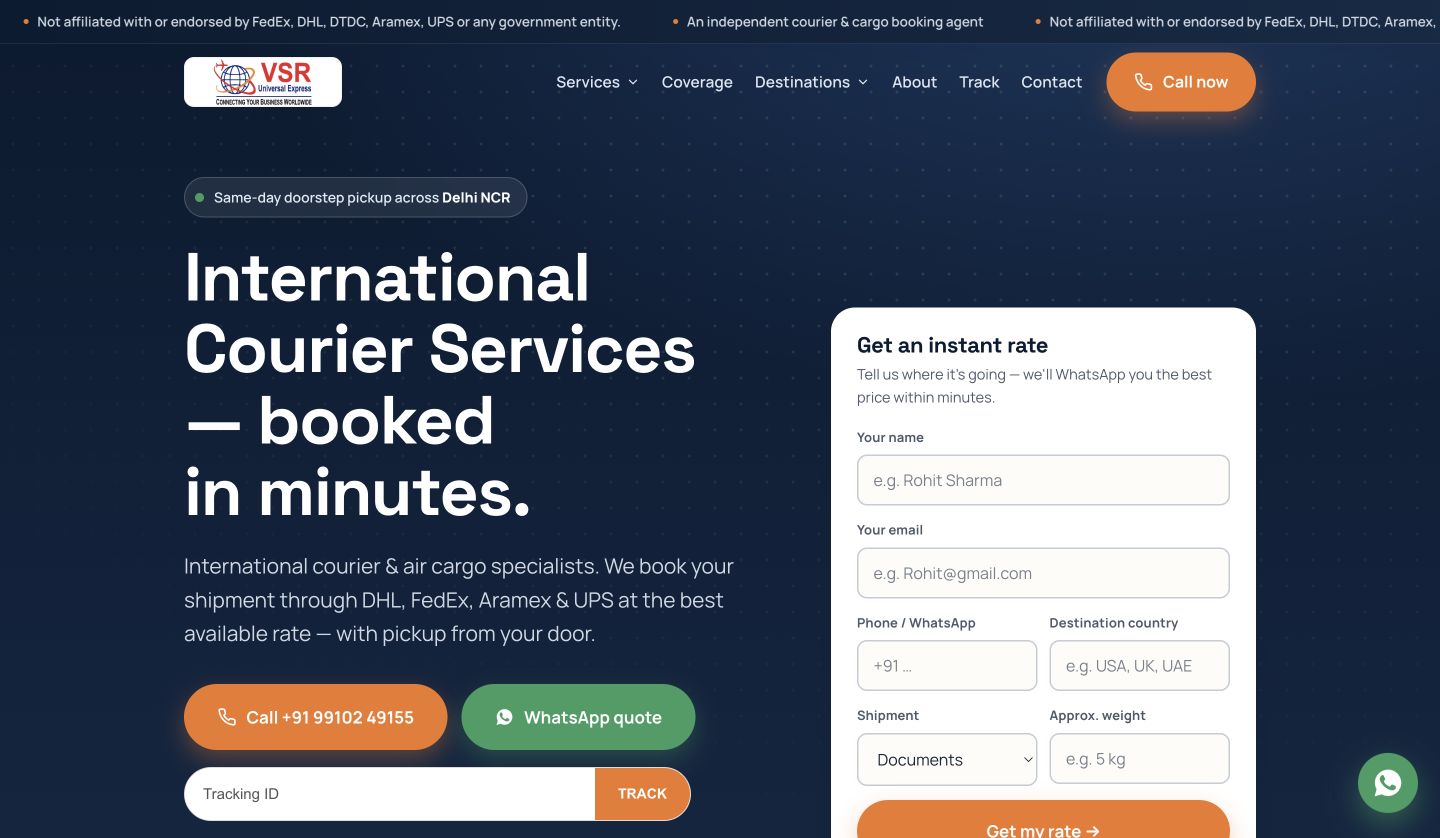
Logistics website & customer app
VSR Universal Express
Connected website and customer app with shared login, tracking IDs and shipment-status notifications. VSR staff manage shipment updates.
Relevance to your platform: This project offers a reference for dispatch tracking and delivery updates for produce buyers.
Supporting evidence
Digittrix-confirmed delivery scope, a live website development credit and published customer-app screens in the case study.

Published project account
Retail sensor dashboards
IKEA Customer Traffic Management
Digittrix’s project account describes sensor inputs connected to internal mobile views and a web dashboard for customer-traffic analysis.
Relevance to your platform: Relevant to turning sensor readings into operational dashboards. Farm sensors and irrigation controls require their own integration scope.
Supporting evidence
Digittrix describes this retail work in its original project article. The article does not provide independent evidence of agriculture results.
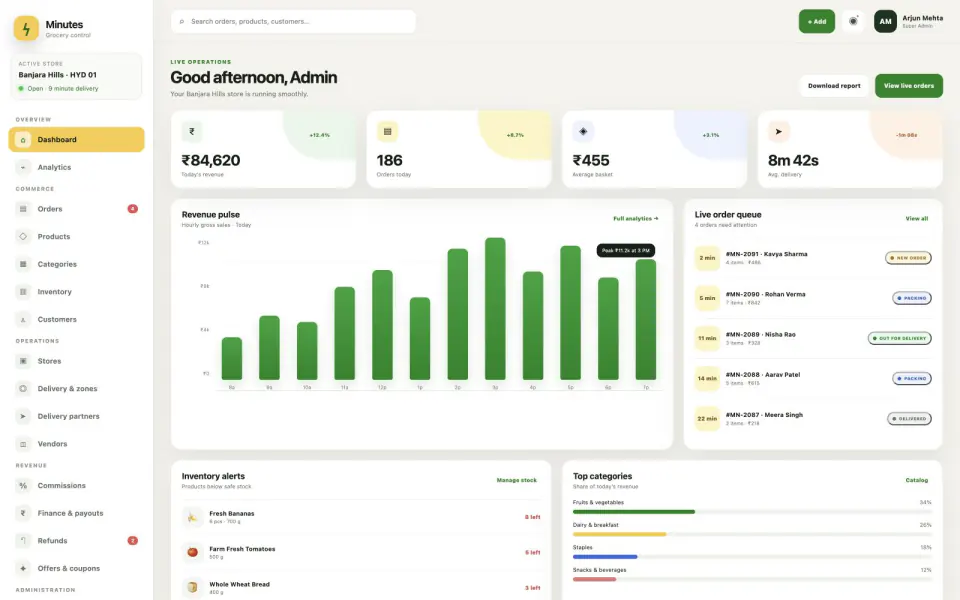
Product demonstration screenshot · illustrative sample data
Try the product demonstration
Grocery Ordering & Operations Demo
Explore catalogue browsing, a cart, order tracking, inventory, stores and delivery administration in an inspectable product demonstration.
A practical starting point for discussing produce catalogues, buyer ordering and fulfilment. We would agree crop grades, units and seasonal availability for your agriculture product.
This is a sample-data demonstration, not a delivered agriculture client project. Demo actions do not place live orders or process payments.
Client experiences · Mobile apps and websites
Client Video Testimonials
Thomas and Anuj share their experience with Digittrix’s mobile app and web application work. These videos cover our cross-industry delivery experience. They are not agriculture-specific project testimonials.
Mobile app development
Thomas’s mobile app development review
Review summary: Thomas describes a mobile app built for his business, including the initial consultation, how the team listened to his ideas, the design and his experience with the finished app.
Read the video transcript → Watch on YouTube ↗Web application development
Anuj’s web application review
Review summary: Anuj describes working with Digittrix to build a web application. He discusses support, feedback, timelines and choosing a technology partner for an MVP.
Read the video transcript → Watch on YouTube ↗About the Team Behind This Service
Technical reviewer: Harsh Abrol, Co-Founder of Digittrix. He works on product planning, software delivery and technology strategy.
Digittrix Infotech Pvt. Ltd. publishes this page and the software planning examples. As an agriculture app development company in India, our Mohali-based agriculture development team can help scope your website, field app and integrations. Explore agriculture app and website development for Delhi-NCR for regional buyer and collection workflows. Read our published work and client reviews, or send a technical scope question or correction.
Updated . The engineering walkthrough is illustrative; the linked client evidence is cross-industry. Your project needs qualified specialists for farming advice, device safety and local requirements.
Start with one useful workflow
Bring Your Agriculture Website or App to Life
Tell us about your farm, cooperative or agritech idea. We’ll help turn your priorities into a practical first release for your farmers, team and buyers.
Discuss Your Agriculture Project