 +91-8727000867
 +64 22 003 5555


A multi-language website helps your business grow by reaching more people around the world. It makes it easier for people who speak different languages to use your site, improving their experience. It also helps your site rank better in search engines for different languages, which is great for SEO. Having your website in multiple languages builds trust with international customers, makes your brand more visible to wider audience, and gives you an advantage over competitors. It also leads to more people interacting with your site and making purchases. Plus, it helps you enter new markets, improve customer service, and follow local rules in different countries
Highlights
- International SEO: plan language-specific URLs, translated metadata, hreflang, canonicals, internal links, and sitemap entries before launch.
- Localization quality: adapt service wording, offers, forms, support details, units, currency, cultural examples, and legal pages for each market.
- Content operations: define who owns translation, review, publishing, updates, and QA so every language stays accurate over time.
- User trust: make contact options, proof points, testimonials, pricing context, and support paths clear for each target audience.

Co-Founder
Harsh Abrol 
Since 2014, Digittrix has helped companies optimise digital products for stronger conversions.
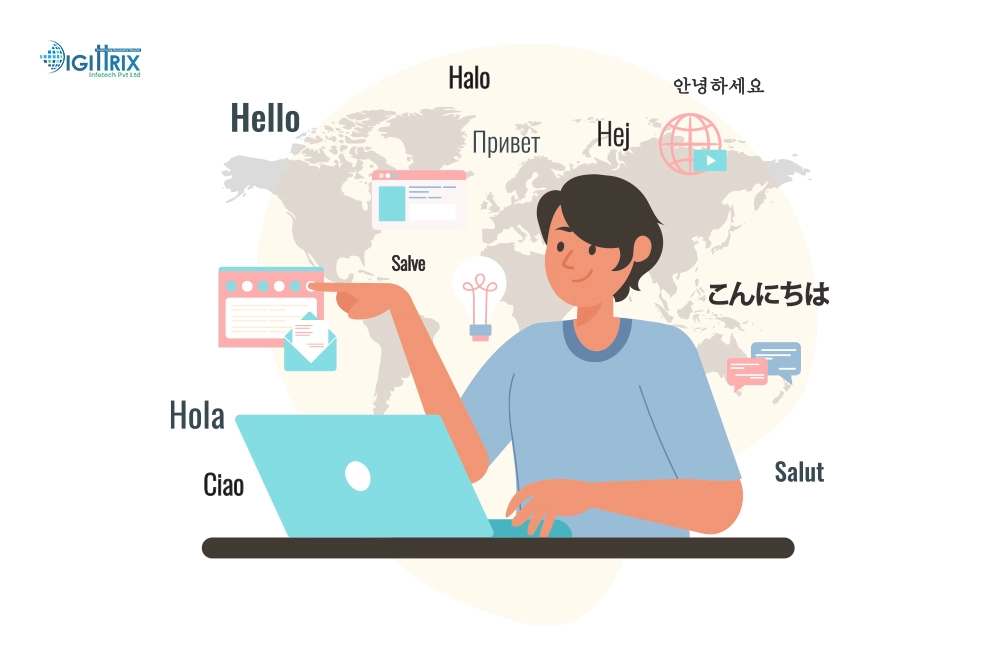
A multilingual website helps customers understand your services, pricing, support, and trust signals in their preferred language. The strongest results come when translation is supported by localization, international SEO, hreflang, performance, and conversion planning.
This means that you will be able to expand your market and build much stronger brand recognition among potential customers who might not be able to afford to buy from brands based in English-speaking countries.
In addition, when you develop or build multilingual website, it helps you reduce the bounce rate on your website as people are more likely to stay on the site longer than they would on an English-only site because they are comfortable with their native language. A high bounce rate indicates that most visitors abandon the site after just a one-page view, this is bad news for marketers because it means they aren't finding what they were looking for on your site - it's time to rethink what your offering is and how best you can deliver it!
Planning a global website? Compare web development services, website conversion planning, and Core Web Vitals fixes before finalizing multilingual scope.
2026 Multilingual Website Benefits Checklist
A multilingual website can support global growth, but the benefit comes from more than translation. The strongest setup connects localized content, international SEO, technical implementation, buyer trust, and a repeatable publishing workflow.
Quick answer: A multilingual website helps businesses reach more markets, improve local trust, support international SEO, reduce friction for non-English users, and create clearer conversion paths when hreflang, language URLs, translation QA, and localized content are handled properly.
Technical SEO checks
- URL structure: choose subfolders, subdomains, or country domains based on market strategy and maintenance capacity.
- Hreflang: connect equivalent language pages so search engines understand the right version for each user.
- Metadata: translate titles, descriptions, headings, schema, alt text, and calls to action for each language.
- Sitemap: include indexable language URLs and keep lastmod dates accurate after content updates.
Localization and conversion checks
- Buyer intent: research how each market searches for services, pricing, features, and support questions.
- Forms and support: localize enquiry forms, WhatsApp prompts, email flows, phone numbers, and support ownership.
- Trust signals: show relevant testimonials, case proof, location context, policies, and payment or delivery details.
- CMS workflow: define how translations are created, reviewed, approved, published, and refreshed.
GEO and AI-search clarity
For stronger search and AI visibility, this page should clearly explain multilingual website entities such as localization, international SEO, hreflang, translated metadata, language URLs, CMS workflow, conversion paths, QA, and global website planning.
For deeper planning, compare our web development services, website conversion guide, Core Web Vitals guide, and frontend framework comparison.
What are Multi-Language Websites?
Multi-language websites, also known as multilingual websites, are websites that offer content in multiple languages to cater to a wider audience. These websites provide the ability for users to select their preferred language, typically through a language selector or dropdown menu.
The primary goal of multi-language websites is to ensure that users from different linguistic backgrounds can access and understand the content. This is particularly important for businesses, organizations, or any online platform with a global reach or target audience.
Check out this video: Multi-Language Website for Your Business
With the increasing complexity of business and technology, it is becoming increasingly important to have access to a team of professional web developers capable of meeting the demands of modern-day projects; outsourcing is also an option. If you are thinking about outsourcing your web development project, you should think about these things first.
How Do Multi-Language Websites Work?
Multi-language websites work by integrating translation tools and content management systems that allow users to switch between different languages seamlessly.
Language Selection
When a user visits a website, they are presented with a language selector that allows them to choose their preferred language. This selector is often placed prominently on the homepage or in the website header.
Content Translation
Once a user selects a language, the website dynamically translates the content into the chosen language. This translation process can be achieved through manual translation by professional translators or by utilizing automated translation tools and technologies.
Language Switching
Users have the flexibility to switch between languages while navigating the website. The language selector or switcher is usually available on every page, making it convenient for users to change languages at any point.
Localization
In addition to translating the text, multi-language websites may also adapt other elements such as date formats, currencies, measurement units, and culturally relevant imagery to ensure a localized experience for users in different regions.
SEO Considerations
For effective search engine optimization (SEO), multi-language websites often employ language-specific URLs and meta tags. This helps search engines understand the availability of content in different languages and display the appropriate version in search results.
Implementing a multi-language website requires careful planning and consideration of the target languages, translation processes, content management systems, and user experience. It is crucial to ensure the accuracy of translations, maintain consistent design and functionality across languages, and regularly update the content to reflect changes in multiple languages.
 Ready to Reach Global Customers?
A multilingual website can help you connect with audiences worldwide, improve user experience, and increase conversions. Digittrix builds scalable, language-ready websites tailored for global growth.
Start your global journey →Why a Multi-Language Website Is Beneficial to Your Business
It shows commitment to foreign customers: When you build a multi-language website, you are showing your commitment to your customers from abroad. They will feel more comfortable using your services and products knowing that they can communicate with you in their native language. This will also increase their trust in you as an organization and they will be more likely to buy from you than from another company that does not have this feature available on its site. There are many Advantages of Integrating Multi Language on your website and we have listed reasons below
Taking your business to a new market
If you run an e-commerce store then having a multilingual website can help you expand your reach into new markets around the globe without having to do costly translations for every single product description or service description on your site. You can simply translate them once and then post them on all sites around the world which will save money and time.
It helps you get more website traffic and increase sales
A multi-language website is not only a great way to expand your business, but it can also help you get more sales. The reason is simple: visitors are more likely to buy something if they find it easier and faster. A multilingual website makes it easier for people around the world to find what they are looking for.
Improves your search engine optimization (SEO) rankings & rankings of websites in general
A multi-language website will boost your SEO ranking because people who visit this website are searching for information on different topics using several languages at the same time, which means that their queries will be more complex than if they just search for information in one language only. By designing this type of website, you can save yourself from having to do multiple SEO jobs for each language separately
Building a multilingual website is an important part of a global marketing strategy
Today, more than 80% of Internet users use multiple communication channels simultaneously, so it's important for businesses to adapt their marketing efforts accordingly. A Multi-lingual website design provides customers with multiple options for finding information about your products or services and making purchases from anywhere in the world without having to translate everything from scratch every time they visit your site.
Reduces your bounce rate
The bounce rate is a measure of how many visitors leave your site without making any purchase or contact with your company or brand. When people leave your site immediately after arriving there, it means that they did not like what they saw and are going elsewhere to find something better - which means that you have lost their attention and interest in your product or service.
Competing against other global brands
The fact is that many global brands do not offer their services in local languages because those markets aren't profitable enough; however, this doesn't mean there aren't opportunities for smaller businesses that want to compete against these giants. A multi-language website helps you to better compete against other global brands as it allows you to reach out to customers from different parts of the world who speak different languages but live in overlapping areas so that they can still see your products or services in their own native language without having to switch from one language into another.
Expanding the reach of your content marketing efforts
Content marketing is becoming more popular by the minute and companies are starting to see how effective it can be when translated into other languages. Having a multi-language website allows you to reach out to people who speak different languages and share your content with them via their preferred means of communication (email, social media campaigns, etc.). This way, you'll be able to attract new audiences who would otherwise never hear about your brand or product line!
Reduces the Costs of Translation Services
Building a multilingual website reduces the costs of translation services as well because many companies use automated translation software like Google Translate to translate their content into multiple languages at once, which saves time and money when compared to hiring separate translators for each language separately.
Boosts Brand Recognition and Awareness
The first benefit of having a multi-language website is that it boosts brand recognition and awareness among the target audience. A good example of this is Google, which has a multilingual website in several languages like Spanish, German, French, and more. The company also has an English version of its homepage where users can find relevant information about their products and services. This way, people from different countries can find valuable information related to their specific needs, thus increasing customer satisfaction and trust in your business.
 Build a Multilingual Website to Grow Your Global Reach
Want to connect with customers in their native language? Our experts help you design and develop multilingual websites that improve engagement and boost conversions.
Improves Customer Confidence and Satisfaction
Multilingual websites build trust between you and your customers. People from different countries or cultures may have different expectations when it comes to how they will interact with your brand and what services they can expect from it. If your site is available in multiple languages, people can find out more about your company's reputation and see how well you perform in different parts of the world. This makes them feel more confident about trusting you with their personal data, which will increase their trust level towards you as well as improve overall customer satisfaction levels.
Helps You to Create Unique Localized Content
A multi-lingual website design allows you to create unique localized content for each language on your website, which is a great way to attract more customers from all over the world. For example, if you have a French-speaking audience when it comes to your e-commerce store, then you can create localized content for them such as product descriptions and images in French instead of English. This will help customers feel more comfortable when browsing through the store and make them more likely to buy something from your store.
Planning to build a website for your business? Read this complete guide on web development costs, process, technologies, and best practices to make smarter decisions before starting your project.
Creating a Multilingual Website in 2026
-
Choose the Right Platform: Use CMS platforms like WordPress or Shopify , which offer built-in multi-language support or plugins or use Custom Development Function using React JS , Laravel or Codeignitor
-
Select Languages: Decide which languages you want to support. Research your audience and choose the most relevant languages.
-
Translate Content: Translate your website content accurately. You can either hire professional translators or use automated tools like Google Translate, but ensure quality for user experience.
-
Use Language Selector: Implement a language switcher in the website header or footer so users can easily select their preferred language.
-
Ensure SEO Compatibility: Use hreflang tags to help search engines understand which language version to display in search results.
-
Responsive Design: Make sure your website design supports text expansion and is fully responsive across devices in all languages.
-
Test and Optimize: Test the website in all languages to ensure content displays correctly and the user experience is smooth.
Build a Multilingual Website with Digittrix
A multilingual website enables you to cater to the needs of multiple audiences. It also helps you to create unique local content, which is in demand today. A multilingual website design makes it easier for people from different parts of the world to communicate with each other and share information about their businesses. This is because they speak different languages and have different cultural backgrounds. So, do you want your eCommerce store in your native language? If you want to plan a multilingual website, share your requirements with Digittrix for a practical scope review.
Build a multilingual website with Digittrix. We create language-ready websites with SEO structure, CMS workflows, hreflang planning, localized content support, performance checks, and practical launch QA.
If you want to build or redesign a multilingual website and need help with scope, UX, SEO, GEO, technology, or launch planning, call +91 8727000867 or email hello@digittrix.com.
 FAQ's
FAQ's