+91-8727000867
 +64 22 003 5555


- 20 January 2026
Designing a Scalable API Structure Using Versioning and Module-Based Architecture
Quick answer: A scalable, versioned, and module-based API architecture ensures secure growth, faster release,s and stable integrations for modern web and mobile applications
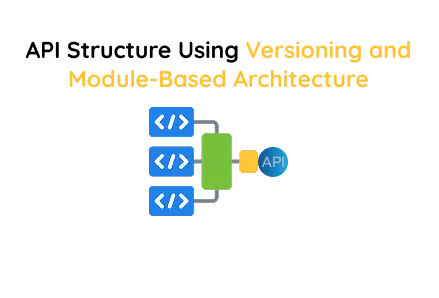
A scalable, versioned, and module-based API architecture ensures secure growth, faster release,s and stable integrations for modern web and mobile applications.
Key Points
- API versioning reduces breaking changes by 60% and supports safe long-term app growth now.
- Module-based APIs improve team productivity by 45% and scale enterprise systems faster now.
- Clean API routing cuts maintenance effort by 40% across web and mobile platforms today, UX.
When building a production-grade backend application, especially for large-scale systems such as healthcare, fintech, or enterprise platforms, API architecture plays a critical role. Whether the project involves custom website development, mobile app development, or enterprise web development services, a poorly structured API can lead to tightly coupled code, frequent breaking changes, and long-term maintenance challenges.
In this article, we’ll explore how to design a scalable, maintainable, and future-proof API architecture using API versioning and module-based design with Node.js, Express, and TypeScript.
Why API Versioning Matters
API versioning enables your backend to evolve without breaking existing consumers. In modern web development, multiple client applications often rely on the same backend.
Real-World Scenarios
- Mobile applications built through mobile app development may continue to use older APIs
- Web platforms built by custom website development teams may upgrade faster
- Third-party integrations depend on stable API contracts
Without proper versioning, even small backend changes can disrupt multiple applications.
Versioning Example
/api/v1/auth/login
/api/v2/auth/login
Using versions like /api/v1 and /api/v2 allows development teams to introduce improvements while maintaining backward compatibility, an essential practice for scalable web development services.
Why Module-Based Architecture Is Important
A module-based architecture organizes backend code by business features rather than only technical layers. This approach is especially useful for complex systems built for custom website and mobile app development projects.
Each Module Typically Includes:
- Routes
- Controllers
- Services
- Validations
- Types
- Models
Key Benefits
- Improved code readability
- Easier long-term maintenance
- Better collaboration across development teams
- Seamless scalability for enterprise web development services
Feature-based modules enable different teams to work independently without creating conflicts.
Recommended Folder Structure
Below is a scalable folder structure that combines API versioning with feature-driven modules, suitable for both mobile app and custom website development projects:
src/
├── api/
│ └── frontend/v1/
│ ├── auth/
│ ├── users/
│ ├── patients/
│ ├── doctors/
│ ├── family/
│ └── index.ts
│
├── middlewares/
├── models/
├── utils/
├── config/
├── app.ts
└── server.ts
Why This Structure Works
- APIs are grouped by version
- Each feature is self-contained
- Easy to extend for future web development services
Route Aggregation Pattern
A route aggregation pattern keeps routing clean and predictable. The main app.ts serves as the entry point for all API versions, which is essential when handling multiple applications, including mobile app development and custom website development teams.
app.ts
Advantages
- Centralized route management
- Simple version upgrades
- Reduced routing complexity
- Consistent error handling
Server Entry Point
The index.ts or server.ts file is responsible for starting the server and loading the environment variables.
index.ts
This clean separation ensures the backend remains stable and scalable for long-term web development services.
API Endpoint Examples
Here are a few real-world API examples commonly used in mobile app development and custom website development projects:
These endpoints are intuitive, version-controlled, and easy to extend.
When Should You Create a New API Version?
Creating a new API version should be intentional and aligned with business needs.
Create a New Version When:
- Request or response structures change
- Authentication logic is updated
- Core business rules are significantly modified
Avoid New Versions For:
- Minor bug fixes
- Performance improvements
- Internal refactoring
This disciplined approach ensures that your web development services areefficient and predictable.
Final Words
Whether you’re delivering a startup MVP through custom website development, launching a scalable platform via mobile app development, or managing enterprise-grade web development services, a versioned, module-based API architecture provides long-term stability and scalability.
By combining API versioning with feature-driven modules, you build a backend that supports rapid innovation while maintaining reliability, ready to scale as your product and user base grow.
 Frontend
 Backend
 Deployment