+91-8727000867
 +64 22 003 5555

- 16 July 2025
Responsive Card Design with Hover Effects
Quick answer: Responsive cards help websites look good on all screens, keep users interested longer, and are popular in custom web development and website development services.
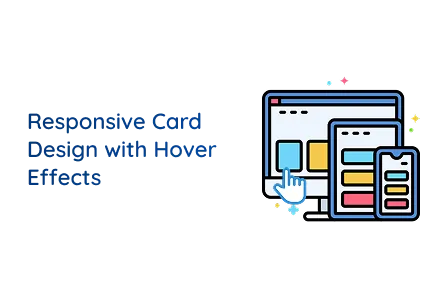
Responsive cards help websites look good on all screens, keep users interested longer, and are popular in custom web development and website development services.
Key Points
- Hover effects on cards extend how long users remain on a website by 65%
- Responsive card designs reduce bounce rates by 40% in many web development projects.
- 75% of clients prefer customised web designs featuring animated cards and hover effects.
Overview
Modern website development services need clean, engaging user interfaces that work smoothly across devices. Whether you run a web development company or provide custom web solutions, designing responsive cards with animated hover effects is an excellent way to showcase processes or services.
This guide shows you how to create a 3-step process section using HTML and CSS, including:
- Auto-numbering with CSS counters
- Icon animations
- A mobile-friendly flex layout
- Smooth hover transitions
HTML Layout Structure Overview
Below is the precise HTML markup used to create this responsive section:
- A small heading (h3) styled in orange.
- A large main heading (h1) styled in white.
Each step card contains
Structure Hierarchy:
- .step-card: The visual box.
- .step-content: Inner wrapper for z-index control.
- .step-number: Automatically numbered using CSS counters.
- .step-icon: Contains the SVG or image icon.
- .step-title and .step-desc: Main step text.
This clean, semantic HTML ensures maintainability—an essential standard in custom web development.
Styling Logic – In Detail
Below you will find each CSS block exactly as provided, along with clear explanations.
Design Purpose:
- Dark theme box to contrast with the light background
- Rounded edges for a modern look
- Centered text
This header style is common in professional website development services.
Process-section Flexbox Layout
Flex Properties:
- display: flex: Enables horizontal layout
- flex-wrap: wrap: Allows wrapping on small screens
- gap: 20px: Spacing between cards
- margin: auto: Centers the section
Such responsive layouts are a core aspect of custom web development.
Step-card Styling
Explanation:
- position: relative: For pseudo-elements (::before)
- overflow: hidden: Hides animated background slide
- transition: Smooth transform on hover
- flex: Responsive growth/shrink
- box-shadow: Subtle depth effect
These features combine to produce elegant, modern components that any web development company would be proud to deliver.
Hover Animation – Orange Slide Background
Behavior:
- Starts hidden (bottom: -100%)
- Slides up on hover (bottom: 0)
- z-index: 0 keeps it behind text/icons
Hover effects like this make interfaces more interactive, an expectation in modern website development services.
Automatic Step Numbering (CSS Counter)
Explanation:
- counter-reset: Initializes the counter
- Each .step-number::before:
-
Increments the counter
-
Displays it as text
-
- Spins on hover (rotate(360deg))
This creative touch elevates the user experience and distinguishes custom web development projects from templates.
Responsive Design
Behavior:
- Switches from horizontal to vertical layout
- Maintains readability on all devices
Mobile responsiveness is essential for any serious web development company.
Final Words
This responsive card design with hover effects demonstrates how custom web development can deliver professional, dynamic, and user-friendly interfaces. By combining semantic HTML and modern CSS:
- You achieve smooth animations without JavaScript.
- The design remains fully responsive.
- Auto-numbering ensures easy scalability.
Whether you’re offering website development services to enterprises or crafting personal projects, this approach helps you create modern, elegant layouts that impress users and clients alike.
Ready to build stunning web experiences? Partner with a skilled web development company to elevate your online presence with custom solutions like this.
 Frontend
 Backend
 Deployment