
Custom CRM development improves sales tracking, customer data management, and workflow automation, helping businesses increase efficiency, accuracy, and revenue.
Highlights

Co-Founder
Vandana Abrol 
5 min read
An enthusiastic developer and skilled business management expert with over a decade of experience in the field
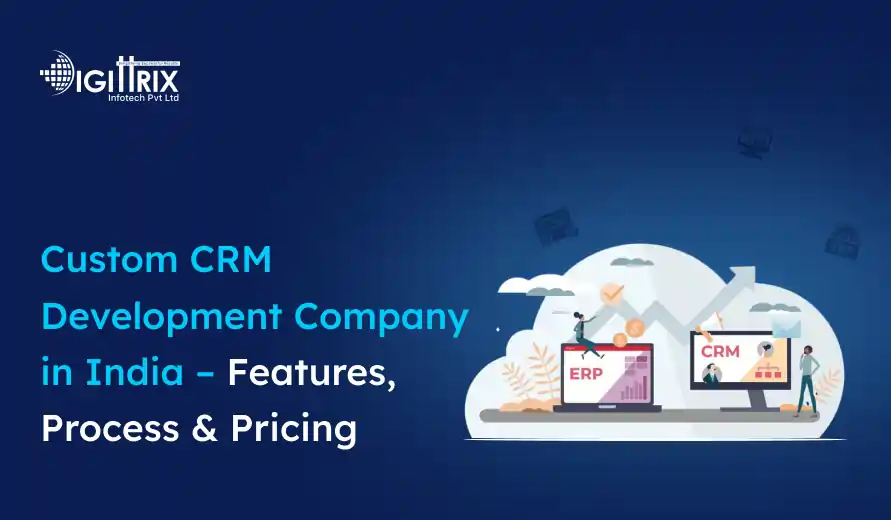
Managing customer relationships is no longer limited to maintaining contact lists or updating spreadsheets. Modern businesses handle leads from websites, paid campaigns, social media platforms, referrals, events, and direct calls. Without a structured system, follow-ups get missed, communication becomes scattered, and revenue opportunities are lost. That is why many companies now partner with a Custom CRM Development Company in India to build a centralized system that aligns with their exact business workflow and long-term objectives.
A custom CRM (Customer Relationship Management) system allows organizations to manage customer data, sales pipelines, service requests, internal coordination, reporting, and automation in a single platform. Unlike ready-made CRM software, a customized system is built specifically for your business structure, industry requirements, and operational processes.
This detailed guide explains CRM features, development stages, pricing structure, benefits, and how to choose the right development partner.
Concerned about data breaches? Check Digittrix's Immigration CRM insights to protect your business!
Custom CRM software is ideal for:
If your business processes don’t fit inside standard CRM templates, a custom solution is the right investment.
Custom CRM development refers to building software that matches your exact operational requirements. Every business follows a unique process. A retail brand tracks inventory and repeat customers. A hospital monitors patient history and appointments. A B2B company manages long sales cycles and approvals.
Pre-built CRM systems may offer general features, but they often lack flexibility for industry-specific processes. When businesses build custom CRM software, they create a solution aligned with:
This approach provides control over system design and future scalability.
A professionally designed CRM includes several interconnected modules.
This module captures leads from:
Leads can be assigned automatically based on region, product category, or sales representative workload.
All customer information is stored in one centralized database:
This avoids duplication and improves coordination.
A visual dashboard tracks deals across defined stages:
Managers can identify where deals slow down.
Sales and support teams receive reminders for calls, meetings, and follow-ups. Managers can review daily or weekly productivity.
Reports help management evaluate:
These reports support data-driven decision-making.
Automation features reduce manual tasks:
Automation improves operational consistency.
The CRM can integrate with:
Access permissions ensure employees see only relevant data.
Field sales teams can access the CRM via responsive web dashboards or dedicated mobile applications.
Security includes encrypted databases, secure authentication, activity logs, and scheduled backups.
A structured development process ensures software quality, performance stability, and long-term usability. Following a systematic approach minimizes risks, prevents costly revisions, and ensures the CRM aligns perfectly with business objectives.
Developers conduct detailed discussions and discovery sessions to understand:
This stage helps identify workflow gaps, automation opportunities, and scalability requirements. Clear documentation and requirement mapping reduce development errors and prevent scope confusion later.
During this phase, the system architecture, database structure, and technology stack are defined. Developers decide how different modules will interact and how data will flow securely across the platform.
A well-planned technical foundation ensures system scalability, performance efficiency, and future upgrade flexibility.
Interface layouts and user journeys are designed to ensure easy navigation and logical workflow movement. Wireframes provide a visual representation of how dashboards, forms, and reports will appear.
A clean and intuitive UI improves user adoption, reduces training time, and enhances overall productivity.
Developers build the core system functionalities, database logic, dashboards, automation rules, and reporting modules.
Common technologies include:
Backend development manages data processing and business logic, while frontend development ensures a responsive and user-friendly interface.
Third-party software such as ERP systems, accounting tools, payment gateways, SMS services, and marketing platforms are connected securely using APIs.
Proper integration ensures real-time data synchronization and eliminates manual data duplication across systems.
The CRM undergoes multiple testing layers, including:
Comprehensive testing ensures the system performs reliably under real-world conditions and protects sensitive customer data.
After successful testing, the CRM is deployed on cloud infrastructure or dedicated hosting servers based on business requirements.
Deployment includes server configuration, database setup, security implementation, and live environment optimization.
Employee training sessions ensure smooth adoption and effective system usage across departments. Proper onboarding reduces resistance to change and improves efficiency.
Ongoing maintenance includes regular updates, performance monitoring, security patches, and feature enhancements to keep the CRM future-ready.
Large companies often require enterprise CRM solutions that support multi-branch operations and high user volumes.
Features may include:
These systems are built for scalability and long-term expansion.
 Ready to Develop a Custom CRM Platform?
A custom CRM platform can streamline lead management, automate workflows, improve team productivity, and provide complete visibility into your sales and customer data. Build a scalable solution designed specifically for your business operations and future growth.
Get expert guidance on custom CRM development from the Digittrix team today.
Start your CRM project →Businesses at different stages require different CRM capabilities. Startups may need a basic lead- and contact-tracking system. Mid-sized companies may require automation and reporting tools. Enterprises need multi-departmental management.
Professional firms provide custom CRM development that adapts to business growth without forcing a system rebuild.
CRM systems benefit various sectors:
Well-designed CRM solutions for businesses improve coordination and provide structured records management.
CRM development cost depends on features, integrations, and complexity.
India offers high-quality development at competitive pricing compared to the US or Europe markets.
The timeline for CRM development depends on feature complexity and integration requirements. A structured project typically follows this duration:
Average Project Duration: 2.5 to 4 months
Clear planning reduces development delays and ensures predictable delivery.
Investing in a custom CRM system delivers measurable long-term returns.
A properly implemented CRM can help businesses:
Most growing businesses recover their CRM investment within 12–18 months through improved operational efficiency and higher sales performance.
A structured CRM system supports:
Over time, it becomes a core operational system.
 Build Advanced Custom CRM Solutions for Your Business
Developing a custom CRM system requires more than basic contact management. Automated sales workflows, real-time reporting, secure customer data handling, and seamless integrations are essential. Digittrix helps businesses design and develop CRM platforms that streamline operations and improve customer relationship management.
Looking to build a custom CRM? Talk to Digittrix experts today.
| Feature | Custom CRM | SaaS CRM |
|---|---|---|
| Ownership | Full ownership | Vendor-controlled |
| Customization | Complete | Limited |
| Pricing Model | One-time + support | Subscription |
| Data Control | Internal | External |
| Scalability | Flexible | Platform dependent |
Businesses with unique workflows benefit more from custom-built systems.
When businesses decide to hire CRM developers in India, they should evaluate:
Experienced developers ensure long-term stability.
India has become one of the leading destinations for software development due to its technical expertise and cost advantages. Businesses across the globe outsource CRM projects to Indian development firms because they receive quality services within controlled budgets.
Here are the primary reasons companies prefer Indian CRM specialists:
Development costs are significantly lower compared to North America or Europe.
Specialized CRM developers, architects, UI/UX designers, and QA testers.
Fixed project cost
Dedicated team model
Hourly engagement
Long-term maintenance contracts, security updates, and upgrades.
Digittrix is a trusted custom CRM development company in India delivering scalable and secure CRM solutions tailored to business needs.
We offer:
Our goal is to build CRM systems that drive measurable business growth.
Data security is one of the most critical aspects of CRM software development. Businesses must ensure their system protects sensitive customer information and internal data.
Key security measures include:
Enterprise-grade CRM systems must prioritize data protection alongside functionality.
Looking to streamline your custom furniture and carpentry business? Check Digittrix’s CRM development guide to optimize your workflow and customer management!
A properly designed CRM system helps businesses manage customer interactions, sales pipelines, and internal coordination with clarity and structure. Instead of adapting processes to generic software, organizations can build systems aligned with their workflow and reporting requirements.
Partnering with a custom crm development company in India gives you access to experienced developers, structured execution processes, and cost-efficient solutions. Whether you operate a startup, a mid-sized company, or an enterprise, investing in a customized CRM platform supports long-term operational stability, performance tracking, and scalability growth.
Managing customer data, sales pipelines, and service interactions requires a structured system tailored to your business model. A well-planned CRM platform helps you organize information, track communication, and maintain accurate records across departments. Instead of relying on fixed software limitations, a customized system lets you define how your workflow operates.
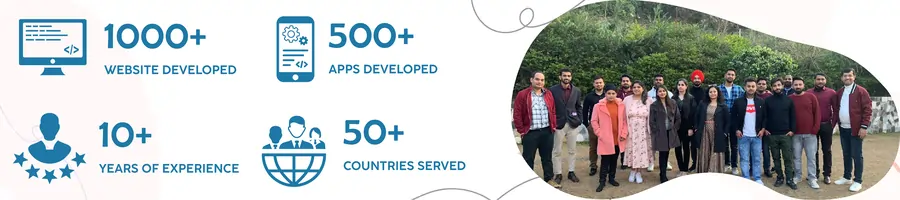
Digittrix provides complete CRM development solutions tailored to your business-specific requirements. With more than 14 years of industry experience and a skilled development team, we design and deliver CRM platforms that align with your internal sales process, reporting structure, and integration needs. Our approach emphasizes clarity, performance, and long-term usability.
Whether you need lead tracking, sales pipeline management, reporting dashboards, automation modules, or integration with third-party tools, our team builds CRM systems tailored to your operational structure.
If you are planning to implement a CRM solution and need professional consultation, speak with our technical managers to discuss your requirements. Call us at +91 8727000867. For any queries or more information, write to us at digittrix@gmail.com. Let us help you elevate your business with the best CRM software development solutions.
Do you need help in ERP/CRM Development ?


Join over 1500+ businesses we've already helped!
The cost of custom CRM development in India typically ranges from ₹6,50,000 to ₹50,00,000 or more, depending on features, integrations, automation level, security requirements, and enterprise complexity.
A custom CRM system typically takes between 2.5 and 4 months to develop. The timeline depends on project complexity, the number of modules, integrations, testing requirements, and the depth of customization.
Custom CRM software is tailored to your business processes and offers full ownership, unlimited customization, and flexible scalability. SaaS CRM platforms offer ready-made solutions with subscription pricing but limited customization and vendor-controlled data management.
Yes, custom CRM systems can integrate with ERP software, accounting systems, payment gateways, marketing automation tools, SMS platforms, and other third-party applications via secure APIs.
A professionally developed custom CRM includes encrypted databases, role-based access control, activity logs, secure authentication, and a compliance-ready architecture to ensure data protection and operational security.

Enhance efficiency with creative business solutions that drive productivity and revenue. Contact us for tailored solutions designed specifically for your business
Make the right business move.
Your email ID is Confidential.








©2026Digittrix Infotech Private Limited , All rights reserved.
 +91-8727000867
 +64 22
003 5555
+64 22
003 5555

 0172-4655268
 Request Instant Call
 Hire Remotely