+91-8727000867
 +64 22 003 5555

Disconnected Systems & Data Silos
Unify fragmented tools into a centralized ERP and CRM ecosystem, with shared information across departments.


Selected organizations represented across Digittrix’s broader product portfolio. Explore our published work and client reviews across web, mobile, and business software.












Last updated .
ERP connects internal operations such as inventory, procurement, finance, and people. CRM connects leads, sales, customer conversations, and support. Together, they bring your business information into one connected platform, automate essential processes, and make reporting easier across departments.
Start with ERP development, CRM development, or a focused integration. We map your workflows and define shared records, permissions, and reporting around the priorities that matter most to your business.
Bring fragmented tools, manual tasks, and business reporting into a clearer workflow.
Unify fragmented tools into a centralized ERP and CRM ecosystem, with shared information across departments.
Automate repetitive reporting, data entry, and approvals to reduce manual effort and improve consistency.
Use dashboards and analytics to understand operations, performance metrics, and customer interactions.
Start with the modules your business needs today. Each solution can connect to your existing tools and expand as your teams and processes evolve.
Connect inventory, procurement, finance, and production in a custom ERP system. Give each team the modules, shared records, and permissions it needs to keep work moving.
Give sales and support teams one place to manage leads, follow-ups, customer conversations, and pipeline performance. Connect your existing communication tools and define who owns each next step.
Bring operational and customer data together in clear dashboards so teams can track performance and make informed decisions.
Replace repetitive handoffs with configurable approval flows, task routing, and notifications across your departments.
From process mapping and interface design to integration, migration, and ongoing improvements.
Choose the services you need for a new platform, an integration project, or the next phase of your existing ERP and CRM.
Build the operational modules your teams need, starting with priority workflows and extending the system as your business grows.
Connect acquisition, sales, and customer service around a shared customer record, with workflows tailored to your teams.
Connect orders, payments, stock, and customer data across departments. Define record ownership, synchronization rules, and error handling for each integration.
Upgrade existing systems in phases. Plan data migration, releases, and support around the operational processes that must keep running.
Connect internal operations, customer workflows, and digital channels through enterprise software designed around your business.
Staff portals, approval systems, and reporting tools built around clear user roles and data ownership. Agree on the workflows and acceptance criteria before development begins.
Responsive dashboards and portals connect to your business rules, authentication, databases, and APIs so teams can work consistently across locations.
Bring approvals, stock checks, lead updates, and visit notes to mobile devices. Share backend services with the web platform, with offline access and synchronization planned where needed.
Choose web, mobile, or both around the work being done. For field teams, define offline tasks, synchronization, and device access. Flutter can be an option for a shared mobile codebase; device integrations and distribution requirements guide the final choice. Explore Flutter’s supported platforms ↗
A useful CRM reflects how your business wins and retains customers. Define the customer journey before selecting fields, automations, or dashboards.
Map your customer segments, acquisition channels, sales stages, communication preferences, and service expectations. Decide which information each team needs and who owns the next action. Those decisions guide workflows, data capture, and reporting.
Define lead qualification rules, follow-up schedules, handover steps, and renewal workflows. Pilot with a small team, review data quality and adoption, then expand.
Build around industry-specific processes, with modules tailored to the way your teams operate.
Production planning, raw material tracking, inventory control, and vendor management for factory operations.
Order processing, warehouse management, multi-location inventory synchronization, and customer tracking.
Appointment and billing workflows with controlled access to records. Pharma CRM workflows can support field visits and distributor follow-ups, with privacy requirements defined during discovery.
Connect property listings, enquiries, site visits, agent assignments, and buyer follow-ups in a custom real estate CRM.
Fleet management, order tracking, inventory automation, and real-time reporting.
Manage enquiries, proposals, project handovers, renewals, and support tickets. Keep sales commitments and customer history visible to delivery teams.
For visa and overseas education consultancies, explore our custom immigration CRM development services for applicant records, document checklists, case stages, and counselor follow-ups.
Reduce duplicate data entry and connect operational and customer information across your business.
We map how data moves between your systems, define synchronization rules, and build integrations around existing workflows.
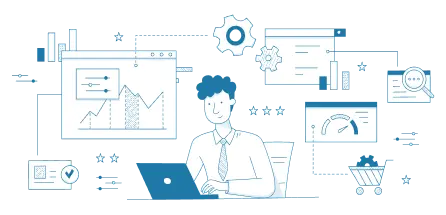
Technology choices follow your workflows, integrations, security requirements, and growth plans.
The final stack is selected during discovery around your existing systems and agreed delivery scope.
Responsive dashboards and mobile experiences for sales teams, operations, and administrators.
React
Angular
Flutter
Next.js
Keep business rules, APIs, permissions, and integrations organized so each module can evolve with controlled changes.
Node.js
PHP
Laravel
Python
Structure shared records, validation, reporting, and retention around your transaction volumes and access requirements.
MySQL
PostgreSQL
MongoDB
MariaDB
Plan deployment, backups, monitoring, and scaling around your operational needs.
AWS
Google Cloud
Microsoft Azure
Docker
Integrate payment providers with invoicing, reconciliation, and customer records.
Razorpay
Stripe
PayPal
Configure identity, permissions, audit trails, and secure communication for your system.
Role-based access
Single sign-on
Secure sessions
Audit logs
Compare an existing product with a custom build against your workflows, budget, and maintenance needs. These platform options are a buyer’s guide; availability of platform-specific implementation should be confirmed separately.
Compare available ERP modules with the workflows that need customization. Include edition, hosting, migration, upgrades, and support in the total cost.
Odoo architecture reference ↗Evaluate standard CRM features, configuration, custom components, and integrations. Include licensing and ongoing administration alongside implementation costs.
Salesforce development reference ↗For an existing SugarCRM system, assess the product version, extensions, relationship data, and integration needs. Check how changes will be maintained through upgrades.
Sugar developer documentation ↗Compare its modules, fields, permissions, and integrations with your requirements. Budget for hosting, backups, upgrades, and technical maintenance.
SuiteCRM developer guide ↗For product-lifecycle requirements, confirm the exact SAP product and licensed services. Review current Integrated Product Development documentation when assessing earlier Enterprise Product Development applications.
SAP product documentation ↗Laravel is a framework for building an application. A custom CRM still needs its customer records, workflows, permissions, reporting, and integrations designed and developed.
Explore Laravel development →Choose an MVP, Advanced, or Advanced with AI package for your ERP or CRM project. These USD budgets describe levels of project scope. Your written proposal confirms the modules, platforms, integrations, migration and support included.
USD 1,499
Start with the core ERP or CRM workflow your team needs for an initial release. Agree the essential records, user roles and reports before development.
Scope to agree
USD 1,500–2,499
Plan a broader ERP or CRM scope with connected modules, workflow automation, integrations and more detailed reporting. The selected requirements determine the quote within this budget range.
Scope to agree
USD 2,500+
Extend advanced ERP or CRM workflows with selected AI capabilities, such as record summaries, document assistance or reporting insights. The AI use case, data preparation and evaluation determine the final scope.
Scope to agree
For a useful estimate, share your current tools, priority workflows, user counts, integrations, migration needs and target rollout. Web and mobile coverage, exclusions and tax treatment are confirmed in the quote. Hosting, licensing, messaging, ongoing support and AI-provider usage charges are identified separately.
Request a scoped ERP / CRM estimate →Compare scope and ongoing costs in our ERP development cost guide and CRM development cost guide.
Explore delivered customer workflows and business operations, including the MadamG ERP and MapMyApplication CRM.
A CRM and mobile app connecting student enquiries, college records, team tasks, and offer-letter tracking for overseas education workflows.
MadamG needed to manage customers, missed appointments, financial information and business analytics. Digittrix delivered ERP and administration workflows for these operational needs alongside its customer and beautician apps.
A custom-first approach, clear milestones, and a system designed for ongoing improvement.
Systems tailored to your workflows, reporting needs, and operational priorities.
Modular platforms designed to support future features and business expansion.
Clear communication, milestone reviews, and progress tracking throughout delivery.
Maintenance, upgrades, and technical assistance for your business systems.
Access controls, secure integrations, and performance planning across the platform.
Design, engineering, integration, testing, and handover within one roadmap.
Move from discovery to rollout in agreed stages, with working demonstrations, review points, and acceptance criteria at each step.
Review your teams, current tools, bottlenecks, and priorities.
Map user roles, dashboards, modules, and integration flows.
Build and review working modules against agreed milestones.
Check workflows, permissions, data quality, and performance.
Plan data migration, user training, and a controlled rollout.
Monitor the system and plan improvements as your business grows.
Clear answers about ERP and CRM development, enterprise applications, platform choices, costs, and ongoing support.
ERP development focuses on operations such as purchasing, inventory, production, and finance. CRM development focuses on leads, sales, customer communication, and support. An integration can connect both through shared records and agreed data ownership.
Consider custom software when standard products cannot adequately support your workflows, integrations, or reporting. Compare the cost of extending an existing platform with the build and maintenance costs of a new system.
Digittrix lists three ERP and CRM development package budgets: MVP at USD 1,499, Advanced at USD 1,500–2,499, and Advanced with AI at USD 2,500+. These are levels of project scope, not separate prices for CRM, ERP and mobile apps. The written proposal confirms the selected modules, platforms, integrations, migration, support and exclusions. Hosting, licensing, messaging and AI-provider usage charges are identified separately.
MVP covers the agreed core workflow, records, roles and essential reports. Advanced extends the scope to connected modules, automation, integrations and management reporting. Advanced with AI adds selected capabilities such as record summaries, document assistance or reporting insights. Each package requires a written scope; AI-provider usage and ongoing infrastructure charges are identified separately.
Yes. A custom workflow can record appointment status, keep missed appointments in the customer history and assign follow-up tasks. MadamG ERP is a published Digittrix example covering customer management, missed-appointment tracking, finance and business analytics. Reminder channels, rescheduling rules and any messaging charges should be agreed separately; tracking alone does not guarantee fewer missed appointments.
Define which roles can view, edit, export and approve each type of record. During discovery, agree authentication, audit logs, backups, retention and integration permissions. For AI features, also define which data may reach a model provider and where human review is required. Applicable privacy or sector requirements need project-specific review; the package name alone does not establish compliance.
No. Odoo, Salesforce, SugarCRM, SuiteCRM and SAP are listed as options to compare with custom development. Confirm the exact product, edition, licensing, integration access and availability of platform-specific implementation before choosing an approach. Laravel and Flutter are development frameworks, not ready-made ERP or CRM products.
The delivery schedule is set after the first-release modules, integrations and migration scope are agreed. Plan milestones for workflow approval, design, development, user acceptance testing, trial migration and launch. API access, usable source data and timely feedback affect these dates. A focused module and a full system replacement need separate estimates; confirm dependencies and responsibilities in the written plan.
Yes, integration can be scoped around available APIs, access permissions, and vendor limits. We first identify which system owns each record, what needs to synchronize, and how errors or duplicate records will be handled.
Migration can include mapping fields, cleaning duplicates, trial imports, and record validation. Agree on the source data, migration responsibility, checks, and recovery plan before switching teams to the new system.
Mobile scope can include approvals, stock checks, lead updates, and visit notes. Supported devices, offline tasks, and synchronization requirements should be agreed before choosing the app technology.
Agree on the support period, contact channel, coverage hours and response targets before launch. Separate fixes to agreed functionality from new features, and identify responsibility for hosting, backups, monitoring and third-party updates. Any included support and ongoing maintenance charges should be recorded in the proposal; there is no single support allowance stated for every project on this page.
Confirm source-code ownership and transfer conditions in the project agreement before development begins. Distinguish custom code from pre-existing components and third-party licenses, and specify who controls the repositories, hosting and vendor accounts. Record data access, export and handover responsibilities rather than assuming every component has the same ownership terms.
Agree a handover checklist covering the code and repositories included in the contract, deployment instructions, administrator access, database documentation, integration configuration and user training. Record third-party licenses, backup and recovery procedures, outstanding issues and the support contact. Review the checklist against the agreed acceptance criteria before sign-off.
The best fit depends on your sales process, integrations, reporting, adoption needs, and budget. Test shortlisted systems with realistic lead, follow-up, handover, and renewal scenarios before choosing a platform or custom development.
Give providers the same workflows, roles, integration list, migration requirements, and acceptance criteria. Compare deliverables, source-code ownership, support terms, and recurring charges alongside the initial development price.
Explore development services and guides for the next step in your roadmap.
Tell us about your current tools, priority workflows, and timeline. We will help define a practical roadmap and written scope for your ERP, CRM, or connected business application.
Where we work: India, the United States, the United Kingdom, Canada, Australia, and New Zealand.
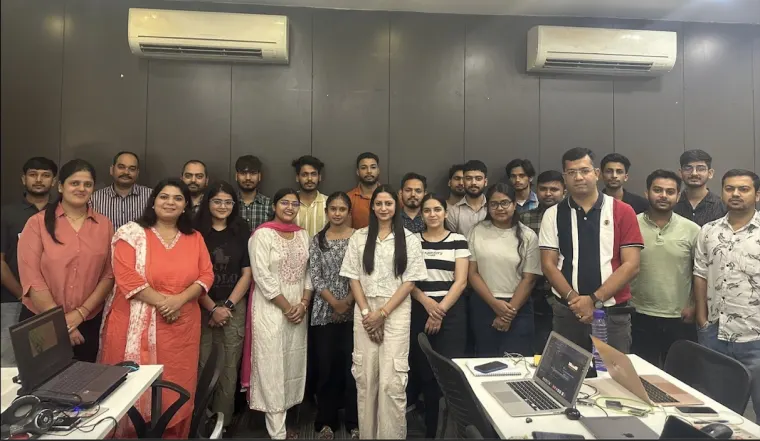
Enhance efficiency with creative business solutions that drive productivity and revenue. Contact us for tailored solutions designed specifically for your business


 Request Instant Call
 Hire Remotely