 +91-8727000867
 +64 22 003 5555


Highlights
- Voice recognition in healthcare may reduce manual entry errors by up to 25% in clinics.
- Healthcare voice assistants may support 35% faster patient query handling rates.
- Speech recognition for medical documentation may save 2 hours daily for doctors.

Co-Founder
Vandana Abrol 
An enthusiastic developer and skilled business management expert with over a decade of experience in the field
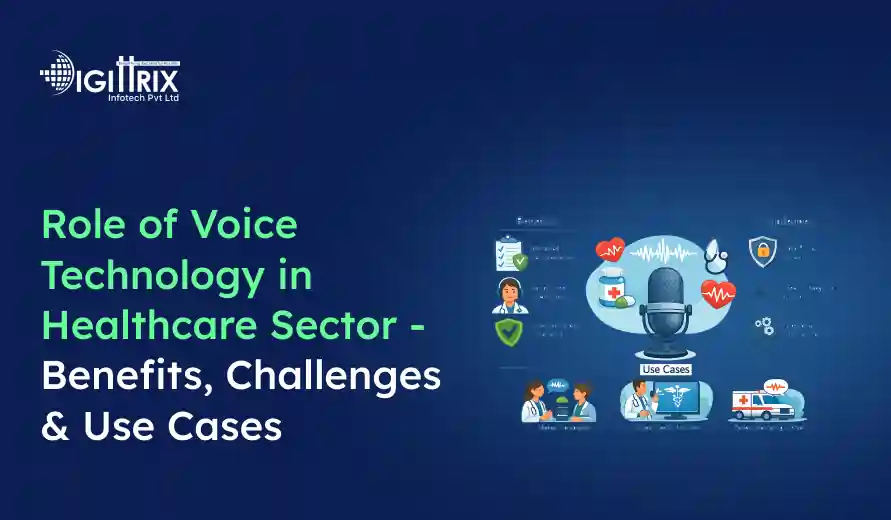
Introduction
Voice technology in healthcare is changing how medical services are delivered and managed across hospitals, clinics, and home care settings. Enabling users to interact with systems through spoken commands, it reduces reliance on manual input methods such as typing or clicking. This shift is helping both healthcare professionals and patients complete tasks faster and with less effort.
The growing demand for quick, accessible healthcare services has heightened the need for practical tools that can handle high workloads. Voice-based systems are now used to support patient communication, data entry, and remote care. As digital tools continue to expand in the medical field, voice-driven solutions are becoming more common in daily healthcare operations.
Discover how technology is changing healthcare delivery! Explore healthcare apps transforming patient care and the future of digital health solutions.
Industry Statistics & Market Trends
The adoption of voice-based systems in healthcare is steadily growing as medical providers seek faster, simpler ways to manage operations. Studies show that a large percentage of doctors now prefer speech tools for documentation because they reduce manual workload and save time during consultations. The use of digital health platforms has also increased, especially since the rise of remote care services.
Reports indicate that voice-enabled tools can reduce documentation time by 30–40 percent in clinical settings. At the same time, telemedicine use continues to expand, with more patients opting for remote consultations. This growth is prompting custom healthcare app development providers to invest in voice-driven solutions to improve communication and task management.
Understanding Voice Technology in Healthcare
Voice technology refers to systems that can process human speech and respond meaningfully. It uses a combination of speech recognition, natural language processing, and machine learning to convert spoken words into commands or data. In medical settings, these systems support tasks such as patient record management, appointment scheduling, and information retrieval.
One key aspect is voice recognition in healthcare, which enables systems to accurately identify and interpret spoken language, even with complex medical terminology. This helps doctors and staff perform their duties without relying heavily on manual input. It also reduces the time spent on repetitive administrative tasks.
 Develop AI-Powered Voice Solutions for Healthcare Systems
Build smarter healthcare workflows with voice-enabled apps, AI assistants, and automated patient communication systems.
Benefits of Voice Technology in Healthcare
Using voice-based tools offers several advantages in the healthcare sector. One major benefit is improved efficiency. Doctors can dictate notes instead of typing, saving time during consultations. This is especially helpful when using speech recognition for medical documentation, which converts spoken input into structured records.
Another advantage is improved accessibility. Patients who may struggle with mobile apps or digital interfaces can use simple voice commands to access healthcare services. Healthcare voice assistants play an important role by guiding users through tasks such as booking appointments, setting medication reminders, and answering basic health-related questions.
Voice tools also help reduce errors in patient records. When information is captured in real time via speech, there is less chance of missing details. This results in more accurate documentation and improved patient care.
- Faster patient data entry through voice commands
- Improved access for elderly and physically challenged users
Voice vs Traditional Data Entry in Healthcare
When comparing voice-based systems with traditional data entry methods in healthcare mobile app solutions, the differences are clear. Voice tools allow doctors to record patient information quickly, whereas manual typing takes more time and effort. This is especially important in busy hospital environments where speed matters.
Voice-based systems also reduce physical strain from long hours of typing. While traditional methods rely heavily on keyboards and manual input, voice systems enable hands-free operation. However, both methods have their place, and many healthcare providers use a combination of both, depending on the situation.
Use Cases of Voice Technology in Healthcare
Voice technology is being used in several practical ways across the healthcare sector. One of the most common use cases is clinical documentation. Doctors can record patient details using voice commands, and the system converts them into written records. This reduces workload and allows more focus on patient interaction.
Another important use case is virtual support via healthcare voice assistants, which can help patients manage daily health tasks. These assistants can remind patients to take medication, monitor symptoms, and provide basic guidance without requiring constant human support.
In telemedicine, voice tools help doctors manage consultations more efficiently. They can access patient data, update records, and issue instructions without switching between multiple screens. This improves the experience for both doctors and patients.
Voice systems are also becoming part of healthcare mobile app solutions, allowing users to interact with apps using speech instead of touch. This makes apps more user-friendly, especially for older patients or those with limited technical skills.
Real-World Applications in Healthcare
Many healthcare providers already use voice-based tools in their daily operations. Hospitals use voice dictation systems to maintain patient records more efficiently. Telemedicine platforms use voice features to improve communication between doctors and patients during online consultations.
In home care settings, patients use voice-enabled devices to manage their health routines. These tools help them track medications, set reminders, and connect with healthcare providers as needed. This practical use of voice systems demonstrates how they can support both clinical and non-clinical healthcare development services.
Upgrade Hospitals & Clinics with Voice Technology
Improve patient care, reduce documentation time, and streamline hospital operations using voice-based healthcare systems.
Voice Technology in Healthcare for App Development
The role of voice technology in healthcare is expanding within digital solutions, particularly in healthcare app development. Developers are now focusing on building applications that support voice interaction as a core feature. This allows users to perform tasks such as symptom checking, appointment booking, and accessing reports through simple voice commands.
A well-designed custom healthcare app can include voice-enabled features that enhance usability and accessibility. For example, patients can navigate the app, receive instructions, and manage their health data without typing. This is especially useful for users who prefer hands-free interaction.
Voice-enabled apps are also helping healthcare providers deliver better remote care. By combining voice technology with mobile platforms, developers are creating tools that support continuous patient engagement and simplify communication.
Challenges of Voice Technology in Healthcare
Despite its advantages, voice technology also faces challenges in healthcare. One of the main concerns is data privacy. Because voice systems handle sensitive patient information, robust security measures are required to protect this data.
Accuracy is another issue. Although voice recognition in healthcare has improved over time, it can still struggle with accents, background noise, or complex medical terminology. Misinterpretation of speech can lead to incorrect data entry, which may affect patient care.
Integrating with existing systems can also be challenging. Many healthcare providers use different software platforms, and connecting voice technology to these systems may require additional effort and cost.
User adoption is another challenge. Some healthcare professionals may struggle to transition from traditional methods to voice-based systems. Proper training and support are essential to help users become comfortable with the technology.
Who Should Use Voice Technology in Healthcare
Voice-based systems are useful for a wide range of users across the healthcare sector. Hospitals and clinics can use them to manage patient records and streamline workflows. Healthcare app development companies and startups can integrate voice features into their digital products to deliver better user experiences.
Healthcare professionals, including doctors, nurses, and administrative staff, can benefit from reduced workloads and faster task completion. In addition, home care providers and older patients can use voice tools to simplify communication and health management. This makes voice technology suitable for both large healthcare organizations and individual users.
Future Scope of Voice Technology in Healthcare
The future of voice technology in healthcare looks promising as speech processing continues to improve. Voice systems are expected to become more accurate and widely accepted in medical settings. This will likely lead to increased adoption across healthcare settings.
Voice tools may also become more personalized, offering health suggestions based on individual patient data. Integration with wearable devices could enable users to manage their health more efficiently via voice commands.
Another area of growth is multilingual support. As healthcare services expand globally, voice systems that understand multiple languages will improve communication between patients and providers.
Discover the future of SEO with voice technology! Read website optimization for voice search to boost visibility and user engagement.
Final Words
Voice technology in healthcare is playing a significant role in improving how healthcare services are delivered. It supports faster communication, reduces manual work, and makes healthcare systems more accessible to a wider range of users. From documentation to patient support, its applications continue to expand.
Although challenges such as data security, accuracy, and integration remain, ongoing improvements are addressing them. With proper use and planning, voice-based systems can contribute to better patient care and more efficient healthcare operations.
Build Smart Healthcare Solutions with Digittrix’s Voice Technology Expertise
Understanding the growing role of voice-enabled systems is essential for healthcare providers and businesses seeking to improve patient care and operational efficiency. From faster clinical documentation and real-time patient interactions to remote monitoring and virtual assistance, voice-based solutions are reshaping how healthcare services are delivered. At Digittrix, we help organizations adopt voice-driven technologies that improve communication, reduce manual work, and simplify healthcare processes.
With experience since 2014 in digital solution development, our team builds advanced healthcare applications with voice capabilities. Whether it’s integrating speech-based tools for medical documentation, developing intelligent virtual assistants, or creating user-friendly patient apps, we deliver practical, scalable solutions aligned with real healthcare needs. Our approach ensures smooth performance, ease of use, and long-term adaptability for healthcare providers.
Planning to integrate voice features into your healthcare platform? Hire expert developers at Digittrix today. We offer transparent pricing, flexible engagement models, and customized solutions tailored to your goals in the healthcare sector.
Ready to bring voice-driven healthcare solutions to life? Schedule a consultation with Digittrix today by calling +91 8727000867 or emailing us at digittrix@gmail.com. Let Digittrix help you turn voice technology concepts into real-world healthcare solutions that drive growth and improve patient experiences.

 FAQ's
FAQ's