 +91-8727000867
 +64 22 003 5555


Quick takeaway
Grocery unit economics answers one question: after the variable costs of a completed order, does the order make a positive contribution toward the business's fixed operating costs? It is a planning framework, not a promise of profitability or financial advice.
What Are Grocery Delivery Unit Economics?
Unit economics measures the direct revenue and direct cost associated with one completed order. For a single-store retailer, the unit is usually a fulfilled customer order. For a marketplace, it may also include a vendor order, commission settlement, or delivery leg. Define the unit before comparing costs; otherwise, an order with customer pickup, an in-house rider, and a third-party delivery partner can appear artificially similar.
Planning formula: contribution per completed order = net merchandise margin + delivery, commission, subscription, or promotion income − funded discounts − payment fees − picking and packing − delivery cost − refunds, credits, and other variable support costs.
Fixed costs—such as core team salaries, rent, software subscriptions, warehouse overhead, and marketing—are assessed separately when estimating break-even.
Inputs to Track for Every Completed Order
| Input | Why it matters | Useful breakdown |
|---|---|---|
| Average order value | Sets the base for merchandise margin, fees, discounts, and basket-level economics. | New versus repeat customers, area, store, category, and delivery slot. |
| Net merchandise margin | Shows the actual product contribution after supplier cost, spoilage policy, and customer-funded discounts. | Category, supplier, own inventory versus marketplace, and substitution rate. |
| Picking and packing cost | Rapid fulfillment can lose margin if picking time, errors, or packing material are not measured. | Items per order, picker minutes, order accuracy, bags, and replacement handling. |
| Delivery cost | Distance, rider availability, batching, incentives, and failed deliveries affect every local order. | Completed delivery, kilometer, zone, time band, and delivery partner. |
| Payments and refunds | Payment fees, cancellations, refunds, and credits can materially change the realized contribution. | Payment method, failure reason, return reason, and order status. |
| Acquisition and repeat behavior | A first order may be unprofitable while later orders contribute positively; the model should not hide that difference. | New versus repeat customer, cohort, offer source, and reorder interval. |
How the Business Model Changes the Math
Single-store or retail-chain ordering
The retailer usually owns the merchandise margin and controls catalog, substitutions, store labor, and delivery rules. The primary decision is whether local delivery contribution covers the added fulfillment cost compared with a pickup or walk-in order.
Multi-vendor marketplace
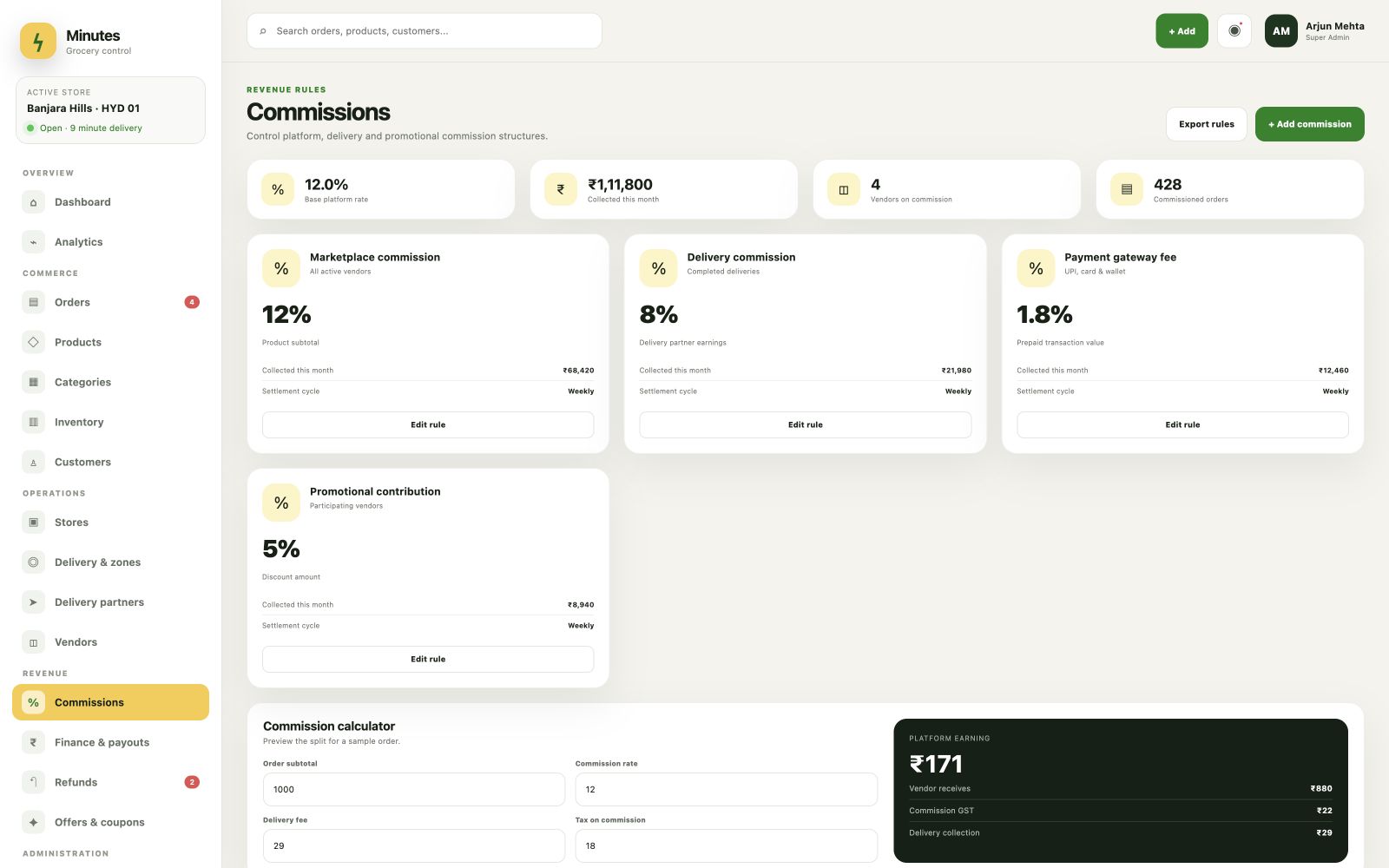
The platform may earn commission, delivery fees, advertising, or subscription income, but it must model vendor payouts, settlement timing, promotions, support, and responsibility for substitutions and refunds. A marketplace needs clean order and settlement records per vendor.
Quick commerce or dark-store fulfillment
Speed depends on inventory accuracy, short service zones, picker capacity, rider availability, and the ability to batch or route orders without breaking the promised delivery window. The model should test each zone and time band separately rather than use a single city-wide average.
A Practical Break-Even Check
After contribution per completed order is credible, estimate the order volume needed to cover fixed monthly costs:
Monthly break-even completed orders = fixed monthly operating cost ÷ contribution per completed order.
This is a directional planning check. It does not replace cash-flow forecasting, tax advice, accounting treatment, or legal review. Recalculate when delivery zones, discount policy, supplier terms, store labor, product mix, or third-party fees change.
Build the Data Model Before the Dashboard
Product reporting can only explain an outcome if the order data records the business rules behind it. A grocery platform should agree the order status model, source of truth for prices and inventory, coupon funding, delivery-fee rule, picker and rider events, substitutions, refunds, cancellation reason, and settlement status before launch.
- Record the promised and actual fulfillment and delivery times.
- Separate customer-funded, vendor-funded, and platform-funded discounts.
- Attribute fees and incentives to the completed order or delivery leg.
- Retain enough audit detail to reconcile orders, refunds, payments, and vendor settlements.
- Review contribution by store, zone, slot, category, order size, and new-versus-repeat cohort.
What to Validate in the First Release
Do not begin with every city or every category. A focused launch can validate a defined service area, catalog range, delivery model, operating hours, and refund policy. Use the early data to decide whether to improve basket size, stock accuracy, picker efficiency, delivery utilization, repeat purchase, or the offer strategy before expanding.
Related Grocery Product Planning
Use this economics model alongside the grocery delivery app development service, the grocery app cost guide, the single-store, marketplace, and warehouse model guide, and the POS and inventory integration guide. Each answers a different decision: what to build, what it costs, which operating model fits, and whether the data is reliable enough to manage orders.

 FAQ's
FAQ's