 +91-8727000867
 +64 22 003 5555


Highlights
Travel app payment integration requires separate payment and booking status tracking, secure transaction verification, and a reliable refund process.

Co-Founder
Vandana Abrol 
An enthusiastic developer and skilled business management expert with over a decade of experience in the field
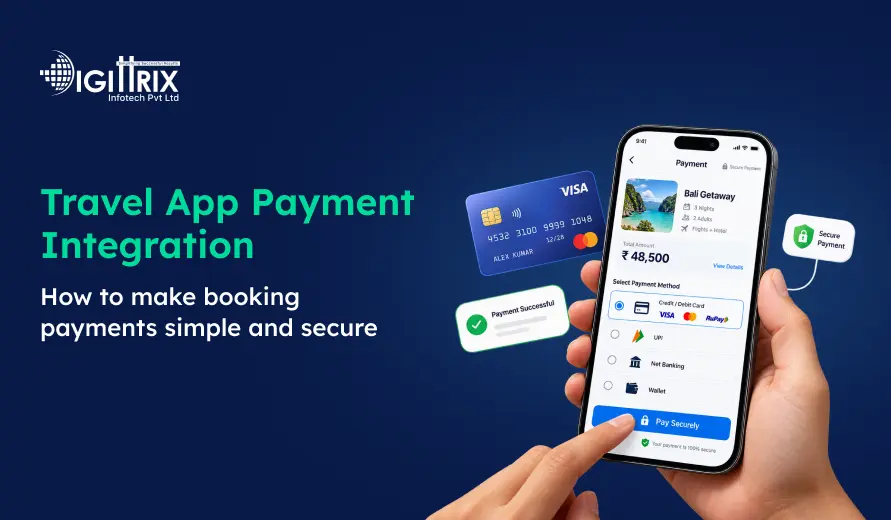
Booking flights, hotels, holiday packages, and rental cars through a mobile application should be convenient. However, failed transactions, unclear booking statuses, limited payment options, and refund delays can create problems for travelers and businesses.
Travel app Payment Integration connects a travel application with payment providers and reservation systems. However, collecting a payment is only one part of the process. The application must also verify the transaction, check whether the travel supplier has confirmed the reservation, manage cancellations, and communicate the correct status to the customer.
A successful payment does not automatically mean that a flight, hotel room, or holiday package is confirmed. The payment and reservation systems must work together while maintaining separate records of their status.
1. What Is Travel App Payment Integration?
Travel app payment integration connects a mobile application or website with payment gateways, financial services, and booking systems. It allows customers to pay for flights, accommodation, rental vehicles, and other travel services through supported payment methods.
A typical transaction involves three important components:
-
Travel application: Displays available services, prices, booking details, and payment options.
-
Payment provider: Processes the transaction and reports its payment status.
-
Travel supplier: Confirms or rejects the reservation according to availability and booking conditions.
The backend verifies the payment and checks the reservation status with the travel supplier. The app sends a booking confirmation only after the supplier confirms the reservation and the required payment conditions are met. If payment succeeds while confirmation is pending, the app should show that status clearly.
 Build Secure Travel App Payment Integration Solutions
Planning to integrate secure payments into your travel app? Talk to Digittrix experts about payment gateways, booking confirmation, transaction security, and refund workflows.
How the Payment and Booking Process Works
A standard workflow can include these stages:
-
The customer selects a flight, hotel, or other travel service.
-
The application retrieves the latest price and availability information.
-
The customer reviews the total amount, taxes, fees, and cancellation conditions.
-
The backend creates a booking reference and payment attempt.
-
The payment provider processes the selected payment method.
-
The backend verifies the payment status through a trusted provider response.
-
The booking system checks the reservation with the travel supplier.
-
The application updates the payment and booking statuses separately.
-
The customer receives the appropriate payment receipt and booking notification.
The application should not treat a payment success response as proof that the supplier has confirmed the reservation.
What Should Happen When Payment and Booking Statuses Differ?
|
Situation |
What the app should do |
|
Payment succeeds; supplier confirmation is pending |
Show “Payment received—booking confirmation pending” and check the supplier response |
|
Payment is captured; booking definitively fails |
Start the appropriate refund workflow and notify the customer |
|
Payment status is unknown after a timeout |
Check the existing payment attempt before offering another charge |
|
The same webhook arrives twice |
Recognize the duplicate and avoid repeating the action |
|
Refund request is accepted |
Show “Refund processing” until the provider confirms its status |
This approach gives customers accurate information and helps support teams investigate transactions without confusing payment receipts with confirmed reservations.
2. Why Is Payment Integration Important for Travel Apps?
Payment integration connects the checkout process with transaction processing, booking records, and customer communication.
A well-integrated payment system helps travel businesses:
-
Support customer preferences: Offer cards, digital wallets, bank payments, and other methods supported in target markets.
-
Show transparent pricing: Display taxes, service fees, currency conversion, and the final payable amount before checkout.
-
Track booking and payment status: Maintain separate records for successful, pending, failed, and refunded payments.
-
Simplify customer support: Use booking references, payment IDs, timestamps, and refund records to investigate transaction issues.
Want to make trip planning easier for your customers? Explore how to build a travel app that simplifies trip planning and discover the features that create a seamless travel experience!
3. Which Payment Methods Should a Travel App Support?
The payment methods should match the countries where the business operates, its customers' preferences, and the payment provider's eligibility rules.
Credit and Debit Cards
Card payments are used for many online travel reservations. Applications can support eligible card networks through a payment provider.
The checkout process should include suitable authentication and clear transaction status updates. Businesses should also review whether their payment provider supports separate authorization and capture.
Digital Wallets
Digital wallets allow customers to pay through supported wallet services. Examples include Apple Pay, Google Pay, and other regional options.
Availability depends on the customer's device, country, payment provider, and business eligibility.
Local Bank Payments
Bank-based payment methods can be important in markets where customers prefer paying directly from their bank accounts. UPI is one example for applications serving Indian customers.
Other countries may have different local bank transfer or account-based payment options. Businesses should check supported transaction types and settlement arrangements before adding them.
Installment and Deferred Payment Options
Some providers offer installment or deferred payment services for eligible customers and bookings. These options may be useful for higher-value travel purchases.
The application should explain repayment terms, fees, eligibility, and cancellation conditions before the customer selects this option.
4. How to Choose the Right Travel App Payment Gateway
Choosing a payment provider requires more than comparing transaction fees. The provider must support the business location, customer markets, booking workflow, and required payment methods.
Compare Transaction Fees
Review domestic and international transaction charges, currency conversion costs, refund fees, and other applicable service charges. Consider the total cost of processing payments rather than looking at one advertised rate.
Check Supported Countries and Payment Methods
Confirm that the provider can accept payments from the countries where the application will operate. Also check whether it supports the required cards, wallets, bank payments, and installment services.
Review APIs and Technical Documentation
The provider should offer suitable APIs, SDKs, testing environments, webhook support, and clear technical documentation. These resources help developers connect payment processing with the application's backend and booking system.
Understand Refund and Settlement Facilities
Travel bookings can involve cancellations, partial refunds, deposits, and balance payments. Review the provider's refund process, settlement schedule, transaction reports, and reconciliation options.
Compare Payment Providers
Businesses may evaluate providers such as Stripe, Razorpay, PayPal, and Adyen. Their availability, features, supported currencies, and business eligibility vary by market.
The right provider depends on the company's location, target customers, transaction requirements, and technical needs. Check the provider's current terms before making a selection.
5. Important Payment Security and Implementation Requirements
Secure payment integration for travel apps involves more than using HTTPS or connecting a recognized gateway. The backend must validate transactions, process provider notifications correctly, and maintain accurate payment records.
Authorization Versus Capture
Payment authorization and capture are two different stages.
-
Authorization: The provider requests approval and places a hold on eligible funds.
-
Capture: The business collects the authorized amount.
For eligible payment methods, the app can authorize funds while it seeks supplier confirmation, then capture them within the provider’s authorization window. If the booking fails, cancel the authorization where supported.
Authorization holds are not permanent. They have expiry periods that depend on the payment method, card network, transaction type, and provider. If the business does not capture the funds before the authorization expires, the hold may be released.
Not every payment method supports separate authorization and capture. For methods that do not support it, the application needs another workflow, such as collecting payment immediately and handling an unsuccessful reservation through the appropriate refund process.
Businesses should confirm the provider's current authorization rules before implementing this approach. See Stripe's authorization and capture documentation.
Server-Side Payment Validation
The application should never depend only on a success message displayed on the customer's device.
The backend should retrieve or verify the transaction through the payment provider and compare important details with its own records, including:
-
Expected payment amount
-
Transaction currency
-
Booking reference
-
Payment attempt identifier
-
Customer or order reference
-
Current payment status
If the amount or currency does not match the booking record, the system should not mark the payment as completed without further investigation.
 7-Day Risk Free Start
Start Your 7-Day Free Trial With Proven Experts
If this article sparked a project idea, start with a dedicated expert for 7 days at no risk. Continue at just $10/Hour if the collaboration is the right fit for your business.

Dedicated Expert Access
Work directly with a specialist aligned to your project goals and timeline.

Direct Chat with Your Team
Collaborate in real-time and get instant support.

Screenshots & Reports
Receive regular reports to track progress transparently.

No Contracts
No commitments. Cancel anytime, no hassle.

Limited Slots Available This Week!
Kickstart Your Project With Zero Risk And Total Confidence.


& Growing Brands
Webhook Reliability
Payment providers use webhooks to notify applications about events such as successful payments, failed transactions, and disputes.
Verifying a webhook signature is important, but it is not the complete solution. A payment system must also account for:
-
Duplicate events: The same event may be delivered more than once. Store processed event identifiers and prevent repeated actions.
-
Delayed events: A notification may arrive after the customer has left the checkout page. The backend should update the correct transaction when the event arrives.
-
Out-of-order events: Notifications may not arrive in the order the business expects. Check the current provider transaction status before applying a status change.
-
Temporary delivery failures: Keep processing records and use the provider's retry or event-retrieval facilities where available.
The backend should also maintain an event log containing the webhook ID, event type, received timestamp, and processing status. These records help developers investigate failed events, track delayed updates, and prevent the same payment action from being processed more than once.
A webhook handler should acknowledge valid events appropriately and process business actions safely. Read the official Stripe webhook guidance for provider-specific details.
Encryption and Tokenization
Use HTTPS and modern TLS protocols to protect information transmitted between the application, backend, and payment provider.
Tokenization replaces sensitive payment details with tokens. When supported, it can reduce the need for a business to store or handle card information directly.
Authentication and Access Controls
Some transactions require additional customer authentication. Eligible card payments may use 3D Secure, while other payment methods have their own verification requirements.
Businesses should also restrict access to payment records and refund actions. Only authorized employees should be able to perform sensitive payment-related operations.
Review applicable PCI DSS and regional payment obligations with the payment provider and relevant compliance specialists.
6. How Should Travel Apps Handle Payment Failures and Refunds?
A payment failure does not always mean that no money has moved. Network interruptions and delayed provider responses can leave a transaction in an unknown or pending state.
Handle Unknown Payment Statuses
Suppose a customer completes checkout, but the application does not receive a response because the network connection drops.
The backend should check the transaction using its payment reference or provider API. If the payment is still processing, the app should show a pending status instead of immediately creating another charge.
Manage Cancellations and Refunds
Travel reservations may have different cancellation conditions. Some allow full refunds, while others include cancellation fees or non-refundable charges.
The application should display the relevant terms before payment and record the refund request against the original booking and transaction.
A refund request being accepted does not always mean that the money has reached the customer's account. The app should show “Refund processing” until the provider reports the appropriate completed status.
If a refund fails or remains pending beyond the provider’s expected timeframe, flag it for the support team. Check the existing refund reference before retrying, and keep the customer informed.
Understand Payment Disputes
A customer refund and a payment dispute are different processes.
A refund is initiated by the business through the payment provider. A dispute occurs when a customer challenges a transaction through their bank or payment service.
For disputes, the business may need to retain relevant records, such as:
-
Booking confirmation and supplier reservation reference
-
Customer checkout and cancellation terms
-
Payment and refund records
-
Relevant customer communication
-
Service delivery or travel documentation
-
Transaction timestamps and provider references
Access to these records helps the business review the issue and respond within the provider's required timeframe.
7. How Should Travel Apps Manage Deposits and Booking Changes?
Not every travel reservation requires the full amount at checkout. Hotels, holiday packages, and other travel services may use deposits or balance payments.
Deposits and Balance Payments
A booking may require an initial deposit followed by a balance payment before a specified date. The application should display the amount collected, remaining balance, payment deadline, and applicable cancellation conditions.
Each payment should have its own transaction reference while remaining connected to the same booking record.
Partial Cancellations
A customer may cancel one hotel night, one passenger, or one part of a travel package without cancelling the entire reservation.
The application should calculate the refund according to supplier rules and the original booking terms. It should also update the remaining booking amount and reservation status.
Rescheduling and Price Differences
When a traveler changes dates or services, the supplier may charge an additional amount or allow a partial refund.
The application should retrieve the updated booking price, explain the difference, and request any additional payment through a new, traceable payment attempt.
8. Why Does Multi-Currency Payment Integration Matter?
Multi-currency payment integration helps travel applications serve customers who book services across different countries. However, displaying a price in a customer's currency and processing or settling the payment in that currency are separate matters.
Businesses should understand three currency types:
-
Display currency: The currency shown to the customer while browsing and reviewing prices.
-
Charge currency: The currency in which the payment provider processes the transaction.
-
Settlement currency: The currency in which the business receives its funds.
These currencies may be different. Currency conversion, provider fees, and the customer's bank charges can affect the final amount.
For example, a traveler may view a hotel price in Indian rupees while the supplier's original price is in euros. The application should explain which currency will be charged and whether conversion fees may apply.
Businesses should consider the following:
-
Display supported currencies clearly.
-
Use current and appropriate conversion rates.
-
Show the final payable amount before checkout.
-
Explain possible conversion fees.
-
Confirm the provider's supported charge and settlement currencies.
-
Apply the provider's rules when processing refunds.
Currency support varies by provider and business location. Review the Stripe currency documentation or the relevant provider's official guidance before implementation.
9. Payment Reconciliation and Transaction Records
Payment reconciliation helps a travel business compare its internal booking records with information from payment providers and financial accounts.
The system should match:
-
Booking references and payment attempts
-
Successful, pending, and failed transactions
-
Captured amounts and partial payments
-
Refund requests and completed refunds
-
Provider fees and currency conversions
-
Settlement and payout records
For example, a payment may appear successful in the provider dashboard while the travel supplier has not confirmed the reservation. Reconciliation helps the business identify this difference and assign it for review.
A regular reconciliation process can also identify missing payment updates, unmatched refunds, duplicate records, and settlement differences.
Businesses should schedule reconciliation at suitable intervals, such as daily or according to their settlement cycle. Unmatched transactions, missing refunds, and differences in settlement amounts should be flagged for investigation rather than adjusted without verification.
10. Common Challenges in Travel App Payment Integration
Travel app payment integration depends on reliable communication between payment providers, booking systems, and suppliers. Businesses should plan for payment delays, duplicate attempts, API interruptions, and regional payment requirements to maintain a consistent customer experience.
Planning to launch a travel app? Explore leading travel app development companies in 2026 and discover the companies driving innovation in travel technology!
11. Best Practices for a Travel Booking Payment System
Before launching a travel application, follow these payment integration best practices:
-
Choose a suitable provider: Compare supported countries, payment methods, transaction fees, and APIs.
-
Validate transactions on the server: Verify payment amounts, currencies, and booking references.
-
Separate payment and booking statuses: Confirm reservations only after supplier confirmation.
-
Handle webhooks carefully: Verify signatures and prevent duplicate event processing.
-
Prevent duplicate charges: Use idempotency controls and check existing payment attempts before retrying.
-
Plan authorization and capture: Review supported payment methods and authorization expiry periods.
-
Test cancellation workflows: Verify deposits, balance payments, partial cancellations, and refunds.
-
Maintain transaction records: Store booking IDs, payment references, timestamps, and status changes.
-
Reconcile financial records: Match payments, refunds, provider fees, and settlement records.
-
Prepare dispute records: Retain booking terms, transaction details, and customer communication.
Testing should cover successful payments, declined transactions, pending payments, interrupted connections, duplicate webhook events, delayed supplier responses, and refund updates.
Simplify Travel Payments with Secure Integration Solutions
Want to create a seamless payment experience for your travel app? Connect with Digittrix to plan secure payment gateways, booking workflows, multi-currency support, and hassle-free refund management.
12 Relevant Travel Industry Experience: YatraWhizz
Digittrix has worked on YatraWhizz, a travel business based in Noida, Delhi NCR. The engagement included improvements to its existing website, schema markup implementation, blog updates, customer and admin backend management, and SEO and GEO activities.
This project reflects Digittrix's experience working with travel-business websites and their supporting digital systems. However, the published project scope does not cover payment gateway implementation. Payment workflows such as transaction verification, supplier booking confirmation, and refund processing should therefore be evaluated separately when planning a travel app payment integration.
Read the YatraWhizz website, SEO and GEO case study to explore the project scope.
How Digittrix Can Support Travel App Payment Integration
Digittrix provides travel app development services that can include payment gateway integration, booking workflows, transaction management, and user-facing payment features. The implementation approach depends on the business model, target markets, supported payment methods, and third-party provider requirements.
For a travel platform, payment integration should be planned alongside booking confirmation, cancellation handling, refunds, and transaction tracking. These workflows help establish a more consistent payment experience across the application.
Final Words
Travel app payment integration must connect payment processing with supplier confirmation, booking changes, refunds, and financial records. A successful payment alone does not confirm a reservation.
Businesses should maintain separate payment and booking statuses, validate transactions on the server, handle webhooks carefully, and reconcile payment and settlement records. Clear cancellation terms and accurate refund updates are equally important.
Before launch, test successful and failed payments, delayed booking confirmations, duplicate notifications, cancellations, and refund workflows. A reliable payment workflow gives travelers clear updates and helps your team resolve booking, refund and settlement issues.

 FAQ's