+91-8727000867
 +64 22 003 5555

Where should the budget go?
Put the first budget into features that test the product’s value.


Explore organisations from Digittrix’s wider product portfolio. Explore our published work and client reviews to see the products behind these brands.











MVP development means building the smallest useful version of a product that can test an idea with real users. A minimum viable product must let those users complete a meaningful task, such as booking a service or managing a project.
We help you decide what to include, what to leave out and what to measure. That keeps your first release focused and gives you evidence for the next investment.
Give your first release a clear purpose and a manageable scope.
Put the first budget into features that test the product’s value.
Identify the first users and how you will learn whether the product helps them.
Choose a small, complete workflow and review working software at agreed milestones.
Test uncertain integrations or device features before committing to the full build.
Use a prototype to explain the experience when you do not yet need live operations.
List the features you will defer and revisit them after the pilot.
Choose the product format closest to your idea. We tailor the user experience, administration, and integrations to the first release.
Planning a mobile MVP? Compare iOS, Android and cross-platform development options before agreeing the first release and maintenance plan.
Give early customers one useful task to complete. We help you choose the first features, build the product and collect feedback before you fund a larger release.
Test a subscription product with a small customer group. We scope the main task, customer workspaces, permissions and billing. We also define how you will separate customer data and measure use.
Build the mobile journey your users need most. We scope the screens, backend connections and device features for your chosen Android or iOS platforms, then prepare the release for testing and submission.
Let customers try your product in a browser. We build responsive screens, dashboards and access controls around the main task, so users can get started without installing an app.
Test the complete exchange between customers and providers: find a service, place a request and fulfil it. We plan the operator tools alongside the customer experience and identify tasks you can handle manually during the pilot.
Test one AI feature with clear inputs, useful outputs and a fallback when it fails. We plan model evaluation, human review and usage costs before you expand the feature.
Try a new business workflow with a limited group before a wider rollout. We scope access permissions, system connections and reporting around that pilot, then agree how you will assess the results.
Our team handles product planning, design, development and quality assurance (QA). We connect each proposed feature to a user need and agree the first-release scope with you.
Agree the main task, staff tools and measures of success before development starts.
Explore scope and timelines →We identify your first users, the problem they face and the assumption your MVP needs to test.
We map the main task and create a clickable prototype so you can review the experience before development.
We build the agreed features and connect the screens, data and external services your product needs.
We test the core workflow, prepare the release and help you plan what to improve after launch.
Use these features as a menu, not a mandatory checklist. Include accounts, search or payments only when the first user journey needs them. Plan security, failure handling and feedback from the start.
Connect the tools your product needs without overloading the first version.
Connect customer records, operational workflows, and selected business systems.
Verify payment status and handle failed payments, refunds and subscription changes.
Agree what data each service exchanges and how the product handles errors.
Prepare hosting, environments, access controls, and release configuration.
Send the confirmations and status updates users need to complete their task.
Connect selected AI services, product measurement, and authentication controls.
We select the technology around your users, integrations and maintenance budget. These options support different needs; your MVP will not require every tool listed here.
Your proposal names the tools we recommend, the integrations we will use and the recurring costs.
Choose the web and mobile tools around your launch platforms and user journeys.
React
Angular
Flutter
Swift
Build maintainable services for the product workflow and the integrations in scope.
Node.js
PHP
Laravel
Python
Choose a data model around your records, queries, access controls, and growth needs.
MySQL
MongoDB
PostgreSQL
Firebase
Plan deployment, environments, backups, and monitoring around the first release.
Microsoft Azure
Docker
Google Cloud
Vercel
Select a provider based on supported countries, business model, currencies, and payment flows.
Stripe
PayPal
Razorpay
Cashfree
Tailor the first release to the people and workflows your business serves.
Test a payment journey, financial dashboard or transaction tool. Agree the data, access and integration requirements during discovery.
Appointment booking, patient portals, and telemedicine workflows around agreed access and data requirements.
Learning platforms, course marketplaces, virtual classrooms, and student progress dashboards.
Budget around your essential workflow, launch platforms, and operating costs. A starter package and a custom MVP have different scopes.
The starter covers an agreed web, Android and iOS build, backend development, custom design and revisions. We list the features and revision limit in your proposal. Budget separately for hosting, third-party fees and app-store memberships.
We estimate two weeks to complete the agreed starter build once we have the required inputs. Your proposal confirms the start date and schedule. App stores control their own review and approval times.
Use the startup app cost calculator →We typically plan custom MVPs over 4–12 weeks. Features, design, integrations and input readiness affect the schedule. We confirm the price, deliverables and milestones after discovery; complex workflows can take longer.
Review a clear output at each stage: a written scope, a prototype, working software, test results and a launch plan. We agree review dates and decision owners at kickoff.
We define the users, problem and assumption to test. You review the feature priorities, exclusions and acceptance criteria: the checks the release must pass.
We map the main task and create a clickable prototype. You review the screens and usability findings before approving development.
We build the agreed features and integrations. You try working software at each review and check it against the agreed requirements.
We test normal use, access permissions, failed requests and performance. Together, we review open issues and decide which fixes the launch needs.
We prepare deployment, documentation and an operating walkthrough. You review code access, account ownership and support responsibilities before handover.
We review user feedback and usage data with you. Use the findings to improve the core task, expand the pilot or reconsider the idea.
Use this checklist when reviewing our proposal or comparing another MVP development agency.
Confirm the features, exclusions, team roles, review dates and process for approving changes.
Record code ownership, repository access, hosting accounts, licences and third-party charges.
Agree acceptance checks, unresolved-issue limits, deployment steps, support coverage and the handover date.
Choose the smallest experiment that answers your current question. You may need to test technical feasibility or usability before building an MVP.
Tests whether a difficult technical assumption is workable. For example, can a selected API return the data your product needs? The output may be a small technical experiment rather than a complete user journey.
Tests how people understand a proposed experience. A clickable booking flow can reveal confusing steps before engineering starts. It may use sample data without a production backend.
Provides a usable core journey to an intended audience and measures what happens. For example, users find a provider and complete a booking, while the team measures completion and gathers feedback.
This example shows how to choose a first release. It illustrates a booking pilot; it does not describe a client’s original MVP or the starter package.
Let a customer find a provider, choose an available time and confirm a booking. Give staff a way to manage it. Add sign-in and payments only when the pilot needs them. Test unavailable slots, failed requests and duplicate submissions.
Measure booking completion: confirmed bookings ÷ booking attempts × 100. Define each event, use the same pilot period and exclude test records. Review failed attempts, customer feedback and staff workload before deciding what to change.
Leave loyalty points, referrals and advanced recommendations for a later release unless the pilot needs them. Staff can handle some tasks manually while you test demand.
For a mobile MVP, also confirm device features, notifications and behaviour when the connection drops. Agree the business rules and integrations before choosing the technology.
Choose a tech stack for your MVP →Explore a documented Digittrix delivery with separate experiences for customers, professionals, and the business team.
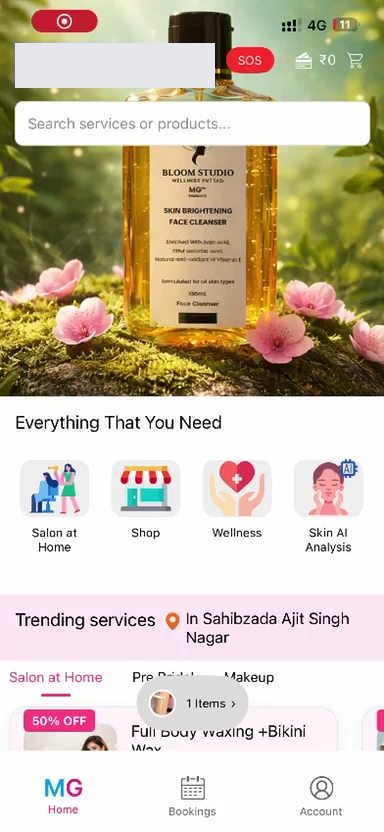
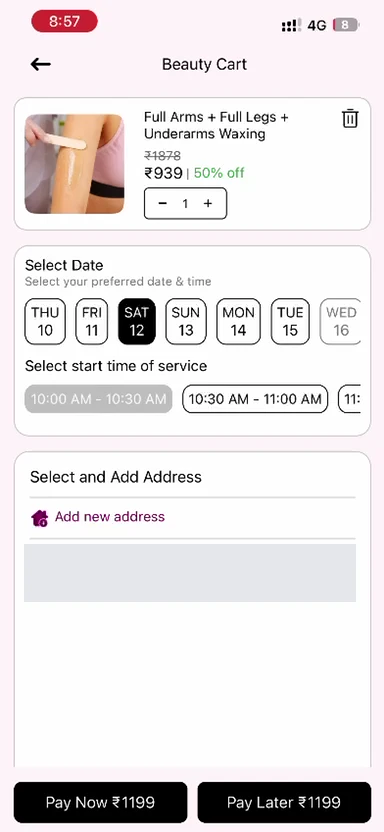
These screens come from our published customer-app recording. We have hidden personal details.
Digittrix confirmed MadamG’s 30-day MVP delivery on 1 October 2026. The current screens show the delivered product; the case study does not itemise the original MVP features or report user-growth results.
Planning a SaaS or commerce product? Explore Talksy’s chat, product-search, and FAQ workflows, our published projects, and client reviews.
Hear how clients chose Digittrix, developed their ideas and worked with the team. These videos cover web and mobile projects with different scopes.
Web application development
Review summary: Anuj describes working with Digittrix to build a web application. He discusses support, feedback, timelines and choosing a technology partner for an MVP.
Watch on YouTubeMobile app development
Review summary: Thomas describes a mobile app built for his business, including the initial consultation, how the team listened to his ideas, the design and his experience with the finished app.
Watch on YouTubeChildren’s learning app
Review summary: Praveen names Plubo, his mathematics app for children, and discusses audio/visual coordination, sliding coins, UI/UX improvements and the team’s patience with repeated feedback.
Watch on YouTubeMeet us online or by appointment at 3rd Floor, Elevate Towers, E 300, Industrial Area, Sector 75, Mohali, Punjab 140307. See our MVP development services in Mohali for office details and local planning. For a Delhi, Gurugram or Noida launch, explore our Delhi-NCR MVP development services.
Find answers about costs, timelines, platforms, ownership and what to prepare before you start.
Features, platforms, user roles, integrations and testing determine the price. Our starter package begins at USD 1,499 for an agreed scope. We quote custom MVPs after discovery. Your proposal lists inclusions and revision limits; budget separately for hosting, third-party fees, app-store memberships and ongoing support.
We typically plan custom MVPs over 4–12 weeks, depending on scope and input readiness. The starter package estimates a two-week build for its agreed scope. We confirm the start date, milestones and delivery schedule in your proposal. App-store reviews and external approvals follow their own timelines.
Yes. We help you identify potential users, research their problem, prioritise features and test a prototype or working release. Together, we decide what evidence to collect. Those findings help you judge demand and choose the next step; an MVP does not guarantee funding or product-market fit.
Yes. We agree launch regions, languages, currencies and review times during discovery. We also check whether your chosen integrations support those markets. Your project scope records the requirements, translation responsibilities and external approvals you need.
We choose the architecture around your expected usage, data and integrations. That gives you a starting point for later releases. As demand grows, your product may need additional testing, infrastructure or engineering; we plan those decisions around actual usage.
Yes. We can scope maintenance, monitoring, bug fixes and later feature development. Your proposal defines the support period, response expectations, costs and responsibilities. We use customer feedback and usage data to help prioritise improvements.
A mobile MVP lets a specific audience complete the app’s main task. For a booking app, users might find a provider, choose a time and confirm an appointment. The first release still needs reliable behaviour, suitable security and testing. You can add secondary features after you learn from users.
Bring a short description of your users, their problem and the task your product should help them complete. Share your budget, target date, preferred platforms and any designs or existing systems. Identify who will approve decisions and how you plan to recruit pilot users.
Yes. We adapt the user journey, business rules, integrations and admin tools to your product. We use established frameworks where they fit and write custom software where your requirements need it. Your proposal identifies the features and services we will build or integrate.
Flutter can suit Android and iOS apps that share a codebase. We check device integrations, performance, platform behaviour and maintenance needs before recommending it. A responsive web app, React Native or native development may fit your product better.
An MVP gives your team a product-learning goal. Agile development helps you work towards it through short cycles of building and feedback. Scrum organises work into Sprints that produce usable increments. An MVP may take several Sprints; teams still need to meet their Definition of Done.
Compare relevant products, client feedback and the people who will do the work. Ask each agency to explain its scope, exclusions, review milestones, testing and handover. Check how the contract handles changes, source-code ownership, third-party costs and support before comparing headline prices.
Our team works from Sector 75, Mohali, Punjab, India. We collaborate online with clients across India and international markets, including Delhi-NCR. You can also request a Mohali office meeting by appointment. Agree review times and decision owners when you plan the project.
Start with one customer task, the necessary account access and basic admin tools. Define how you will keep each customer’s data separate and what usage to measure. Add subscriptions if you need to test paid demand. Leave advanced reports and complex pricing plans for later unless the pilot needs them.
Ask us to record code ownership, repository access, third-party licences, deployment accounts and documentation in the agreement. Confirm which accounts you will control and who will maintain the product. The handover plan should explain access, operating instructions and support responsibilities.
Technical references: Flutter platform support and the Scrum Guide.
Published by Digittrix. Content updated .
Share who the product serves, the problem it solves, your budget and your target date. We’ll discuss the next step and help define a realistic first release.
Where we work: India, the United States, the United Kingdom, Canada, Australia, and New Zealand.