 +91-8727000867
 +64 22 003 5555


Highlights
- AI attendance systems can reduce manual attendance errors by up to 90%.
- HR teams can cut attendance processing time by nearly 70% with automation.
- Facial recognition attendance can achieve identity accuracy rates above 99%.

Co-Founder
Vandana Abrol 
An enthusiastic developer and skilled business management expert with over a decade of experience in the field
Introduction
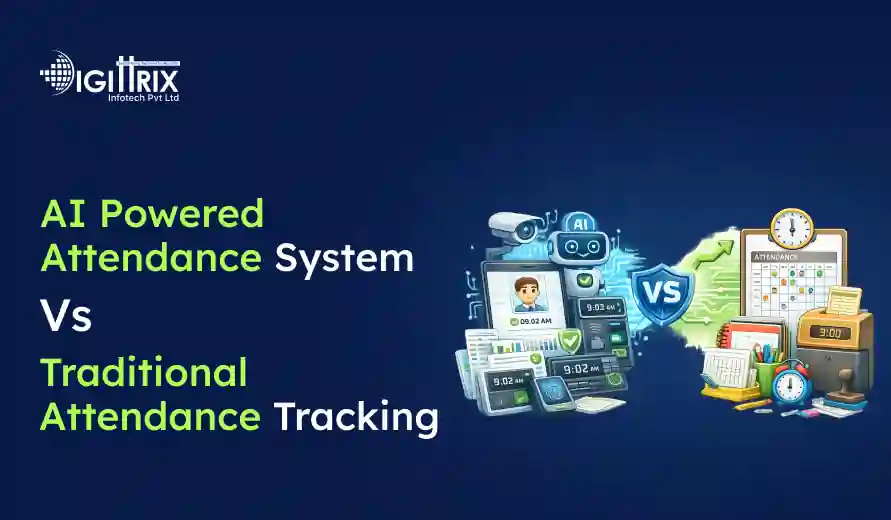
An AI-powered attendance system is transforming how organisations record and manage attendance. Attendance tracking has always been a key part of managing employees, students, and workforce operations. Organisations need accurate attendance records to calculate salaries, monitor punctuality, maintain discipline, and improve workforce planning. For many years, attendance was recorded manually using registers, punch cards, spreadsheets, or simple biometric devices. While these methods served their purpose, they often posed challenges with accuracy, reporting, and record management.
The growth of artificial intelligence has introduced a new approach to attendance management. Modern attendance platforms now use AI-based technologies such as facial recognition, behaviour analysis, location verification, and automated reporting. These systems can identify individuals, record attendance in real time, and reduce manual effort. As businesses and educational institutions continue to modernise their operations, many decision-makers are comparing AI-powered attendance systems with traditional attendance tracking methods to determine which option best suits their needs.
Looking to improve attendance accuracy in educational institutions? Explore Digittrix's guide to biometric attendance for universities and discover how fingerprint, facial recognition, and automated attendance systems help reduce proxy attendance and simplify campus management.
Understanding Traditional Attendance Tracking and AI-Powered Attendance System
Traditional attendance tracking refers to methods used for decades to record employee or student attendance. These systems typically rely on manual processes or basic electronic tools. Common examples include paper registers, punch cards, swipe cards, biometric fingerprint scanners, and spreadsheet-based records.
In a manual attendance register, employees or students sign their names upon arrival. Supervisors or administrators later review these records and calculate attendance statistics. While this method is easy to implement, it often demands significant administrative effort.
Card-based attendance systems introduced automation by allowing users to swipe identification cards. Biometric fingerprint systems further improved accuracy by verifying individual identities. However, these systems still require physical interaction and can encounter issues such as hardware failures, maintenance requirements, and data synchronisation challenges.
Although traditional attendance tracking remains common in many organisations, growing workforce demands have highlighted several limitations that can undermine productivity and record accuracy.
 7-Day Risk Free Start
Start Your 7-Day Free Trial With Proven Experts
If this article sparked a project idea, start with a dedicated expert for 7 days at no risk. Continue at just $10/Hour if the collaboration is the right fit for your business.

Dedicated Expert Access
Work directly with a specialist aligned to your project goals and timeline.

Direct Chat with Your Team
Collaborate in real-time and get instant support.

Screenshots & Reports
Receive regular reports to track progress transparently.

No Contracts
No commitments. Cancel anytime, no hassle.

Limited Slots Available This Week!
Kickstart Your Project With Zero Risk And Total Confidence.


& Growing Brands
What Is an AI Attendance System?
An AI attendance system uses artificial intelligence to automate attendance recording and management. Rather than relying solely on manual entries or physical devices, the system can identify individuals using advanced recognition technologies.
Many AI attendance platforms use a facial recognition attendance system that compares captured images with stored records. Some systems also use geolocation verification, behavioural patterns, voice recognition, or mobile-based authentication. Once identification is complete, attendance records are automatically generated and stored in a centralized database.
The system can also analyse attendance patterns, generate reports, detect unusual activity, and provide managers with useful information on workforce attendance trends. Since most AI-based solutions run on cloud platforms, authorised users can access attendance records from different locations whenever needed.
This automated approach reduces administrative workload and supports automated attendance management across departments and locations.
Accuracy Comparison of an AI-Powered Attendance System
Accuracy is one of the most significant differences between an AI-powered attendance system and traditional attendance systems.
Traditional methods often rely on human involvement. Manual attendance registers can contain errors such as incorrect entries, missed signatures, duplicate records, or calculation errors. Even card-based systems may encounter situations where employees forget their cards or use another person's card.
Biometric fingerprint systems offer improved accuracy but can still encounter difficulties due to worn fingerprints, dirty sensors, or hardware faults.
An AI-powered solution can deliver higher accuracy through advanced identity verification. Facial recognition technology can identify individuals within seconds while reducing the risk of duplicate entries. Since attendance is recorded automatically, there is less reliance on manual data entry.
Many systems can also detect suspicious activity and notify administrators when unusual attendance patterns arise. This helps maintain cleaner records and improves accountability across the organisation.
 Build Smart AI-Powered Attendance Solutions for Your Organization
Looking to develop a modern attendance management system with facial recognition, real-time tracking, automated reporting, and workforce analytics? Connect with Digittrix experts today.
Time Efficiency and Attendance Management System Benefits
Traditional attendance tracking often demands significant time for record-keeping. Human resources teams, administrators, or supervisors may spend hours reviewing attendance logs, calculating work hours, preparing reports, and correcting errors.
When attendance data is stored across multiple files or departments, the reporting process can become even more time-consuming. Any mistake may require additional verification before payroll processing or performance evaluation.
A modern Attendance Management System automates much of this work. Attendance records are updated in real time, reducing the need for manual calculations. Reports can be generated instantly, allowing managers to review attendance statistics whenever needed.
Automated notifications, leave tracking, and attendance summaries further reduce routine administrative tasks. As a result, staff members can focus on other responsibilities rather than spending large amounts of time on attendance record management. Additionally, AI-driven attendance analytics help organisations identify attendance trends and improve overall workforce efficiency.
Security and Fraud Prevention
Attendance fraud is a common concern across many organisations. Traditional attendance systems may allow practices such as proxy attendance, buddy punching, or unauthorised record modifications.
For example, one employee might sign in on behalf of another, or someone may use another person's access card. These situations can lead to inaccurate records and financial losses.
AI-powered attendance systems help reduce such risks through advanced verification methods. A facial recognition attendance system verifies individual identities before attendance is recorded. Some systems can even detect attempts to use photographs, videos, or other deceptive methods.
Centralised databases also provide stronger control over attendance records. Authorised administrators can monitor access, track changes, and maintain audit trails that document system activity.
This additional layer of verification improves the accuracy of attendance management and reduces opportunities for manipulation.
Workforce Attendance Management and Remote Workforce Support
Modern organisations often operate across multiple offices, branches, project sites, or remote work environments. Traditional attendance systems may struggle to manage attendance data efficiently across these locations.
Collecting records from multiple sites can cause delays and increase administrative complexity. Hardware installation and maintenance may also become costly as the organisation grows.
AI-powered attendance systems are generally more adaptable to evolving workforce requirements. Cloud-based platforms can manage attendance records from multiple locations via a single dashboard. Employees working remotely can verify attendance using approved mobile applications, location tracking, or facial recognition.
This flexibility supports improved Workforce Attendance Management for businesses with distributed teams, field staff, hybrid work arrangements, and multiple office locations.
Modernize Attendance Tracking with AI-Powered Automation
Replace manual registers and outdated tracking methods with intelligent attendance software featuring facial recognition, automated reports, leave management, and real-time workforce monitoring.
Reporting and Employee Attendance Tracking Software
Attendance records provide greater value when organisations can analyse them effectively. Traditional systems usually offer limited reporting capabilities, especially when records are maintained manually.
Preparing attendance reports may involve exporting data, reviewing spreadsheets, and performing calculations manually. This process increases the workload and may delay decision-making.
Modern Employee Attendance Tracking Software can automatically generate detailed reports. Managers can view attendance summaries, overtime records, absenteeism trends, late arrivals, and workforce utilisation data via visual dashboards.
Some systems can identify attendance patterns over time, helping organisations address recurring issues and improve workforce planning. Access to real-time information enables faster, more informed decisions.
Cost Considerations
Cost is an important factor when comparing attendance solutions.
Traditional attendance methods may seem less expensive at first because they often require only basic equipment or simple record-keeping. However, hidden costs can accumulate over time through manual administration, reporting, paper records, hardware maintenance, and attendance discrepancies.
AI-powered attendance systems may require a larger upfront investment, depending on the technology and deployment model. Expenses can include software subscriptions, cameras, cloud services, and implementation costs.
Despite these upfront costs, many organisations find that automated attendance management reduces administrative effort, reporting time, and attendance-related errors. Over the long term, these operational savings can offset the initial investment.
Which System Is Better?
The answer depends on the organisation's size, structure, and goals.
Small organisations with limited attendance management needs may find traditional systems sufficient for their operations. If the workforce is manageable and attendance reporting requirements are simple, a traditional approach may continue to serve its purpose.
However, organisations with growing teams, multiple locations, remote employees, or complex reporting requirements often benefit from AI-powered attendance systems. The combination of automation, accuracy, security, and centralised management can support more efficient operations.
Solutions such as an attendance management system, employee attendance tracking software, and advanced analytics tools continue to gain popularity among businesses seeking improved attendance visibility.
Discover how AI is revolutionizing the tech industry. Explore Digittrix's guide to AI in software development and stay ahead of emerging technology trends.
Final Words
An AI-powered attendance system has moved attendance management far beyond paper registers and basic tracking tools. Traditional attendance systems remain useful in certain situations, but they often require manual effort, pose reporting challenges, and carry a higher risk of errors. AI-powered attendance solutions offer automated identification, real-time record management, stronger security, and advanced reporting. By evaluating workforce size, operational requirements, and long-term objectives, organisations can select the attendance solution that best aligns with their current and future needs and supports better workforce attendance management.
Upgrade Workforce Monitoring with an AI-Powered Attendance Solution from Digittrix
As businesses continue to adopt digital workplace tools, attendance management has become a key area for automation. Organisations are moving beyond manual registers, spreadsheets, and conventional punch-in systems towards smarter attendance solutions that provide real-time tracking, automated reporting, and accurate workforce monitoring.
Whether you need an attendance system for remote teams, field employees, corporate offices, educational institutions, or multi-location organisations, Digittrix provides end-to-end development services, including planning, UI/UX design, development, deployment, third-party integrations, and ongoing technical support.
Contact Digittrix at +91 8727000867 or digittrix@gmail.com to discuss your attendance management software development project.

 FAQ's
FAQ's