+91-8727000867
 +64 22 003 5555


Highlights
- 82% of dating app users value simple profiles and easy navigation when choosing matches.
- 87% of users expect fast messaging and smooth communication after finding a match.
- 85% of dating app users prefer clear privacy and safety controls while using the platform.

Co-Founder
Vandana Abrol 
An enthusiastic developer and skilled business management expert with over a decade of experience in the field
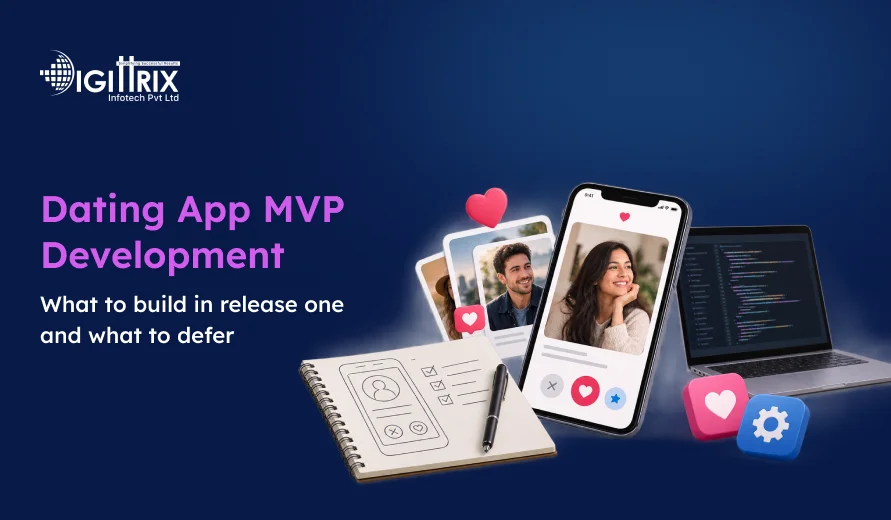
Building a dating app does not mean launching every feature at once. A first release should focus on the features people need to create a profile, discover potential matches, connect with others, and use the app safely. Dating app MVP development helps businesses start with a focused product, collect real user feedback, and decide what should be added in later releases.
A well-planned MVP can include user registration, profiles, preferences, discovery, matching, messaging, notifications, and basic safety controls. More advanced features such as video dating, complex recommendation systems, extensive gamification, and multiple payment options can be planned after the core experience has been tested.
What Does Dating App MVP Development Include?
The purpose of dating app MVP development is to build the smallest useful version of a dating product without removing the features that are important to the main user journey.
Before development starts, the product team should define who the app is for and what problem it is trying to solve. For example, an app designed for a niche community may need different profile fields and filters from a general dating platform.
The first release should answer a simple question: can users join, find relevant people, match, and start a conversation?
A basic MVP may include:
- User registration and login
- Profile creation
- Profile photos and basic information
- Age and location preferences
- Discovery and search
- Like or swipe actions
- Mutual matching
- One-to-one messaging
- Push notifications
- Report and block options
- Basic account settings
- Simple administration and moderation tools
These features create the basic path from registration to conversation. Anything that does not support this journey can usually be considered for a later release.
Core Features to Build in the First Release
When planning dating app MVP development, it is useful to divide features into essential, useful, and later-stage categories. The essential features should be ready before launch.
1. Simple Registration and Login
Users should be able to create an account without going through a long process. Email, phone-based authentication, or another suitable login method can be considered based on the product requirements.
The registration flow should collect only the information needed to create a useful profile at the beginning. Additional details can be requested later if they improve the user experience.
2. Profile Creation
Profiles are central to a dating app. Users should be able to add a photo, name, age, location, interests, and other information that helps other members understand who they are.
The profile should also allow users to update their information easily. A clean profile structure is more useful for an MVP than adding a large number of fields that few users may complete.
3. Preferences and Discovery
Users need a simple way to tell the app what they are looking for. Basic preferences can include age range, location, distance, and other relevant options.
Discovery should then show profiles based on these settings. The first release does not need a highly complex recommendation engine. Clear rules and useful filters can be enough to test the main concept.
4. Matching
A dating app needs a clear matching flow. Users may like or pass on profiles, and a match can be created when both people express interest.
The matching system should be easy to understand. Complicated matching rules can be introduced later after the business understands how people use the platform.
5. Messaging
Once users match, they need a way to communicate. Basic one-to-one text messaging can be included in the first release.
Features such as GIFs, voice messages, video calls, disappearing messages, and advanced chat tools can be considered for future versions if they support the product strategy.
6. Safety and Moderation
Safety should not be treated as a later feature. Even a small dating app needs basic controls that allow users to report or block another member.
An admin or moderator should also have a way to review reported accounts and take appropriate action. These controls can help create a safer environment while the platform grows.
How Dating App Design Supports the MVP
Good dating app design should make the main actions easy to understand. Users should not have to search through multiple screens to complete basic tasks such as editing a profile, viewing a match, or starting a conversation.
The design process can begin with simple wireframes that show how users move from registration to discovery, matching, and messaging.
A strong dating app UI UX design should also consider different screen sizes, readable text, clear buttons, simple navigation, and an easy profile setup process. The goal is not to make the first release visually complicated. It is to make the important actions clear.
A typical MVP flow can look like this:
Sign up → Create profile → Set preferences → Discover profiles → Like → Match → Chat
This flow should be tested before adding extra journeys.
Features to Defer Until After Launch
One of the biggest mistakes in a new dating product is trying to build everything into the first version. Dating app MVP development works better when the team has a clear list of features that can wait.
Some features that may be deferred include:
Advanced AI Matching
AI-based recommendations can become useful when the platform has enough information about user preferences and behaviour. However, a new product may not have enough data to make advanced recommendations useful from day one.
A basic matching system can first be used to understand what users actually want.
Video Dating
Video profiles and live video calls can add another way for people to interact, but they also bring additional development, infrastructure, moderation, and testing requirements.
For many products, basic text messaging is enough to test the core concept before video is introduced.
Gamification
Badges, points, challenges, profile scores, quizzes, and reward systems may increase interaction, but they are not necessary for every first release.
The team should first confirm whether users complete profiles, discover people, match, and start conversations.
Multiple Subscription Plans
A dating app can eventually offer premium memberships, boosts, credits, or other paid options. However, the first release does not always need a complicated pricing structure.
If monetization is part of the MVP, one simple paid option may be easier to test than several plans.
Advanced Social Features
Stories, public posts, community groups, live rooms, and other social features can make a dating platform more engaging, but they can also change the scope of the product significantly.
These features should be considered when there is a clear reason for adding them.
How a Dating App Developer Can Plan the First Release
A dating app developer needs a clear feature list before development begins. Each feature should have a purpose, expected user action, and defined acceptance criteria.
The development team can break the project into smaller parts:
- Product requirements
- User journeys
- Wireframes
- UI design
- Backend and database planning
- Mobile app development
- Matching and messaging
- Admin and moderation
- Testing
- Deployment
This approach makes it easier to identify problems before they become expensive changes.
A dating app development company may also help divide the roadmap into release one, release two, and later versions. This allows the business to focus its initial budget and development time on the features that directly support the product idea.
How Custom Dating App Development Can Scale Later
With custom dating app development, the product can be planned around the specific audience, business model, matching method, and future roadmap instead of copying every feature from an existing platform.
After the first release, the team can review user behaviour and feedback. This information can help decide whether the next version should focus on better discovery, improved messaging, subscriptions, video, advanced matching, or another feature.
The technology structure should also leave room for future changes. For example, the team may need to expand the matching logic, introduce additional filters, connect payment services, or add new administration controls as the platform grows.
What Should Be Tested Before Launch?
Testing should cover more than whether buttons work. The complete user journey should be checked across supported devices and platforms.
Important areas include:
- Registration and login
- Profile creation and editing
- Photo uploads
- Preference settings
- Discovery and matching
- Messaging
- Notifications
- Report and block functions
- Admin actions
- Subscription or payment flows, if included
- Data protection
- App performance
- Different screen sizes
The team should also test common failure situations. For example, what happens when an image upload fails, a message cannot be delivered, or a user reports another account?
Finding these issues before launch can make the first version easier to use.
How to Decide What Goes Into Release One
A simple feature test can help decide whether something belongs in the MVP.
Ask these questions:
Does this feature support the main user journey?
If users cannot complete the main purpose of the app without it, the feature should probably be considered for release one.
Does it solve a real user problem?
A feature should have a clear reason for being included rather than being added simply because another dating app has it.
Can it be tested with real users?
The first release should help the business learn. Features that provide useful feedback can be more valuable than features that only make the app look larger.
Can it be added later without disrupting the core product?
If a feature can safely wait, moving it to a later release can help keep the first version focused.
Build a Focused MVP Before Expanding
The goal of dating app MVP development is not to create a small version of every possible dating feature. It is to create a usable first product that lets a business test its idea with real users.
Start with registration, profiles, preferences, discovery, matching, messaging, notifications, and basic safety controls. Once these areas work well, additional features can be planned based on actual user feedback and business requirements.
A focused first release also makes it easier to identify what needs improvement. Instead of spending development time on features that may not be used, the team can improve the parts of the product that matter most to its users.
Final Words
A successful first release starts with a clear scope. Dating app MVP development should focus on the essential journey from creating an account to finding a match and starting a conversation. Advanced features can be added when user feedback, product data, and business goals show that they are needed.
If you are planning a dating product, define your target users, core features, matching approach, platform requirements, and future roadmap before development begins. Digittrix can help turn these requirements into a structured development plan and build the product around your chosen release scope.
Build Smarter Dating App MVP Solutions with Digittrix
A dating app does not need every possible feature in its first release. The right MVP can start with the core user journey, including account creation, profiles, preferences, profile discovery, matching, messaging, notifications, and basic safety options. Features such as video dating, advanced AI matching, complex subscriptions, and gamification can be planned for later versions based on user feedback and product goals.
At Digittrix, we help businesses plan and build dating applications around their target audience and product requirements. Our team can assist with MVP planning, dating app design, user profiles, matching features, chat functionality, notifications, safety controls, payment integration, admin dashboards, and other components required for a scalable dating platform.
If you are planning to launch a dating app and want to decide what belongs in release one and what can wait, Digittrix can help you define a practical development scope and turn your concept into a working MVP.
Contact Digittrix today at +91 8727000867 or email digittrix@gmail.com to discuss your dating app development requirements.