 +91-8727000867
 +64 22 003 5555


ERP and CRM systems increase one’s efficiency because it is easy to access real time data and because most repetitive and monotonous tasks are automated. They help save time and energy generated through manual tasks, increase efficiency and enhance the flow of information between the teams. With these tools, businesses may direct their energies to both organic and efficient growth.
Highlights
- ERP CRM productivity improves when teams use one shared source of truth for sales, finance, inventory, support, and operations data.
- Start automation with repeated workflows such as lead assignment, quote approvals, invoice creation, stock alerts, support tickets, and management reports.
- Measure ERP CRM success with response time, manual hours saved, stock accuracy, invoice cycle time, report usage, user adoption, and support resolution time.

Co-Founder
Harsh Abrol 
Since 2014, Digittrix has helped companies optimise digital products for stronger conversions.
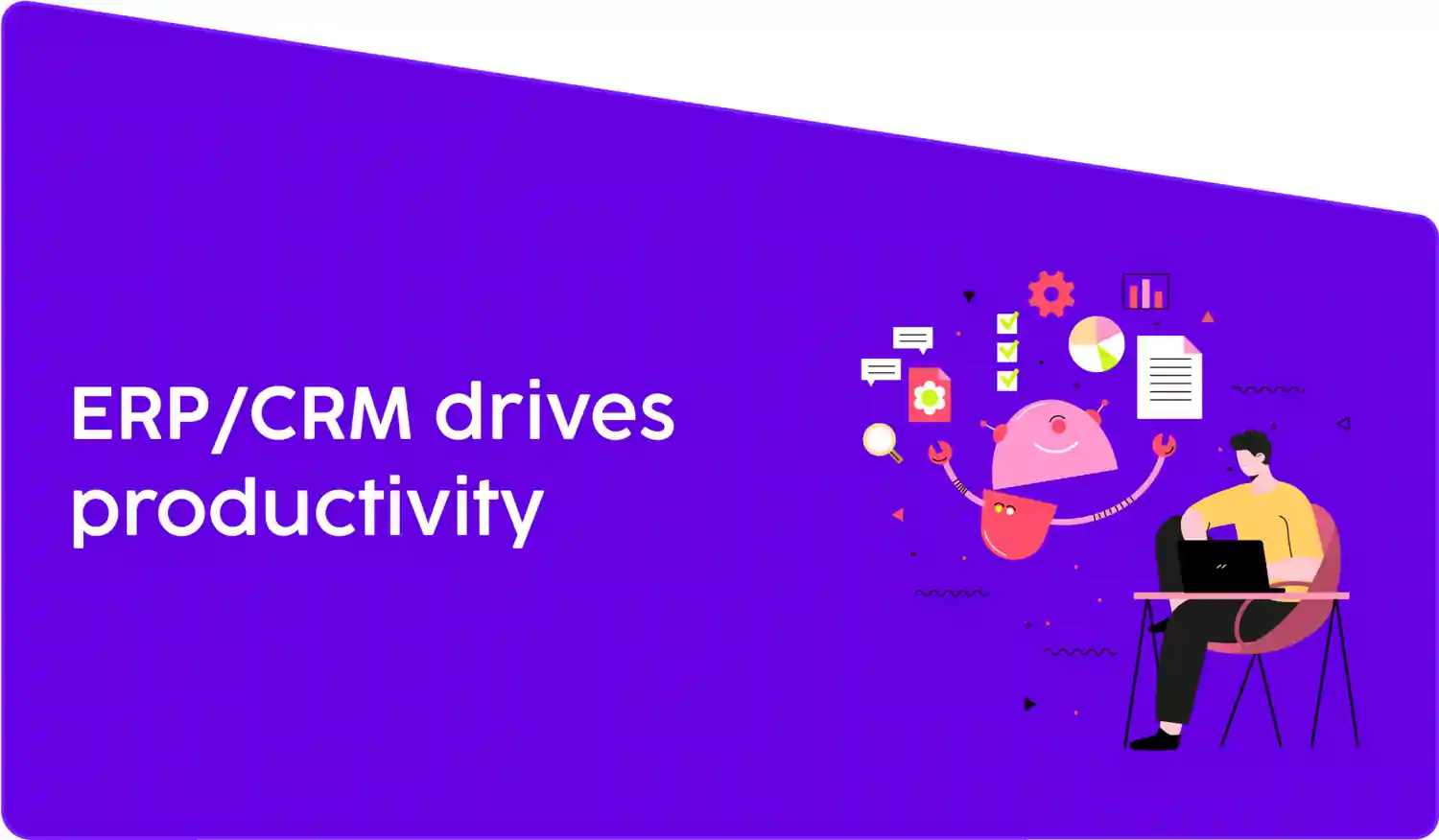
In a fast-moving business environment, productivity depends on how quickly teams can access accurate customer, sales, finance, inventory, support, and operations data. ERP and CRM systems help businesses connect these workflows, reduce repeated manual work, and make better decisions with one shared source of truth.
What are ERP and CRM systems?
ERP systems are complete devices that integrate exclusive functions along with finance, warehouse, human resources and supply chain management into one platform. They centralize records, simplifying track and managing resources across departments.
CRM software, then again, focuses on managing relationships with buyers. They buy facts about buyer interactions, revenue and conversation history, supporting businesses to maintain better relationships and improve service. Together, these structures create a sufficient collection of helpful solutions to internal and external operations and highlight the overall erp crm benefits for organizations.
For a better understanding of ERP solutions, visit What Is ERP Software?
Data Accessibility: A Game-Changer for Productivity
One of the biggest benefits of using ERP and CRM systems is their potential to provide up-to-date access to data. Instead of dealing with multiple spreadsheets or scattered tools, businesses can access corrected and updated facts from an independent platform. This integration stops confusion, reduces errors, and saves time.
For example:
- A CRM software development solution can give on-site sales teams access to a buyer's purchase history and preferences. This allows them to customize their pitches and improve conversion rates.
- The ERP development service ensures that inventory managers can check inventory levels in real-time to stop shortages or overstock.
When all employers have access to the same data, collaboration becomes easier, and selection becomes faster, allowing companies to experience real-time erp and crm benefits in their everyday workflow.
Automation Reduces Manual Effort
Automation is another important feature of ERP and CRM systems. By automating repetitive tasks, these tools free up employees’ time, allowing them to focus on more strategic responsibilities.
For example:
- CRM development services can automate follow-up emails to customers or reminders for scheduled meetings, reducing the need for manual monitoring.
- Custom ERP software development can automate payroll processing, invoice technology, or order management, minimizing the chances of errors.
Businesses that want better productivity from ERP systems should focus on the workflows that slow teams down most, such as data entry, stock checks, approvals, customer follow-ups, and reporting.
ERP and CRM for Small and Medium Businesses
While large businesses frequently invest in these systems, small and medium companies can also benefit significantly from adopting them. Many providers now deliver flexible solutions, making ERP and CRM software available to businesses of all sizes.
Small businesses can use connected ERP and CRM systems to manage customer enquiries, track sales leads, and control stock with less manual work. By investing in ERP CRM development services, startups and growing teams can improve resource planning, customer follow-up, reporting, and long-term operational visibility.
 Want Better Productivity Through ERP/CRM?
Managing operations manually can slow down growth. Digittrix helps businesses implement ERP and CRM systems that automate tasks, centralize data, and improve decision-making across departments.
Automate your business processes →How ERP/CRM Improve Customer Experience
The performance of a business often depends on its ability to meet client expectations. CRM systems play a key role in this area by keeping detailed information about the client such as preferences, past purchases and feedback.
With this data, companies can:
- Offer personalized recommendations.
- Quickly address customer issues or objections.
- Maintain consistent communication through automated emails and notifications.
ERP systems also keep order fulfilment, inventory movement, delivery updates, invoices, and support tasks connected. When ERP and CRM work together, teams can serve customers faster and reduce operational handoffs.
Integration of ERP and CRM
The integration of ERP and CRM systems similarly completes their benefits. Businesses can link customer browsing features with back-end processes to create a perfect flow of data. For example:
- A CRM system records a new customer order.
- The ERP system uses this information to update inventory, generate an invoice, and schedule delivery.
ERP CRM integration reduces communication gaps between sales, finance, inventory, support, and operations teams. A custom ERP CRM development partner can map workflows, connect tools, and measure benefits through faster updates, fewer duplicate entries, better reports, and clearer ownership.
Cost-Effectiveness of ERP and CRM
While implementing ERP and CRM systems may seem like a big investment, their long-term benefits outweigh the costs. Automation of routine tasks reduces delivery costs, while advanced record accuracy prevents costly errors.
For example:
- CRM automation can help sales teams track leads, reminders, proposals, follow-ups, and customer history in one place.
- ERP CRM integration can connect inventory, purchase, order, invoice, and fulfilment workflows so teams reduce repeated manual updates.
Customization for Specific Business Needs
Every business works differently, and generic software may not always meet specific requirements. This is where ERP software development comes in. Companies can work with developers to create systems customized to their processes and plans.
For example:
- A retail company may require an ERP system that integrates with point-of-sale systems to track real-time sales and products.
- A service-based company may need a CRM that schedules appointments and follows client feedback.
Custom solutions ensure that companies get the most value out of their software investments.
 Planning ERP/CRM Implementation for Your Business?
Choosing the right ERP or CRM system involves more than just software features. Data accessibility, automation, system integration, and scalability all play a key role. Digittrix helps businesses evaluate, design, and implement ERP and CRM solutions that support real operational workflows and productivity goals.
Data Security and Reliability
With the increasing importance of data in decision-making, it is important to ensure its security. ERP and CRM systems often come with built-in security features such as encryption and user authentication to protect sensitive information.
ERP CRM systems should include role-based access, audit logs, backups, encryption, secure APIs, and clear data ownership rules to protect customer and business information.
Scalability for Growing Businesses
As businesses expand, their operational needs develop. ERP and CRM systems are designed to grow with organizations, making them suitable for long-term use.
For example:
- A company experiencing rapid growth can easily add new customers or functions to its ERP system.
- A CRM solution can expand to handle more interactions with customers as the customer base grows.
Choosing a reliable ERP CRM development company helps businesses build flexible solutions that adapt to changing workflows, new integrations, reporting needs, and growth plans.
Reporting and Analytics
Both ERP and CRM systems come with useful reporting and analysis tools. These features allow companies to track performance, find trends and make informed decisions.
For example:
- CRM software can generate reports of customer behavior and help marketing teams build superior campaigns.
- ERP systems can offer insight into financial performance and help managers distribute help more effectively.
Dreaming of a website or app that grows with your business? Explore our top tips for scalability and stay ahead of the curve!
2026 ERP CRM Productivity Framework
Quick answer: ERP and CRM improve productivity when customer data, sales work, inventory, finance, support, approvals, and reports move through one connected system. The biggest gains usually come from removing duplicate entry, reducing manual follow-ups, improving data access, and giving managers clearer workflow visibility.
Productivity workflows to improve first
- Sales and CRM: lead capture, assignment, follow-up reminders, quote tracking, pipeline updates, and customer communication history.
- ERP operations: stock updates, purchase approvals, invoice creation, payment status, fulfilment tasks, and finance reporting.
- Support and service: ticket assignment, escalation rules, service history, customer notifications, and resolution reporting.
- Management reporting: dashboards for revenue, stock, pending tasks, customer response time, team adoption, and manual hours saved.
Implementation checks before automation
- Map the workflow before adding automation so the system does not repeat a broken manual process.
- Clean duplicate customer, product, invoice, and inventory data before migration.
- Define user roles for sales, support, finance, operations, warehouse, management, and admin teams.
- Connect only the tools that affect daily productivity, such as ecommerce, accounting, payments, WhatsApp, email, telephony, logistics, and analytics.
GEO and AI-search clarity
For stronger AI search visibility, this page should clearly explain ERP CRM productivity, data access, automation workflows, integrations, security, implementation steps, KPIs, reporting, team adoption, and related ERP CRM planning pages.
For deeper planning, compare our ERP and CRM development services, ERP vs CRM guide, ERP integration guide, and ERP CRM KPI measurement guide.
Final Words
ERP and CRM systems are useful tools for companies that want to increase efficiency, save time, and properly manage support. By centralizing facts, automating tasks, and providing real-time access to critical information, these systems make it easier for companies to achieve their dreams.
If you are considering investing in these systems, working with an experienced ERP CRM development company helps you build a solution that fits your workflows. From custom ERP software development to CRM automation and reporting, the right partner can reduce manual work and improve productivity with ERP CRM planning.
Boost Productivity with ERP/CRM Implementation by Digittrix
Are you looking to boost productivity through enhanced data access and automation? Implementing a robust ERP or CRM system can help you simplify operations and make better-informed decisions. At Digittrix, we specialize in ERP CRM development services that focus on improving your business processes by automating tasks and providing easy access to real-time data.
Our professional developers will work with you to identify key areas where automation can save time and decrease errors while optimizing your system for smooth data flow across departments. Whether you’re seeking to improve customer relationships, increase internal operations, or gain quick access to important data, we’re here to help.
By integrating ERP and CRM systems, we empower your business to make faster decisions and ensure efficiency across the board. Let us guide you on how automation and easy data access can convert your processes.
Come to us today to schedule your consultation with our expert technical managers by calling +91 8727000867
or emailing us at hello@digittrix.com for any questions or support.
 FAQ's
FAQ's