 +91-8727000867
 +64 22 003 5555


Highlights
- White-label taxi apps reduce development time by up to 70% for new startups.
- Over 60% of small taxi firms prefer ready-made apps for faster market entry.
- App-based taxi services are expected to grow by 12% annually till 2030.

Co-Founder
Vandana Abrol 
An enthusiastic developer and skilled business management expert with over a decade of experience in the field
Introduction
The taxi booking industry has evolved rapidly with the rise of mobile apps and digital platforms. Businesses no longer need to build a ride-hailing system from scratch to enter this market. Taxi booking app development now often starts with ready-made solutions that save time and effort. A white-label taxi booking app provides a pre-built system that can be rebranded and customized for a specific business. This approach saves time, reduces development costs, and enables companies to launch their services faster.
This guide explains everything you need to know about white-label taxi booking app development in simple terms. It covers how these apps work, their key features, benefits, the development process, cost factors, and challenges. Whether you are a startup owner or an established business planning to expand into ride-hailing services, this article will help you understand the process clearly.
Want to build a successful taxi app like Uber? Discover Digittrix’s On-Demand Taxi App Development Companies 2026 insights and learn how advanced ride-hailing solutions can transform your business.
What is a White-Label Taxi Booking App?
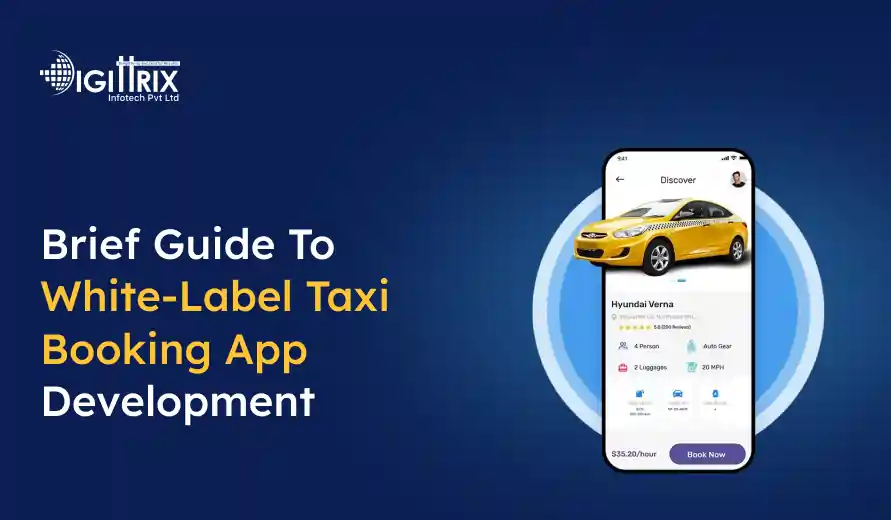
A white-label taxi booking app is a pre-built software solution that businesses can rebrand as their own. Instead of building a taxi app from scratch, companies purchase or license an existing platform and customize it with their logo, design, and business rules. This type of white-label taxi app solution is widely used by startups entering the transportation sector.
These apps typically include:
- Passenger mobile app
- Driver mobile app
- Admin dashboard
The core system remains the same, but the branding and certain features can be adjusted to meet business needs.
For example, if a local transportation company wants to offer app-based ride-booking services, it can use a white-label solution instead of hiring a large development team. This allows it to start operations quickly and focus more on customer service and marketing.
Why Choose White-Label Taxi App Development in Taxi Booking App Development?
Building a taxi booking app from scratch requires significant time, effort, and technical expertise. A white-label solution offers a practical alternative in modern taxi booking app development.
Faster Launch
Since the app is already developed, businesses can launch their service in weeks rather than months. This is especially useful in competitive markets where timing matters.
Cost Savings
Developing an app from the ground up requires hiring developers, designers, testers, and project managers. White-label apps reduce these expenses because the base product is already available. Compared with the taxi app development cost for custom solutions, this approach is more budget-friendly.
Proven System
White-label apps are typically tested in real-world environments. This reduces the likelihood of major technical issues after launch.
Easy Customization
Businesses can customize the app’s design, color scheme, logo, and certain features to match their brand identity.
Focus on Business Growth
Instead of spending time on development, companies can focus on operations, driver management, and customer support.
 Launch Your White-Label Taxi Booking App with Ease
Looking to enter the ride-hailing market quickly? Talk to Digittrix experts and get a ready-made white-label taxi booking app tailored to your business needs.
Key Features in Taxi Booking App Development
A good taxi booking app must include features that make the experience smooth for both passengers and drivers. These features are standard across most on-demand taxi booking app platforms.
Passenger App Features
- Easy registration and login
- Ride booking with pickup and drop-off location
- Fare estimation
- Real-time driver tracking
- Multiple payment options (cash, card, digital wallets)
- Ride history
- Ratings and reviews
Driver App Features
- Simple registration process
- Ride request alerts
- Navigation support
- Earnings tracking
- Ride history
- Availability toggle (online/offline)
Admin Panel Features
- User management (drivers and passengers)
- Ride tracking and monitoring
- Payment and commission management
- Reports and analytics
- Promo code management
These features form the foundation of most taxi-booking apps. Depending on the provider, additional options may also be available.
How White-Label Taxi Apps Work
Understanding how the system operates helps make better business decisions, especially in ride-hailing app development models.
- A passenger opens the app and enters pickup and drop-off locations.
- The system calculates the fare and displays nearby drivers.
- A driver accepts the ride request.
- The passenger can track the driver in real time.
- After the ride is completed, payment is processed.
- Both the passenger and the driver can rate each other.
All these steps are managed by the backend system, which connects users, drivers, and administrators.
Development Process of a White-Label Taxi App
Even though the app is pre-built, some steps are still required to set it up for your business. This process is commonly followed in taxi booking app development projects.
1. Requirement Analysis
First, define your business model. Decide:
- Target audience
- Service area
- Pricing strategy
- Type of vehicles
2. Choosing the Right Provider
Not all white-label solutions are the same. Compare providers by:
- Features offered
- Customization options
- Pricing
- Technical support
Some businesses also compare this approach to Uber clone app development before making a final decision.
3. Branding and Customization
Once the platform is selected, the app is customized with:
- Business name and logo
- Color theme
- App interface adjustments
4. Integration of Payment Systems
Payment gateways are integrated to enable smooth transactions. Options may include:
- Credit/debit cards
- Digital wallets
- Cash payments
5. Testing
Before launch, the app is tested to verify:
- Performance
- User experience
- Payment functionality
6. Launch
After testing, the app is published on platforms such as the Android and iOS app stores.
7. Maintenance and Updates
Regular updates are required to fix bugs and add new features.
Cost Factors in Taxi Booking App Development
The cost of a white-label taxi app development depends on several factors. Understanding taxi app development cost helps with better planning.
Licensing Fee
Most providers charge either a one-time or a monthly fee for access to their platform.
Customization Cost
Advanced customization may result in additional charges.
Payment Gateway Charges
Payment providers typically charge a small percentage per transaction.
Hosting and Server Costs
Apps require servers to manage data and user activity.
Maintenance Costs
Regular updates and support may incur extra fees.
Estimated Cost Range
A basic white-label taxi app may cost between $5,000 and $25,000, depending on the features and level of customization.
Advantages of White-Label Taxi Apps
Quick Market Entry
Businesses can start operations without lengthy development cycles.
Lower Risk
Since the system has already been tested, there is less risk of failure.
Scalability
Most white-label apps can handle a growing number of users as the business grows.
Technical Support
Many providers offer ongoing support and updates.
Limitations of White-Label Taxi Apps
While these apps offer many benefits, they also have some limitations.
Limited Customization
You may not be able to modify all features.
Dependency on Provider
Your business depends on the provider for updates and maintenance.
Licensing Restrictions
Some providers may impose restrictions on usage or expansion.
Competition
Many businesses may use similar platforms, resulting in similar app designs.
Custom vs White-Label Taxi App Development
Custom Development
- Built from scratch
- Full control over features
- Higher cost
- Longer development time
White-Label Development
- Pre-built solution
- Limited customization
- Lower cost
- Faster launch
Choosing between the two depends on your budget, business goals, and the type of taxi booking development service you require.
Complete White-Label Taxi Booking App Solution
Get a fully functional system including passenger app, driver app, and admin panel designed for smooth ride management and business scalability.
Important Features to Consider Before Choosing a Solution
Before selecting a white-label taxi app, check if it includes:
- Real-time GPS tracking
- Secure payment system
- User-friendly interface
- Multi-language support
- Driver verification system
- Admin control panel
These features help in running the business smoothly.
Technology Used in Taxi Booking Apps
Even though the app is pre-built, it still relies on modern technologies.
Frontend
- Android and iOS applications
- User interface design
Backend
- Server-side programming
- Database management
APIs
- Maps and navigation
- Payment gateways
- Notifications
Cloud Services
Used for data storage and application performance.
Security Considerations
Security is important for both users and business owners alike.
Data Protection
User data must be stored securely.
Secure Payments
Payment transactions should be encrypted.
Driver Verification
Background checks help ensure safety.
App Permissions
Limit access to only necessary features, such as location.
Marketing Your Taxi Booking App
After launching the app, the next step is to attract users.
Digital Marketing
- Social media promotion
- Search engine optimization
- Paid advertising
Referral Programs
Offer rewards to users who invite others.
Discounts and Offers
Provide special deals to attract new users.
Local Partnerships
Work with hotels, businesses, and event organizers.
Future Trends in Taxi Booking Apps
The ride-hailing industry continues to grow, driven by new ideas, technologies, and the rising demand for custom ride-hailing development solutions.
Electric Vehicles
Many companies are moving toward eco-friendly transportation options.
Ride Sharing
Users can share rides to reduce costs.
Subscription Models
Monthly plans for frequent users.
AI-Based Route Optimization
Helps reduce travel time and fuel usage.
Challenges in Taxi App Business
Running a taxi app business presents challenges.
Competition
Large companies dominate the market.
Driver Management
Maintaining a good driver network is important.
Customer Retention
Keeping users engaged requires ongoing effort.
Regulatory Issues
Different regions have different rules for taxi services.
Tips for Success
- Choose a trusted white-label provider
- Focus on customer service
- Offer competitive pricing
- Maintain app performance
- Keep updating features based on user feedback
Curious about building a powerful taxi app? Explore Digittrix’s Best Tech Stack for Taxi App Development to understand the technologies behind scalable ride-hailing solutions.
Final Words
Developing a taxi booking app using white-label solutions is a practical choice for businesses looking to enter the ride-hailing market quickly. It provides a ready-made system that can be customized to match a company’s brand and requirements. This approach reduces development time, lowers costs, and allows businesses to focus on operations and growth.
However, it is important to choose the right provider, understand the limitations, and carefully plan the business strategy. With the right approach, a white-label taxi app can serve as a strong foundation for a successful transportation service.
Build Your Taxi Business with White-Label App Solutions by Digittrix
At Digittrix, we help businesses enter the ride-hailing market with ready-to-launch white-label taxi booking apps that bring structure and simplicity to daily operations. With experience since 2014 in digital solutions, our team works closely with clients to set up fully functional taxi platforms that include passenger apps, driver apps, and admin panels. We focus on creating systems that are easy to manage, support smooth ride handling, and help businesses operate with better control over bookings, drivers, and payments.
Looking to launch your own taxi booking service with a white-label app? Connect with Digittrix today by calling +91 8727000867 or emailing us at digittrix@gmail.com. Let Digittrix help you build a system that enables smooth operations, improved ride management, and steady business growth.

 FAQ's
FAQ's