 +91-8727000867
 +64 22 003 5555


Highlights
- 72% of students may prefer simple education apps with clear navigation and fewer steps.
- 64% of users may return more often when progress tools show completed study tasks.
- 58% of learners may use an app more when lessons are divided into short study sections.

Co-Founder
Vandana Abrol 
An enthusiastic developer and skilled business management expert with over a decade of experience in the field
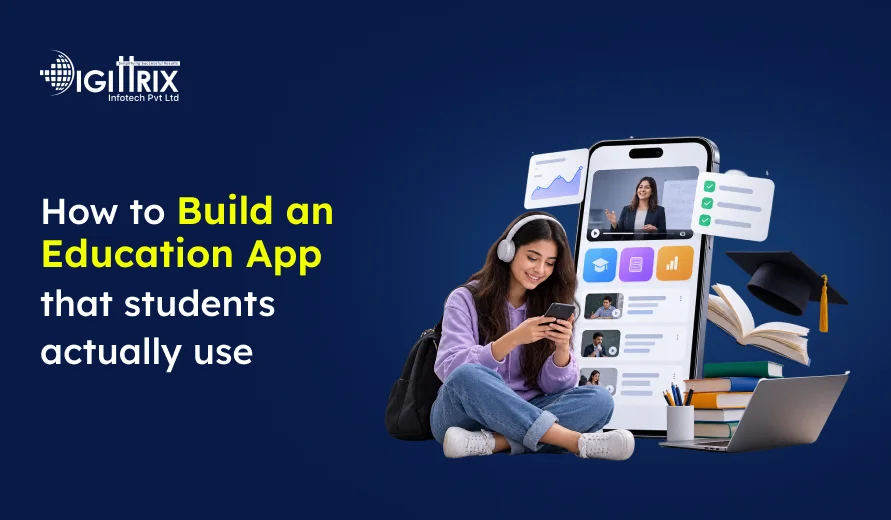
Plenty of education apps get downloaded and then forgotten. The app has video lessons, quizzes, notes, and login, but students open it twice and go back to WhatsApp and YouTube. Features alone don't bring students back. The app has to fit into how they already study, and it has to make studying a little easier than it was without it.
If you're a school, coaching institute, university, or startup planning an app, that's the question to keep in mind during education app development: why would a student open this tomorrow? Here's how to get to a good answer.
Want to understand the role of AI in education? Check AI in Education App: Key Use Cases and Benefits to explore how AI can improve learning experiences!
Start With One Real Student Problem
Before anyone designs a screen, decide what problem the app solves. "Online learning" is too broad. "Helping Class 12 students practise past papers and see where they lose marks" is a real problem.
The problem shapes everything else. An exam prep app needs subject-wise material, practice questions, mock tests, and a record of past scores. A school communication app is a different product: class schedules, homework updates, attendance, teacher messages, and notices that parents can read without calling the office.
Trying to build both in one app is how you end up with a cluttered product that does neither well.
Think About When and Where Students Will Use It
Most students will open your app on a phone, in short gaps: on the bus, between classes, after dinner. Some will be on a patchy mobile connection. Some will have ten minutes, not an hour.
Before you finalise features, get honest answers to a few questions. Where will they use it, at home, in college, or while travelling? Phone or tablet? Will the internet be reliable? How long can they realistically spend in one sitting? Talking to ten actual students will tell you more than any planning document.
This research also helps an education app development company decide which platform, interface, and performance requirements should be included from the beginning.
 Build a Student-Friendly Education App
Planning an education app? Talk to Digittrix experts about creating a simple, engaging, and scalable learning experience.
Keep the Interface Simple
If a student has to hunt through menus to find today's lesson, they'll stop looking. The home screen should show what matters right now: the course they're in the middle of, assignments that are due, the next test, and how far along they are.
Stick to familiar icons, readable text, and obvious buttons. Don't cram a dozen options onto one screen. A good course flow is easy to follow: course, then lessons, then the video or reading material, then practice, then results. At every point, the next step should be obvious.
Also check that everything works on both small phones and tablets. Videos, forms, and text that look fine on your development laptop often break on a five-inch screen.
Add Features That Support Studying
The right feature set depends on your app's purpose, but a few features earn their place in most education apps.
Video and audio lessons. Video is good for demonstrations and step-by-step explanations. Audio helps when students want to revise while commuting or doing something else.
Quizzes and practice tests. A short quiz right after a lesson tells a student whether they actually understood it. Use multiple-choice, true/false, short answer, or timed tests depending on the subject.
Progress tracking. Students like knowing where they stand. One screen should answer four things: how many lessons they've finished, which subjects need work, which tests are pending, and how they did last time.
Reminders. A nudge about tomorrow's test or an unfinished lesson is useful. Five notifications a day will get your app muted or deleted.
Search and filters. Once you have hundreds of lessons and documents, students need a fast way to find a specific topic without scrolling.
These education app features should serve a clear learning purpose rather than being added simply because another app has them.
Break Content Into Small Pieces
You can build a great app and still lose students if the content is hard to get through. Nobody wants to open a two-hour lesson on their phone.
Split long lessons into short chapters, so a student can finish one section on the bus and pick up the rest later. Use headings, examples, diagrams, and practice questions along the way. And pitch the content at the right level, because what works for a Class 8 student won't work for a university student or a working professional.
Let Students Study Their Own Way
Students don't all learn at the same pace or want the same things. Your app can adapt a little without taking over. For example, after a test, it can point out the topics where the student lost marks and suggest practice material for those topics.
The key is to keep the student in control. Suggestions are helpful. Forcing a fixed path is annoying, and students will drop the app if it feels like it's making decisions for them.
A good education app development services plan should therefore consider flexible learning paths, different content formats, and student preferences.
 7-Day Risk Free Start
Start Your 7-Day Free Trial With Proven Experts
If this article sparked a project idea, start with a dedicated expert for 7 days at no risk. Continue at just $10/Hour if the collaboration is the right fit for your business.

Dedicated Expert Access
Work directly with a specialist aligned to your project goals and timeline.

Direct Chat with Your Team
Collaborate in real-time and get instant support.

Screenshots & Reports
Receive regular reports to track progress transparently.

No Contracts
No commitments. Cancel anytime, no hassle.

Limited Slots Available This Week!
Kickstart Your Project With Zero Risk And Total Confidence.


& Growing Brands
Use Gamification Carefully
Points, badges, streaks, daily targets, certificates, and class challenges can make routine study more fun. They work best when they're tied to something that matters, like finishing a chapter or hitting a study target.
They stop working when the reward becomes the point. If students are chasing badges instead of learning, you've built a game with a syllabus attached. Ask of every reward: does completing this activity actually help the student?
Build Proper Tools for Teachers and Admins
Students are only one part of it. Teachers need to upload lessons, create assignments, add questions, review submissions, check scores, and send announcements. Administrators need to manage users, courses, payments, subscriptions, reports, and settings. Parents, if they're involved, need their own limited view.
Set up role-based access from the start, so each person only sees what's relevant to them. It keeps the app cleaner and safer.
For larger projects, custom education app development can provide separate experiences for students, teachers, parents, and administrators instead of forcing every user into the same dashboard.
Make It Fast, Even on a Weak Connection
Students give up quickly on apps that load slowly or stall in the middle of a video. Pay attention to image sizes, video delivery, API response times, database performance, and startup time. Test on cheap phones and slow networks, not just on the latest device with office Wi-Fi.
Where it makes sense, let students download lessons, notes, or practice sets for offline use. For students with limited data or unreliable internet, this can decide whether they use the app at all.
Performance should remain an important part of education mobile app development, especially when the target audience uses different devices and network conditions.
Protect Student Data
Education apps often hold personal details, academic records, messages, and payment information. Treat security as part of the build from day one, not something to bolt on before launch.
At a minimum, that means secure login and strong password handling, encrypted data in transit, role-based permissions, safe payment processing, proper session management, careful storage of user data, and regular security testing. Also check which privacy rules apply to your users and region, especially if students are minors.
Build a Student-Friendly Education App
Planning an education app? Talk to Digittrix experts about creating a simple, engaging, and scalable learning experience.
Test With Real Students
Your own team will miss problems because they already know how the app works. Give a small group of real students simple tasks: sign up, find a course, watch a lesson, take a quiz, submit an assignment, check results.
Then watch where they pause or tap the wrong thing. Those moments show you confusing menus, unclear buttons, missing information, and extra steps you didn't know were there.
Keep Improving After Launch
Getting into the app store isn't the finish line. Once real users arrive, watch the numbers: daily and monthly active users, lesson and course completion rates, quiz attempts, session length, crashes, subscription activity, and which features get used most.
Read the feedback too. Then decide what to change based on what students actually do, not on what feels like a good idea in a meeting. Adding features just to add them is one of the easiest ways to make an app worse.
An eLearning app development project should continue to evolve after launch as usage data and student feedback reveal what works and what needs adjustment.
What Makes Students Keep Coming Back?
Usually it's not one big thing. It's a clear purpose, easy navigation, content that's worth their time, fast performance, and tools that make studying less of a hassle. A good education app doesn't need hundreds of features. It needs the right few, built around what students actually need.
In practice, the process looks like this: identify the problem, research students, plan features, design the interface, build, test with users, launch, watch usage, and keep improving.
Want to make learning more accessible and engaging? Check Education Mobile App Development to explore smarter digital learning solutions!
Final Words
Building an education app that students actually use takes more than good development. The app has to fit into how they already study.
Get the basics right: a clear purpose, easy navigation, useful content, practice activities, progress tracking, sensible reminders, solid performance, and good security. Then keep updating it based on real feedback. Whether it's for a school, university, coaching institute, startup, or course provider, start with what students need, not with a long feature list. If the app makes studying easier to organise and gives students a real reason to return, you've got a strong foundation.
Build an Education App Students Want to Use
Creating an education app requires more than putting courses, videos, and quizzes into a mobile interface. Students need an app that is easy to navigate, works well on their devices, provides useful study material, and helps them manage their academic activities without unnecessary complexity. A clear app structure makes it easier for students to find lessons, complete assignments, take tests, and track their progress.
At Digittrix, we provide digital solutions for schools, coaching institutes, universities, education startups, and businesses planning to build learning platforms. Our team can assist with app planning, UI/UX design, mobile app development, backend development, feature integration, testing, security, and ongoing improvements for education-focused products.
Our process begins with understanding the learners, courses, teaching model, and business requirements behind the app. We can help plan features such as student accounts, course libraries, video lessons, quizzes, assignments, progress dashboards, notifications, teacher panels, payment options, certificates, and administrative controls. The goal is to create an app structure that matches how students and educators are expected to use the platform.
Whether you are planning an exam preparation app, school learning platform, online course application, coaching app, or a broader digital education product, Digittrix can help turn your requirements into a practical application. We focus on clear navigation, mobile performance, suitable features, secure data handling, and testing so the final product is ready for real users.
If you are planning an education app and want to discuss your idea, features, technology requirements, or development scope, Digittrix can help you plan the next steps.
Contact Digittrix today at +91 8727000867 or email digittrix@gmail.com to discuss your education app requirements.
 FAQ's
FAQ's