+91-8727000867
 +64 22 003 5555

High upfront costs
Prioritize essential features so your initial investment supports a testable product idea.


Selected organizations represented across Digittrix’s broader product portfolio. Explore our published work and client reviews to see the products behind these brands.












MVP product development creates a working first version with the essential features needed to solve a specific problem and test your business assumptions. Developing a minimum viable product lets you collect real user feedback before investing in a larger application.
Using an MVP for software development helps your team define the smallest useful release, design its core journey, and decide what to measure. Our minimum viable product development services connect that learning goal to the product design, engineering, and launch plan.
Give your first release a clear purpose and a manageable scope.
Prioritize essential features so your initial investment supports a testable product idea.
Define the audience, problem, and feedback you need before expanding the roadmap.
Break the build into reviewable milestones and keep the first release focused.
Choose the architecture and integrations around actual product requirements.
Create a working product or prototype that helps explain your idea and its core journey.
Separate launch essentials from later improvements with a prioritized backlog.
Choose the product format closest to your idea. We tailor the user experience, administration, and integrations to the first release.
Our MVP development services for startups turn one customer problem into a focused release. As a startup MVP development company, we help founders prioritize features, build a working product, and collect early user feedback before expanding the roadmap.
Build a subscription product around the workflow your customers use most. Our SaaS MVP development connects account workspaces, your core service, billing, and administration. Agree tenant separation, plan limits, and the usage events you need to measure from the start.
As an MVP app development company, we focus on the essential mobile journey: onboarding, the action your users came to complete, and a way to collect feedback. Our minimum viable product app development services cover agreed iOS or Android platforms, backend APIs, notifications, and release preparation.
MVP in web development means delivering a focused browser-based product that users can try without installing an app. We build responsive interfaces, dashboards, permissions, and integrations around your core workflow, with room for future iterations.
Connect buyers and providers through discovery, onboarding, transactions, and administration. Validate the two-sided journey before expanding your marketplace.
Test a useful AI feature with defined inputs, measurable outputs, and a fallback. Integrate selected models into your product while planning human review and usage costs.
Pilot a new workflow or product before a wider rollout. Our MVP development for enterprises connects a focused user experience with agreed internal systems, access controls, and reporting. Define the pilot audience, operating constraints, and success measures before building.
Our MVP development team brings product planning, design, software engineering, and QA into one delivery roadmap. For founders building an MVP, we connect each feature to the user problem it should solve.
Agree on the core user journey, operating tools, and success measures before development begins.
Explore scope and timelines →Creating a minimum viable product starts with a clear audience, a testable problem, and a prioritized first release.
Connect product design to the build through reviewed journeys, interactive prototypes, and usable interface components.
Our MVP software development services connect your application, APIs, data, and selected integrations around the requirements of your business.
Release, learn from real use, and prioritize the next improvement.
Select the capabilities that support your first release. The final feature set follows your business model and written scope.
Connect the tools your product needs without overloading the first version.
Connect customer records, operational workflows, and selected business systems.
Support transactions, billing states, and payment notifications through selected providers.
Connect external services with clear data mapping and error handling.
Prepare hosting, environments, access controls, and release configuration.
Add product-relevant messaging, push notifications, SMS, and email.
Connect selected AI services, product measurement, and authentication controls.
Choose frontend, backend, database, cloud, and payment tools around the product’s scope, maintainability, integrations, and operating budget.
These are options, not a bundle of required tools. Your proposal identifies the selected stack, integrations, and recurring service costs.
Choose the web and mobile tools around your launch platforms and user journeys.
React
Angular
Flutter
Swift
Build maintainable services for the product workflow and the integrations in scope.
Node.js
PHP
Laravel
Python
Choose a data model around your records, queries, access controls, and growth needs.
MySQL
MongoDB
PostgreSQL
Firebase
Plan deployment, environments, backups, and monitoring around the first release.
Microsoft Azure
Docker
Google Cloud
Vercel
Select a provider based on supported countries, business model, currencies, and payment flows.
Stripe
PayPal
Razorpay
Cashfree
Tailor the first release to the people and workflows your business serves.
Payment journeys, financial dashboards, and transaction tools with requirements defined during discovery.
Appointment booking, patient portals, and telemedicine workflows around agreed access and data requirements.
Learning platforms, course marketplaces, virtual classrooms, and student progress dashboards.
Budget around your essential workflow, launch platforms, and operating costs. A starter package and a custom MVP have different scopes.
Our published starter offer covers an agreed web, Android, and iOS build with backend development, custom design, and revisions. The proposal defines included features and the revision allowance. Hosting, third-party fees, and app-store memberships are excluded.
The estimated delivery is a completed agreed starter build in 2 weeks. The proposal confirms the start date and schedule; app-store launch depends on review and approval.
Read the startup app cost guide →A custom MVP may take 4–12 weeks, depending on features, design, integrations, and content readiness. Complex workflows or external dependencies can extend that estimate. Your written proposal confirms price, deliverables, milestones, and ongoing costs.
Our minimum viable product process moves from discovery and design to development, testing, launch, and learning. Each stage has a clear output and a review point so your team can make informed decisions about the next release.
Define your audience, customer problem, business assumptions, and success measures. Agree a prioritized backlog and the acceptance criteria for the first release.
Review the core journey through wireframes and interactive product screens. Resolve usability questions before approving the build scope.
Develop the agreed features, backend services, and selected integrations. Review working increments against the acceptance criteria at agreed milestones.
Check functionality, permissions, usability, and performance before launch. Record issues and confirm which fixes are required for release.
Prepare deployment, release documentation, and operating walkthroughs. Confirm repository access, account ownership, and support responsibilities in the handover plan.
Use feedback and product analytics to prioritize the next improvements. Compare real usage with the agreed success measures before expanding the backlog.
Work with an MVP development agency that connects product decisions, engineering, testing, and launch planning. Review the work and team behind your proposal before choosing a delivery partner.
Work with a team across discovery, design, development, and QA.
Review working features throughout the build and confirm priorities for the next stage.
Plan maintainable software, transparent scope, and post-launch support around your product.
Building an MVP for startups is useful when you need evidence from real use. A smaller experiment may answer an earlier question first.
Tests whether a difficult technical assumption is workable. For example, can a selected API return the data your product needs? The output may be a small technical experiment rather than a complete user journey.
Tests how people understand a proposed experience. A clickable booking flow can reveal confusing steps before engineering starts. It may use sample data without a production backend.
Provides a usable core journey to an intended audience and measures what happens. For example, users find a provider and complete a booking, while the team measures completion and gathers feedback.
This illustrative backlog shows how to prioritize MVP application development. It is a planning example, not a client case study or a list of features included in the starter price.
Agree sign-in, a provider list, available appointment times, booking confirmation, and basic administration. Define permissions, error states, and acceptance criteria. Add payments only if they are essential to the first validation goal.
Track how many users start and complete a booking, where they drop out, whether they return, and what support requests reveal. Agree the pilot audience, measurement period, and decision criteria before release.
Defer loyalty points, referral campaigns, advanced recommendations, and multi-region workflows unless essential to the hypothesis. Use pilot feedback to choose the next feature instead of expanding every part at once.
For a minimum viable product for an app, confirm device features, notifications, and offline behaviour. As a bespoke MVP development company, we scope custom business rules and integrations alongside the core journey.
Choose a tech stack for your MVP →Digittrix works from 3rd Floor, Elevate Towers, E 300, Industrial Area, Sector 75, Mohali, Punjab 140307. We provide remote product development for clients in India and international markets.
Looking for MVP development services near you? Confirm the office location, meeting arrangements, working-hour overlap, and the people responsible for your project. Contact our team to discuss a local consultation or a remote discovery session.
Contact the Digittrix team →Explore a documented Digittrix delivery with separate experiences for customers, professionals, and the business team.
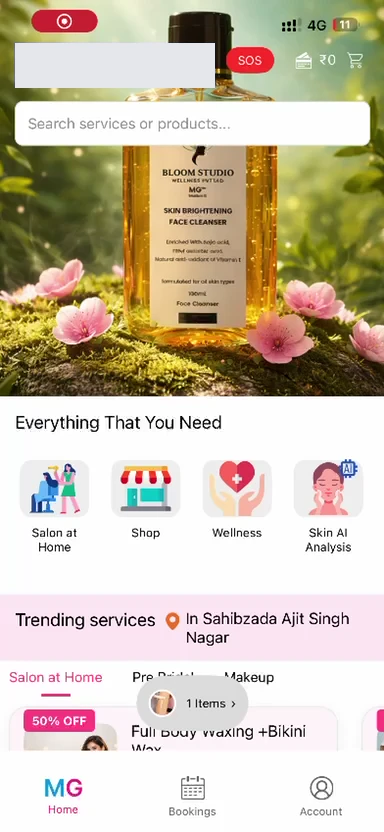
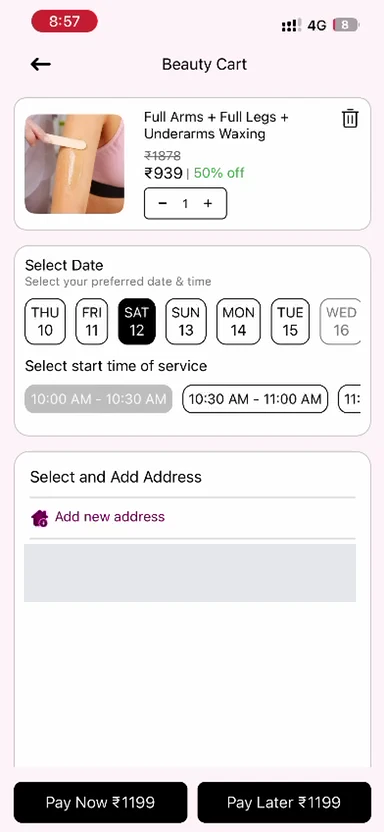
Screens from Digittrix’s published customer-app recording. Personal details are hidden.
Digittrix confirmed a 30-day MVP delivery time for MadamG on 1 October 2026. The case study documents the delivered product; its full feature set should be assessed separately from that first-release milestone. Growth results have not been published.
Planning a SaaS or commerce product? Explore Talksy’s chat, product-search, and FAQ workflows, our published projects, and client reviews.
Meet our Sector 75 team by appointment or online to define your first release. Explore local discovery, office directions, INR planning estimates and project evidence on our MVP development company in Mohali page.
Get clear answers about creating a minimum viable product, development costs, frameworks, team selection, and ongoing support.
Digittrix’s published startup starter package starts from USD 1,499 for an agreed web, Android, and iOS build with backend development, custom design, and revisions. The proposal defines the included features and revision allowance; hosting, third-party fees, and app-store memberships are excluded. Custom MVP development cost is quoted after reviewing scope, user roles, integrations, and testing. Minimum viable product cost also includes ongoing hosting, API usage, and support.
A custom MVP may take 4–12 weeks depending on scope, design, integrations, and content readiness. The published startup starter package estimates a completed agreed build in 2 weeks; its proposal confirms scope, start date, and schedule. App-store review and approval are separate. Developing an MVP with complex permissions or data migration can take longer. We confirm review milestones in the written proposal.
Yes. Building an MVP for startups begins with identifying the intended users, the problem to solve, and the assumptions to test. We help with research, feature prioritization, prototypes, and feedback planning. A working release creates an opportunity to test demand; it does not guarantee product-market fit or funding.
Yes. We plan launch regions, languages, currencies, time-zone overlap, and relevant integration availability during discovery. Market-specific requirements are agreed in the project scope.
We plan maintainable architecture so the product can evolve after launch. Growth requirements, expected usage, data needs, and integration limits guide the technical choices; larger releases may require additional engineering.
Yes. The support arrangement can cover maintenance, monitoring, issue resolution, and feature improvements. We agree the coverage, response expectations, recurring costs, and handover responsibilities in the proposal, then use product feedback to plan further development.
An MVP in mobile app development is a usable first release that lets a defined audience complete the app’s main task. For a booking product, this might mean finding a provider, selecting a time, making a booking, and managing it. A minimum viable product mobile app still needs reliable core flows, appropriate security, and testing; secondary features can follow later.
Start by describing one audience, one problem, and the main action users need to complete. Building a minimum viable product then involves prioritizing a small feature set, prototyping the journey, selecting platforms, developing and testing the release, and reviewing real usage. Agree the feedback and success measures before adding more features.
Yes. Our bespoke MVP development services adapt user journeys, business rules, integrations, and administration to your product. Custom MVP development can use established frameworks and supported components while still addressing your requirements. We agree which parts need custom engineering and which can use existing services.
Flutter for MVP development can be a useful option when the product needs Android and iOS apps with a shared codebase. Its suitability depends on device integrations, platform-specific behaviour, performance, and the team’s maintenance needs. We review those requirements before choosing Flutter or another framework.
A minimum viable product in Agile is a product-learning goal that can be delivered through iterative development. Scrum is a framework for organizing work into Sprints and inspecting usable increments. An MVP may span several Sprints; it is not a formal Scrum artifact or a reason to skip the Definition of Done.
When comparing MVP development agencies or MVP software development companies, review relevant work, discovery methods, team responsibilities, milestone reviews, testing, and handover. Ask how scope changes, source-code ownership, third-party costs, and post-launch support will be handled. Compare written deliverables as well as the headline estimate.
Digittrix is based in Mohali, Punjab, India, and works remotely with Indian and international clients. If you are looking for an MVP development agency near you, confirm the office location, consultation arrangements, working-hour overlap, and communication process. Contact our team to arrange a discussion about your product.
SaaS MVP development should prioritize one customer workflow, account access, required user roles, and basic administration. Agree how customer workspaces and their data are separated, what usage to measure, and whether subscriptions are essential to the first test. Advanced reporting, complex pricing tiers, and extra integrations can follow when early usage supports them.
Before development, confirm source-code ownership, repository access, third-party licences, deployment accounts, documentation, and support terms in the written agreement. Ask which accounts you will control and how credentials and operating instructions will be handed over. These details depend on the agreed scope and contract; a headline development price does not define them.
Technical references: Flutter platform support and the Scrum Guide.
Published by Digittrix. Content updated .
Tell us about your idea, target users, core workflow, preferred platforms, and launch timeline. We can turn your brief into a discovery plan and a written scope for your first release.
Where we work: India, the United States, the United Kingdom, Canada, Australia, and New Zealand.
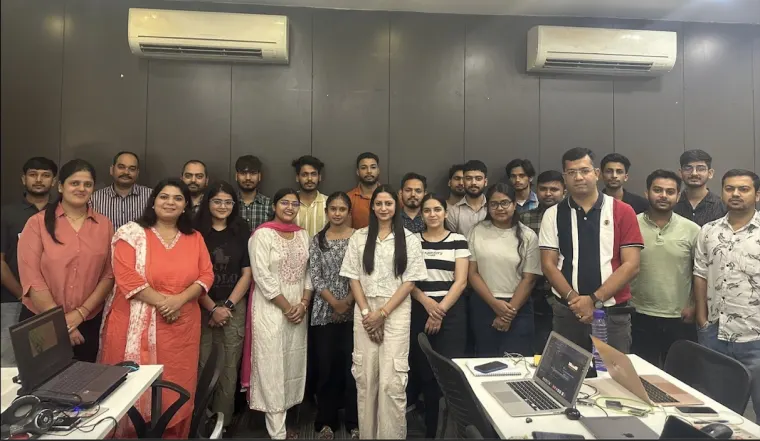
Enhance efficiency with creative business solutions that drive productivity and revenue. Contact us for tailored solutions designed specifically for your business


 Request Instant Call
 Hire Remotely