 +91-8727000867
 +64 22 003 5555


Highlights
- 65% of travellers research online before choosing destinations, packages, or travel brands.
- 72% of travel buyers check reviews before contacting an agency or booking a package.
- 58% of travel leads come from search, social media, referrals, and digital campaigns combined.

Co-Founder
Vandana Abrol 
An enthusiastic developer and skilled business management expert with over a decade of experience in the field
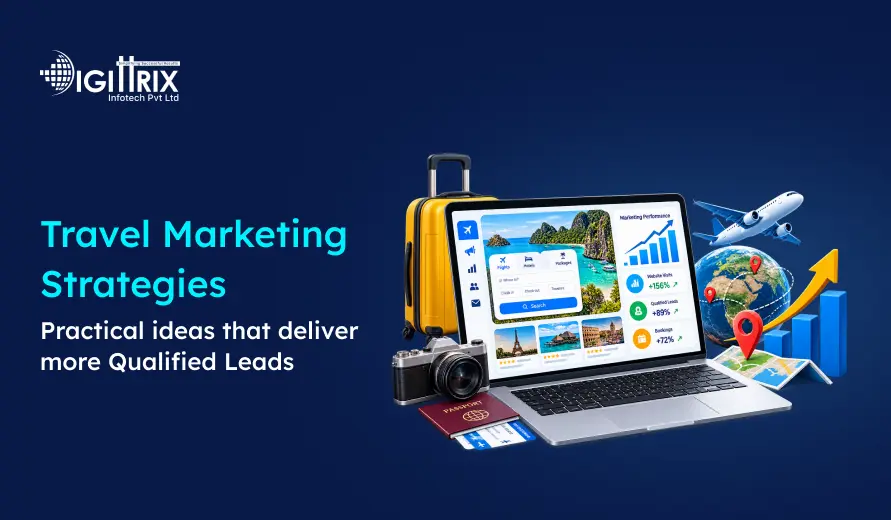
The travel industry has changed significantly as people now research destinations, compare packages, read reviews, and check prices online before contacting a travel company. Businesses that want consistent inquiries need marketing that reaches potential customers at the right stage of their planning journey. Travel Marketing Strategies can help travel agencies and tour operators attract relevant audiences, build trust, and turn online searches into genuine inquiries. From destination-focused content and local search optimisation to social media and email campaigns, a well-planned approach can connect your services with travellers who are more likely to book.
Want to grow your travel business online? Check Digittrix's digital marketing guide for travel companies to discover strategies for sustainable growth!
Understanding What Makes Travel Marketing Work
Travel customers rarely decide after seeing a single advertisement. A person may first search for a destination, then compare activities, check accommodations, read reviews, compare prices, and finally contact several businesses before choosing one.
This makes customer intent a key part of marketing. Your website and promotional channels should provide useful information throughout this process.
A family planning a vacation may search for family-friendly destinations, suitable hotels, child-friendly activities, transportation, and package prices. A couple planning a honeymoon may focus on romantic resorts, private experiences, and destination recommendations.
Understanding these differences allows a business to create more relevant pages, advertisements, and content instead of using the same message for every traveller.
Build Destination Pages That Answer Real Questions
Destination pages can become some of the most valuable pages on a travel website. Instead of providing only a short description and a list of packages, create pages that answer the questions people commonly ask before travelling.
A useful destination page can include:
-
Best time to visit
-
Popular attractions
-
Recommended activities
-
Suitable travel durations
-
Accommodation options
-
Transportation information
-
Approximate package costs
-
Family or couple-friendly options
-
Travel preparation information
-
Frequently asked questions
For example, a company selling Thailand holidays could create separate pages for Bangkok tours, Phuket holidays, Chiang Mai trips, and Thailand family packages.
Each page should have its own useful information rather than changing only the destination name. This gives visitors a better reason to stay on the page and helps search engines understand the subject clearly.
Use Tourism Marketing Strategies Around Search Intent
People searching for travel information have different levels of buying intent. Some are simply researching, while others are actively comparing providers.
Your content should address these different stages.
For early-stage visitors, articles such as “Best Places to Visit in Bali” or “Things to Do in Dubai With Kids” can provide useful information.
For people closer to making a decision, content such as “Bali Family Holiday Packages” or “Dubai Tour Packages With Airport Transfers” can provide more commercially relevant information.
This approach allows Tourism Marketing Strategies to support the customer journey rather than focusing only on direct sales.
The key point is to make every page useful. Content written solely to insert keywords may attract little interest. Content that genuinely answers travel questions has a better chance of attracting visitors who are interested in the destination and the services being offered.
 Grow Your Travel Business With Effective Digital Marketing Strategies
Looking to attract more qualified travel enquiries and bookings? Talk to Digittrix experts today.
Strengthen Travel SEO Services With Useful Content
Search engines can send valuable visitors to travel websites when important pages are properly structured and supported by useful content. Travel SEO Services can include keyword research, technical improvements, internal linking, content development, local optimisation, and performance monitoring.
Start by identifying searches that match the services you actually provide. These may include destination searches, package-related terms, location searches, and specific travel requirements.
For example, a travel company serving customers in Melbourne could target searches related to holiday packages from Melbourne, international travel agencies in Melbourne, family holiday planning, or specific destinations offered by the business.
Internal linking is also important. A destination guide can link to a relevant package page, while a package page can link to accommodation information, travel guides, and enquiry pages.
This creates a clearer website structure and helps visitors move from general information toward a commercial page.
Make Travel Lead Generation Part of Every Campaign
Getting website visitors is only one part of online marketing. Businesses also need a clear process for turning interested visitors into enquiries.
Travel Lead Generation can be supported through simple actions such as:
-
Quote request forms
-
Callback requests
-
WhatsApp enquiry buttons
-
Trip planning forms
-
Downloadable itineraries
-
Consultation bookings
-
Newsletter subscriptions
-
Package enquiry buttons
The form should ask for information that helps the travel consultant understand the customer's needs. Useful fields may include destination, travel dates, number of travellers, preferred package type, and approximate budget.
Avoid asking for unnecessary information. A long form can discourage people from completing it, especially when they are using a mobile phone.
Calls to action should also be specific. “Request Your Holiday Quote” gives visitors a clearer next step than a generic “Submit” button.
Create Content Around Different Traveller Types
A travel business can attract more relevant visitors by producing content for specific customer groups.
Family travellers may be interested in:
-
Child-friendly destinations
-
Family resorts
-
School holiday packages
-
Safe activities
-
Family itineraries
Couples may search for:
-
Honeymoon destinations
-
Romantic resorts
-
Couple-friendly activities
-
Private tours
-
Anniversary packages
Adventure travellers may be interested in trekking, rafting, diving, wildlife experiences, or outdoor activities.
Creating separate content for these audiences allows your business to address specific needs instead of presenting one broad message.
This can also support better landing-page performance because visitors immediately see information related to the type of trip they are considering.
Use Travel Digital Marketing Across Multiple Channels
A travel business should not depend entirely on search traffic. Travel Digital Marketing can bring together search, social media, email, paid advertising, video, and other online channels.
Social media is particularly useful for travel because destinations and experiences are highly visual. Short videos can show hotel rooms, attractions, local food, activities, itineraries, and customer experiences.
Possible content ideas include:
-
One-day destination guides
-
Packing tips
-
Hotel walkthroughs
-
Destination comparisons
-
Seasonal travel suggestions
-
Budget planning tips
-
Local food recommendations
-
Short itinerary ideas
The purpose should not always be to sell a package. Informative content can attract people who are still researching and introduce them to the business before they are ready to enquire.
Grow Your Business Without Marketing Overload with Our 1 Week Plan

Social Media Management

CRM

SEO

Website Maintenance

Get 7 days free
With experts handling Content, CRM, SEO, and Website Maintenance —no contracts, no upfront cost.


Limited free trial slots available — start your 1-week growth plan today

Improve Your Travel Business Marketing With Reviews
Trust has a major role in travel purchasing decisions. Customers are often spending a substantial amount on flights, accommodation, tours, and other services, so they want confidence before paying.
Customer reviews can help address this concern.
Ask genuine customers to review the service after completing their trip. Where appropriate, encourage them to mention the destination, type of package, communication, itinerary, and overall experience.
Specific reviews are generally more useful to prospective customers than short comments with little detail.
Reviews can be displayed on relevant website pages, business profiles, and social channels. Always use authentic feedback rather than creating testimonials.
Photos and videos shared by customers can also provide useful social proof when permission has been given to use them.
Work With a Travel Marketing Agency When Needed
Some travel companies have internal staff who can manage marketing, while others need specialist support. A Travel Marketing Agency can help businesses plan campaigns, develop content, manage search optimisation, run advertising, and monitor performance.
Before selecting an agency, ask how it measures results. Traffic numbers alone do not tell the complete story.
A good reporting process should consider enquiries, qualified leads, conversion rates, campaign costs, important search terms, landing-page performance, and other business outcomes.
The agency should also understand your destinations, customer groups, services, and booking process. Travel marketing is more useful when campaigns are based on the actual products and customers of the business.
Make Local Search a Priority
Local search can be valuable for travel agencies that serve customers from specific cities or regions.
People may search for terms such as “travel agency near me,” “holiday packages in Birmingham,” or “travel agent in Sydney.” Your business information should be accurate and consistent across your website and relevant business directories.
A complete Google Business Profile should include:
-
Business name
-
Address
-
Phone number
-
Website
-
Opening hours
-
Business category
-
Services
-
Photos
-
Customer reviews
Location pages can also help when they provide genuinely useful information for customers in that area.
Avoid creating several pages that contain nearly identical text with different city names. Each location page should provide information relevant to the customers served there.
Use Email to Stay Connected With Prospects
Many travelers do not book immediately after their first visit. International travel may require weeks or months of planning, especially when customers need to compare dates, prices, accommodations, and activities.
Email marketing can help maintain communication during this period.
A simple sequence could begin with a destination guide, followed by planning advice, suggested itineraries, package information, and a relevant offer.
For example, someone who requests information about a family vacation could receive family travel tips and suitable package suggestions rather than unrelated promotions.
Keep emails useful and easy to read. Each message should have one clear purpose and a straightforward action for the recipient.
Create Better Landing Pages for Paid Campaigns
Paid advertising can generate inquiries quickly when campaigns are properly targeted. However, sending every advertisement to the homepage can make it harder for visitors to find what they were promised in the advertisement.
Create landing pages that closely match the search or advertisement.
For example, an advertisement for “Bali Honeymoon Packages” should lead to a page specifically focused on honeymoon travel in Bali.
The landing page should clearly explain the package, outline what is included, answer common questions, display trust signals, and provide an obvious way to inquire.
Monitor conversions rather than clicks alone. A campaign that produces fewer visitors but more genuine enquiries may provide better business value.
Grow Your Travel Business With Effective Digital Marketing Strategies
Looking to attract more qualified travel enquiries and bookings? Talk to Digittrix experts today.
Make Your Website Useful for AI and Conversational Search
Travel customers increasingly ask detailed questions through conversational search tools. This creates an opportunity for businesses that publish clear and well-organised information.
Pages should answer common questions directly, use descriptive headings, provide accurate business information, and explain services in plain language.
Questions such as “What is the best time to visit Bali?”, “How much does a family holiday to Dubai cost?” or “What does a Thailand tour package include?” can be addressed through dedicated content.
Clear answers also make pages easier for visitors to scan on mobile devices.
Keep important business details consistent across your website, business listings, and other trusted sources. Consistency helps users and search systems understand your services and the areas you serve.
Measure Qualified Enquiries Instead of Traffic Alone
A successful marketing campaign should be measured against business goals.
Important metrics include:
-
Qualified enquiries
-
Quote requests
-
Phone calls
-
Booking requests
-
Conversion rate
-
Cost per lead
-
Organic traffic
-
Landing-page conversions
-
Returning visitors
-
Email responses
If a page receives significant traffic but very few enquiries, review the search intent, page content, offer, trust signals, and call to action.
If another page receives less traffic but produces regular enquiries, it may deserve additional promotion.
This type of analysis helps businesses spend their marketing budget on activities that produce meaningful results.
Bring Different Marketing Activities Together
The strongest Travel Marketing Strategies are usually built from several connected activities rather than one promotional channel.
A travel company can publish destination guides, optimise service pages, collect reviews, run targeted advertising, share videos, maintain local profiles, and send useful emails.
Each activity can support another. A social media video can send visitors to a destination guide. The guide can link to a holiday package. The package page can lead visitors to an enquiry form. The resulting customer can later provide a review that supports future marketing.
This creates a marketing system where content, search, social media, and customer communication work together.
Want to strengthen your travel business online? Check Digittrix's tourism digital marketing insights to learn what every travel business needs to know!
Final Words
The most useful Travel Marketing Strategies focus on reaching travellers who have a genuine interest in the destinations and services being offered. Destination pages, search-focused content, local optimisation, customer reviews, targeted advertising, email communication, and clear enquiry options can all contribute to stronger lead quality.
The goal is not simply to attract more visitors. It is to provide useful answers, build confidence, match the customer's travel requirements, and make contacting the business simple. When each part of the marketing process supports the next step in the customer's journey, travel businesses have a stronger opportunity to turn online searches into qualified enquiries and bookings.
Grow Your Travel Business With Digittrix’s Travel Marketing Services
Growing a travel business today requires more than offering attractive holiday packages and good customer service. Travellers now search online for destinations, compare tour packages, read reviews, check prices, view travel photos, and research agencies before making a booking. Travel Marketing Services can help travel agencies, tour operators, and tourism businesses reach relevant audiences, improve online visibility, and generate more qualified enquiries.
At Digittrix, we provide complete digital marketing solutions for travel agencies, tour operators, holiday package providers, destination businesses, and tourism companies. Our services include search engine optimization (SEO), local SEO, content marketing, website optimization, social media marketing, paid advertising, online reputation management, and business profile optimization.
Our Travel Digital Marketing solutions bring together SEO, destination-focused content, social media promotion, local search optimization, paid campaigns, and reputation management to help travel businesses reach potential customers at different stages of their travel planning journey. We also provide Travel SEO Services focused on improving search visibility for destinations, holiday packages, travel services, and location-based searches.
As an experienced digital marketing partner, Digittrix focuses on practical marketing strategies that help travel businesses attract relevant visitors, build customer trust, and turn online searches into genuine enquiries. Our approach considers search intent, destination-specific content, customer behaviour, and the needs of travellers looking for suitable packages and services.
If you want more qualified travel enquiries, stronger search visibility, and a clearer online marketing plan, Digittrix provides complete digital marketing solutions for travel and tourism businesses.
Contact Digittrix today at +91 8727000867 or email digittrix@gmail.com to discuss your travel marketing requirements.
 FAQ's
FAQ's