
App Maintenance & Takeover
Already have a live iOS or Android app? If your developer is leaving, a release is stuck, or customers keep reporting the same crash, we can review the app and plan the next release with you.
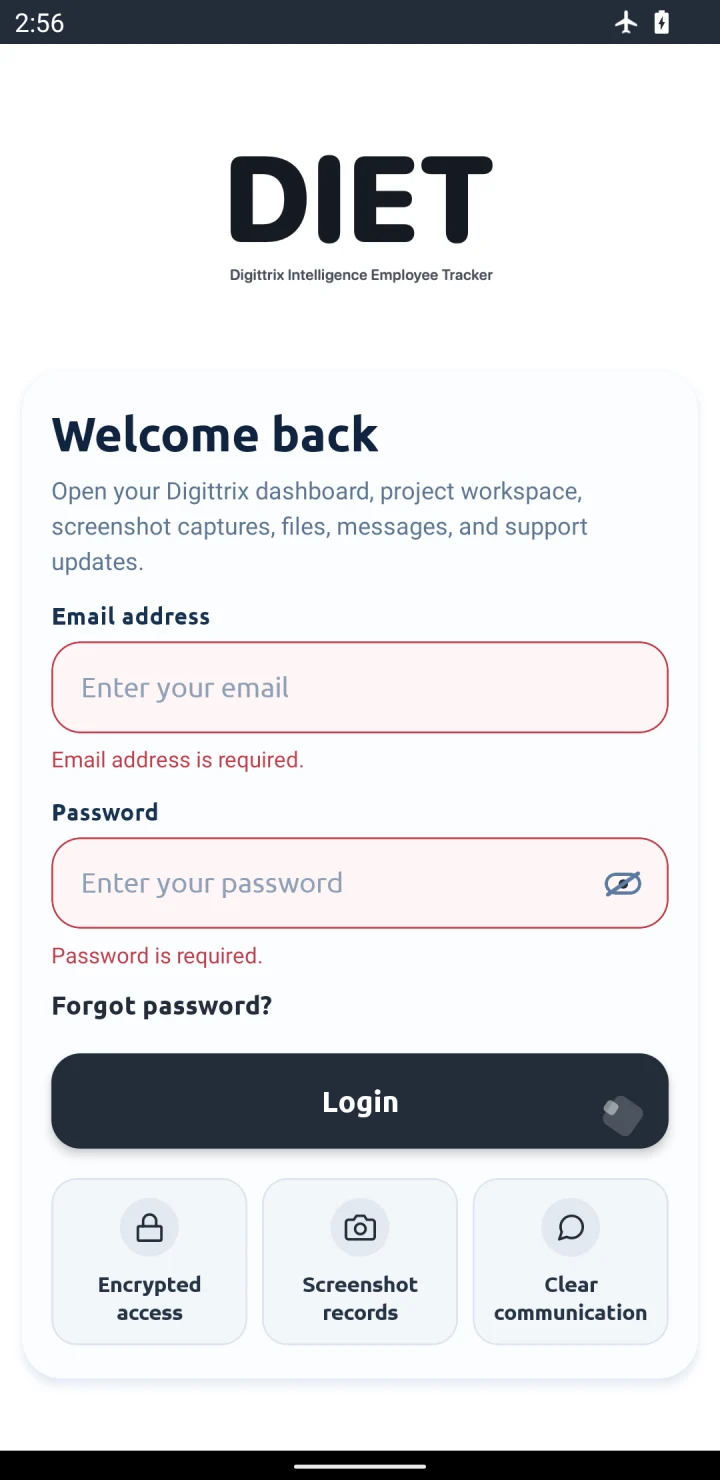
Three Android checks passed on retest
We tested DIET 1.2.5 (build 48) offline on an Android 12 emulator. Back navigation, onboarding and empty sign-in validation passed before and after clearing app data.
Read the Android test recordHow we take over an existing app
We can review an app built by another agency or an in-house team. The first question is whether a new developer can reproduce the version your customers use.
Map the handover
Start with a store link, the issue you see and your next deadline. Then we identify who controls the source code, store listings, signing access, backend and crash reports. If access is missing, we list what needs to come from the previous team.
Build and test a baseline
With agreed access, we try to build the app in a test environment, check its dependencies and reproduce a priority workflow such as sign-in or checkout. We record blockers and the device and build used for each check.
Agree the next release
You receive a written handover inventory, findings ranked by impact, and a proposed fix and release plan. You decide which work to approve, who signs off the build and when a release can go to the stores.
What to collect from your outgoing developer
Before a handover call, mark each item as available, held by a supplier, or missing. An owner’s name and the last known release are enough to start.
- Source and build instructions
- Locate the repository, the tag or commit used for the store build, and the steps for building it. A store download alone is insufficient to produce an editable release. If the source is missing, ask the previous team where it was last built.
- Store accounts and signing
- Identify the owner of each store listing, the iOS bundle ID, the Android package name and who can authorize releases. If your company already owns the listings, it can usually invite the incoming team with the roles it needs.
- Backend and paid services
- List the hosting, database, domain, payments, messaging and analytics accounts the app actually uses. Record the owner and billing contact for each. Flag anything still billed to the outgoing agency before it closes an account.
- Test access and release history
- Prepare a test account, a list of supported devices and the last release notes. Include one reproducible customer issue with the app version, device and steps. Share sensitive access later through private account invitations.
If the agency owns your store listing
An ownership change may require a formal transfer. Apple allows eligible apps to keep their bundle ID, ratings and reviews. Google Play transfers the app’s users and ratings, while historical payout and earnings reports stay with the original account. Confirm eligibility and export the reports your finance team needs before transfer.
Apple’s app transfer guidanceGoogle Play’s transfer checklist
What ongoing app maintenance covers
Choose the work your app needs each month and agree who handles incoming issues, testing and releases.
Read the guide to post-launch maintenance costs- Crash and bug fixes
- Review crash reports and user feedback, reproduce agreed issues and retest the affected workflow after a fix.
- Compatibility updates
- Review OS, SDK and dependency changes, then test the affected app features on the agreed iOS and Android versions.
- Store releases
- Prepare a test build, share release notes and coordinate submission through your organization’s developer accounts.
- Monthly reporting
- See what shipped, which issues remain open, how support time was spent and what decisions are needed for the next release.
How we quote the work
An app with a working build and one reproducible crash needs a different estimate from an app with missing source code or several outdated integrations.
Initial review
We agree the review scope and fee after discussing your platforms, available access and priorities.
Fixes and monthly support
Use the findings to choose a one-off fix or a monthly support plan. The proposal sets out the work or hours included, coverage hours, response targets and release responsibilities. Major features, hosting and third-party charges are priced separately where applicable.
A worked monthly budget
Illustrative USD calculation for one live app with a working build and one planned release. Substitute the hours and rate from your proposal and the amounts on your supplier bills.
- Engineering and release work
- 8 hours for fixes + 6 for testing + 4 for release and reporting = 18 hours
- Example labour cost
- 18 hours × an assumed $50 per hour = $900
- Example supplier bills
- $100 hosting + $40 monitoring and messaging = $140
- Illustrative monthly total
- $1,040 before tax
The figures illustrate the arithmetic. Digittrix quotes your review and ongoing work after scoping. Budget separately for initial takeover work, store renewals where due, and any major upgrade.
What to measure after an update
Compare the affected build with its replacement. Record the date range, app version, operating system and sample size so the team can tell whether the same issue is still reaching users.
Android crashes and freezes
Google Play’s overall thresholds are 1.09% for user-perceived crashes and 0.47% for user-perceived ANRs (app freezes). Android vitals measures affected daily active users. Google assesses app quality over 28 days and also publishes device-specific thresholds.
Check the Android vitals thresholdsiOS crashes per session
Apple reports the average number of crashes per session for the selected period, using analytics shared by participating users. For example, 4 crashes across 2,000 observed sessions gives a 0.2% crash rate. Compare successive iOS builds using the same period length and metric.
See how Apple defines crash rateCompletion of a critical task
A checkout can fail while the app stays open. For an ordering app, count distinct checkout attempts and confirmed orders for the same build and period. If 190 of 200 attempts succeed, completion is 95%. Review the ten remaining attempts alongside payment and order records.
What needs attention in your app?
Send the store link, the problem and your next release date. A public link or short description is enough for the first conversation. Keep passwords and signing keys private.